- 24/7 mobile service
- 15-30 min typical arrival
- All London
Wheel Balancing: Signs Your Car Needs It
Quick answer Wheel balancing corrects uneven weight in a wheel and tyre by adding small weights to the rim. If your steering wheel or seat shakes at certain speeds, usually somewhere between 50 and 70 mph, or your tyres wear unevenly, your wheels may be out of balance. We offer mobile wheel balancing in London, at your home, workplace or roadside.
What is wheel balancing?
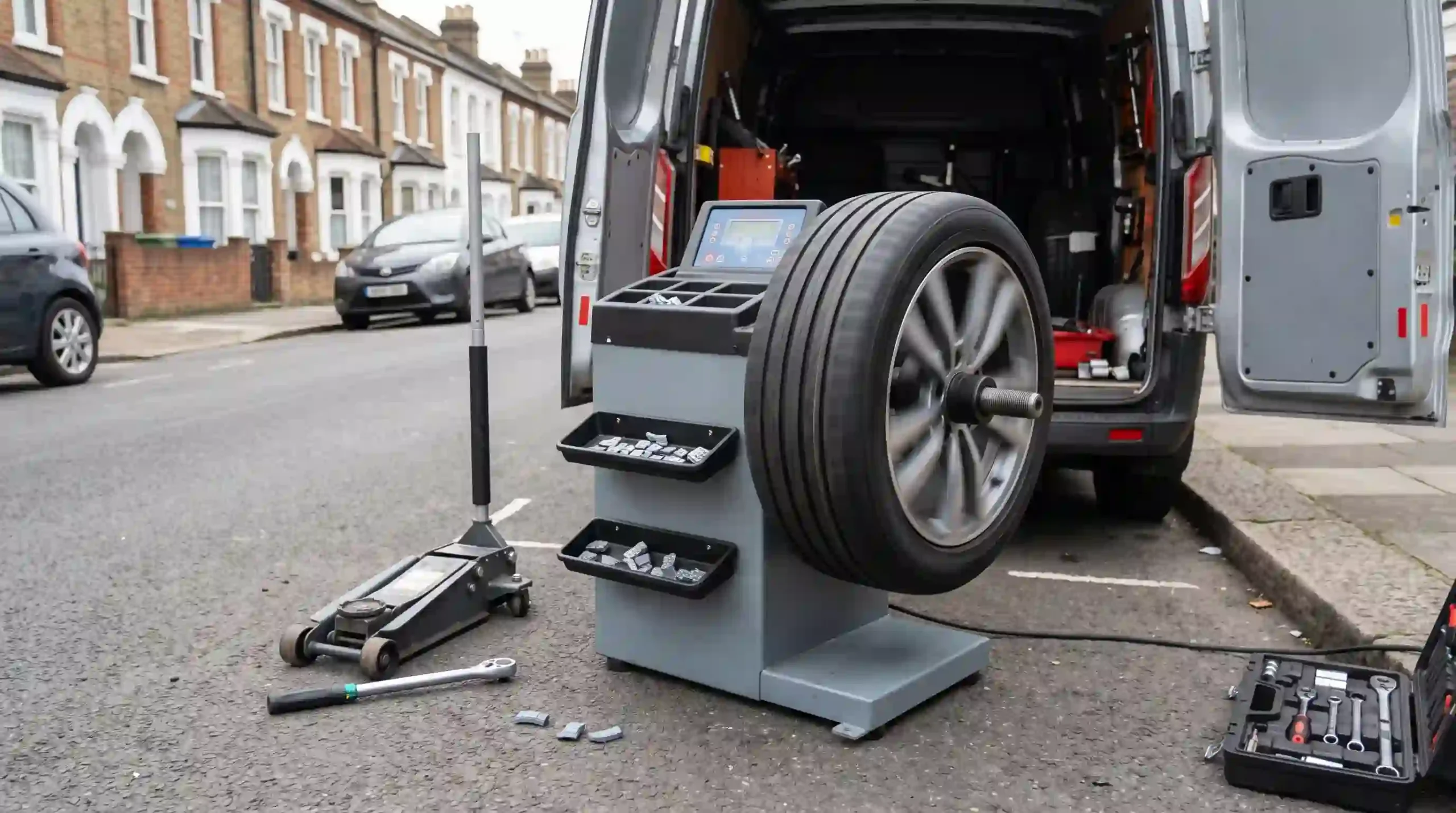
No wheel and tyre is perfectly even all the way round. One spot is always a few grams heavier. At low speed you will not feel it. At motorway speed that small difference makes the wheel hop as it spins, and you feel it as a vibration.
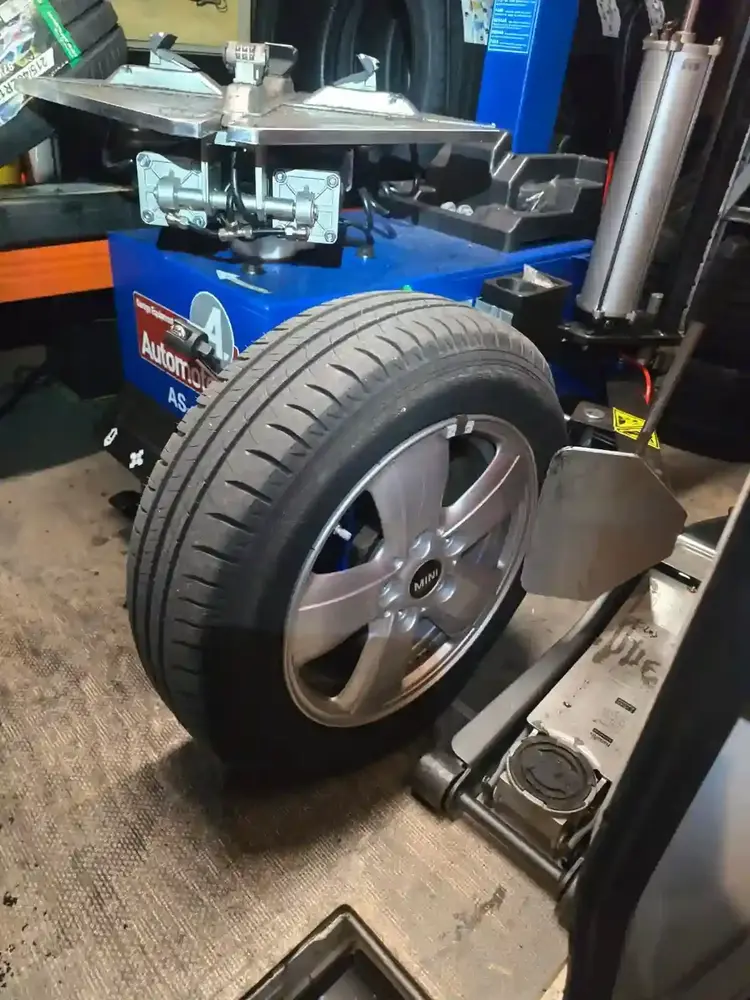
Wheel balancing finds that heavy spot. The wheel is spun on a balancing machine, and the machine shows where weight is needed. A technician then fits small weights to the rim, either clip-on or stick-on (stick-on weights are often used on alloy wheels), until the wheel spins evenly.
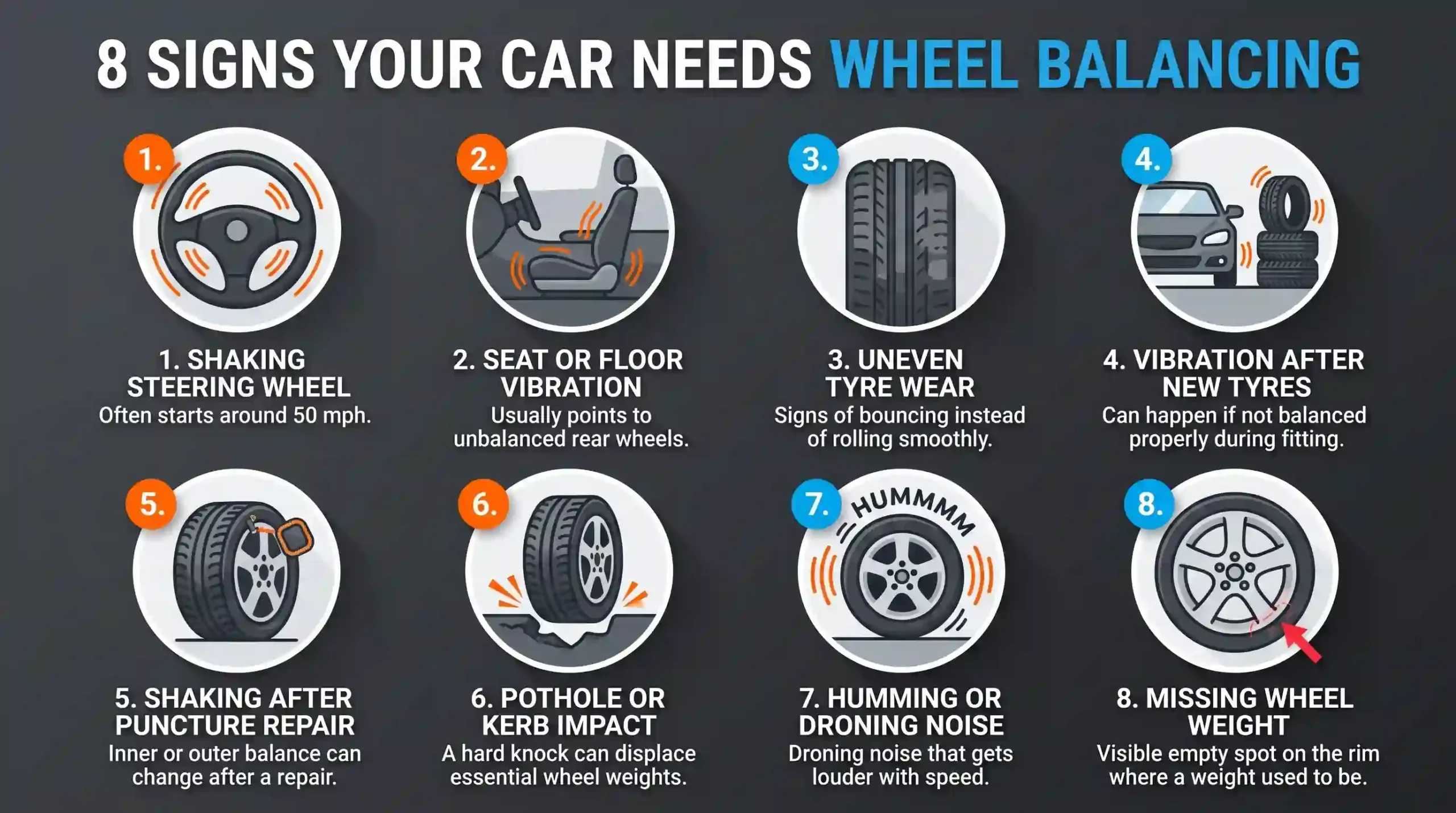
8 signs your car needs wheel balancing
The steering wheel shakes at certain speeds
The most common sign. It often starts around 50 mph and may fade again at higher speed. It usually points to a front wheel.
You feel vibration through the seat or floor
Vibration in the seat or the back of the car usually points to a rear wheel.
Your tyres wear unevenly
Patchy, scalloped or cupped wear on the tread can mean a wheel has been bouncing instead of rolling smoothly.
It started after new tyres
If the car shakes after a tyre change, the wheels may not have been balanced properly, or a weight may have come off.
It started after a puncture repair
When a tyre comes off the wheel for a repair, the balance can change.
You hit a pothole or kerb
A hard knock can move or knock off a weight, or damage the wheel itself.
You hear a humming or droning noise
A noise that gets louder as your speed goes up is worth checking.
A balancing weight is missing
If you can see a clean patch or an empty spot on the rim where a weight used to be, get it checked.
Is it wheel balancing, or something else?
Not every vibration is a balance problem. Tap what your car is doing.
What are you noticing?
Wheel out of balance
Vibration that shows up in a speed range and disappears below it is the classic balance problem. Wheel balancing is the fix.
A wheel alignment problem
Pulling to one side, or a steering wheel that sits off-centre, points to alignment, not balance. Balancing will not fix it, so ask a garage to check your alignment. If you also see uneven tyre wear, send us a message and we can look at the tyres.
Brake discs
Shaking only when you press the brake pedal usually comes from the brakes, not the wheels. Get the brakes checked by a garage.
Damaged tyre or bent wheel
Shaking at every speed, or a bulge in the tyre, can mean the tyre or wheel is damaged. Do not keep driving on it. Stop somewhere safe and call us so we can inspect it.
Bent wheel, damaged tyre or worn suspension
If the shaking returns soon after a proper balance, the cause is probably something else. Get the wheel and tyre inspected, and have the suspension checked if the tyre looks fine.
Quick reference
| What you notice | What it usually means | What to do |
|---|---|---|
| Shaking at 50-70 mph, smooth below that | Wheel out of balance | Book wheel balancing |
| Car pulls to one side, or steering wheel is off-centre | Wheel alignment problem | Get alignment checked |
| Shaking only when you brake | Brake discs | Get the brakes checked |
| Shaking at every speed, plus a bulge on the tyre | Damaged tyre or bent wheel | Stop driving and get it inspected |
| Vibration returns soon after balancing | Bent wheel, damaged tyre or worn suspension | Get the wheel and tyre inspected |
Quick self-check
Does your car need wheel balancing?
Tick everything that applies.
Tick any that apply. Two or more usually means wheel balancing will help.
What happens if you ignore it?
Unbalanced wheels do not usually leave you stranded, but the damage builds slowly. Tyres wear faster and unevenly, so you may replace them sooner. The constant vibration also puts extra strain on the suspension and wheel bearings. And it simply makes driving tiring, especially on long motorway trips.
When should you get your wheels balanced?
- Whenever new tyres are fitted
- After a puncture repair where the tyre was taken off the wheel
- After a hard pothole or kerb hit
- As soon as you feel vibration at speed
- When you notice uneven tyre wear
There is no strict mileage rule. Some drivers check balance when they rotate their tyres, which is a sensible habit.
How mobile wheel balancing works
- We arrive
At your home, workplace or a safe roadside spot.
- We check the tyre and wheel
For damage, bulges and stuck-on dirt or old weights.
- The wheel is spun
The balancing equipment shows where the imbalance is.
- We fit weights to the rim
Small weights correct the imbalance.
- We check the result
And tell you if something else, like a bent wheel or tyre damage, is causing the problem.
It usually takes around 10 to 15 minutes per wheel, depending on the car. If you need new tyres at the same time, we can supply and fit them in the same visit: Tyre Supply & Fit.
Wheel balancing vs wheel alignment vs tyre rotation
| Service | What it does | You notice |
|---|---|---|
| Wheel balancing | Evens out the weight of the wheel and tyre | Vibration at certain speeds |
| Wheel alignment | Sets the angle of the wheels | Car pulls to one side, steering wheel off-centre |
| Tyre rotation | Moves tyres to different positions | Used to even out wear |
Wheel balancing in London: we come to you
You do not need to take time off or sit in a garage waiting room. FlatFix Tyre brings the balancing equipment to you.

- 24/7 service, day or night
- Typical arrival 15-30 minutes across London
- At your home, workplace or a safe roadside spot
- We cover London from Harrow and Stanmore to the centre, east, south and west of the city. See all areas we cover or our mobile tyre fitting in Harrow page.
- Works for cars, vans and run-flat tyres. Read about run-flat tyres.
- If the shaking is caused by a tyre pressure problem, we can also help with a TPMS check.
Learn more about our wheel balancing service.
Frequently asked questions
What are the signs of unbalanced wheels?
The main signs are steering wheel or seat vibration at certain speeds (often 50-70 mph), uneven tyre wear, a humming noise, and vibration that started after new tyres, a puncture repair or a pothole.
At what speed do unbalanced wheels shake?
Most drivers notice it between about 50 and 70 mph. It can fade at higher speeds, which is why people sometimes think the problem has gone away.
Is it safe to drive with unbalanced wheels?
For a short time, usually yes. But it wears your tyres and suspension faster and is tiring to drive. If the shaking is severe or sudden, stop and check the tyres first, because it could be tyre damage.
How often should I get my wheels balanced?
There is no fixed interval. Balance them when new tyres are fitted, after a tyre comes off the wheel, after a hard impact, and whenever you feel vibration at speed.
Do new tyres come balanced?
New tyres should be balanced when they are fitted. If your car shakes after a tyre change, ask for the wheels to be checked again.
What is the difference between wheel balancing and alignment?
Balancing fixes uneven weight in the wheel and tyre, which causes vibration. Alignment sets the wheel angles, which affects pulling and steering position. They are different jobs.
Can wheel balancing be done at home?
Yes. We offer mobile wheel balancing in London at your home, workplace or a safe roadside location.
How much does wheel balancing cost in London?
It depends on your vehicle, the number of wheels and whether it is done with new tyres. Send us your registration and the problem and we will quote you before any work starts.
Do run-flat tyres need balancing?
Yes. Run-flat tyres need balancing the same way as standard tyres.
Shaking steering wheel right now?
Tell us your location and what the car is doing, and we will come to you.