Pothole Tyre Damage in London: Should You Repair or Replace Your Tyre?
Hitting a pothole can happen in seconds, but the damage it causes to your car can affect your safety long after the impact. A sudden bang, steering vibration, loss of tyre pressure or a visible bulge could all indicate that your tyre has been damaged.
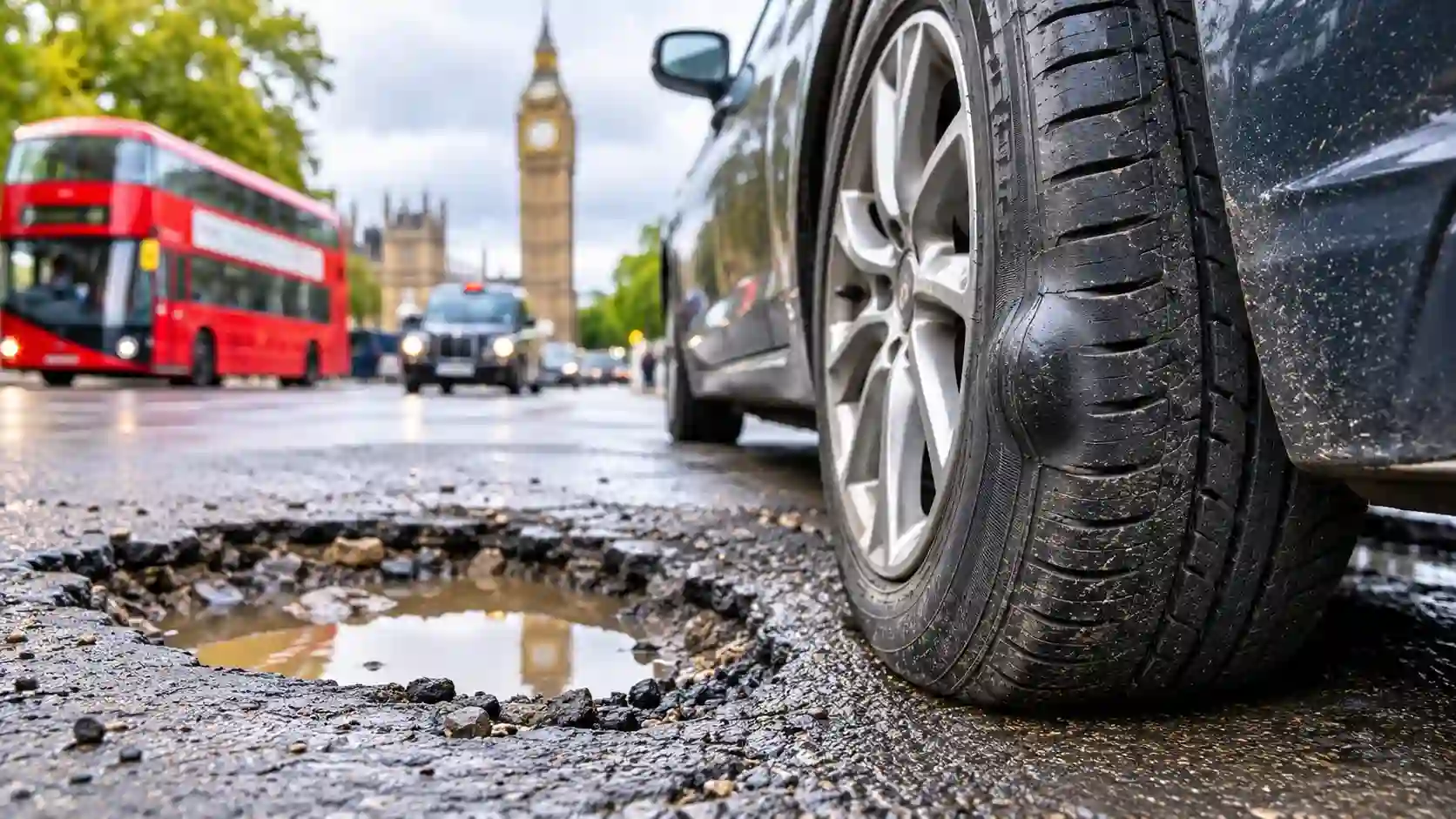
Potholes are a familiar problem for drivers across London. Whether you are travelling through busy town centres, residential streets or main roads, an unexpected hole in the road can damage your tyres, wheels and suspension.
But how do you know whether a tyre damaged by a pothole can be repaired or needs replacing? And is it safe to continue driving after hitting one?
In this guide, FlatFix Tyre explains the warning signs to look for, what to do immediately after hitting a pothole, when a tyre repair may be possible and when you should arrange a replacement.
If your tyre has been damaged and you need help, visit FlatFix Tyre to find out about our mobile tyre fitting service in London.
Damaged Your Tyre After Hitting a Pothole?
Don't risk driving on a damaged tyre. Speak to FlatFix Tyre about mobile tyre assistance across London.
24/7 emergency contact • London service area
Can a Pothole Damage Your Car Tyres?
Yes. A pothole can damage a tyre when the wheel drops into a hole and strikes its sharp edge or the road surface underneath. The force of the impact can compress the tyre against the wheel rim, potentially damaging the rubber or its internal structure.
The severity depends on several factors, including the depth and shape of the pothole, your speed, tyre pressure, tyre condition and the size of your wheels.
Possible tyre damage
- A puncture or loss of tyre pressure.
- A cut or split in the tyre sidewall.
- A bulge or bubble on the tyre.
- Damage to the tyre's internal structure.
Possible vehicle damage
- A bent or cracked alloy wheel.
- Wheel balancing problems.
- Wheel alignment or suspension problems.
- Steering or suspension damage.
Not all damage is immediately visible. A tyre may look normal from the outside but still have internal damage after a heavy impact. This is why it is important to have a tyre professionally inspected if you notice unusual symptoms.
7 Signs Your Tyre May Have Pothole Damage
After hitting a pothole, pay attention to how your car behaves. The following warning signs could indicate that your tyre or wheel needs attention.
1. A Bulge or Bubble on the Tyre Sidewall
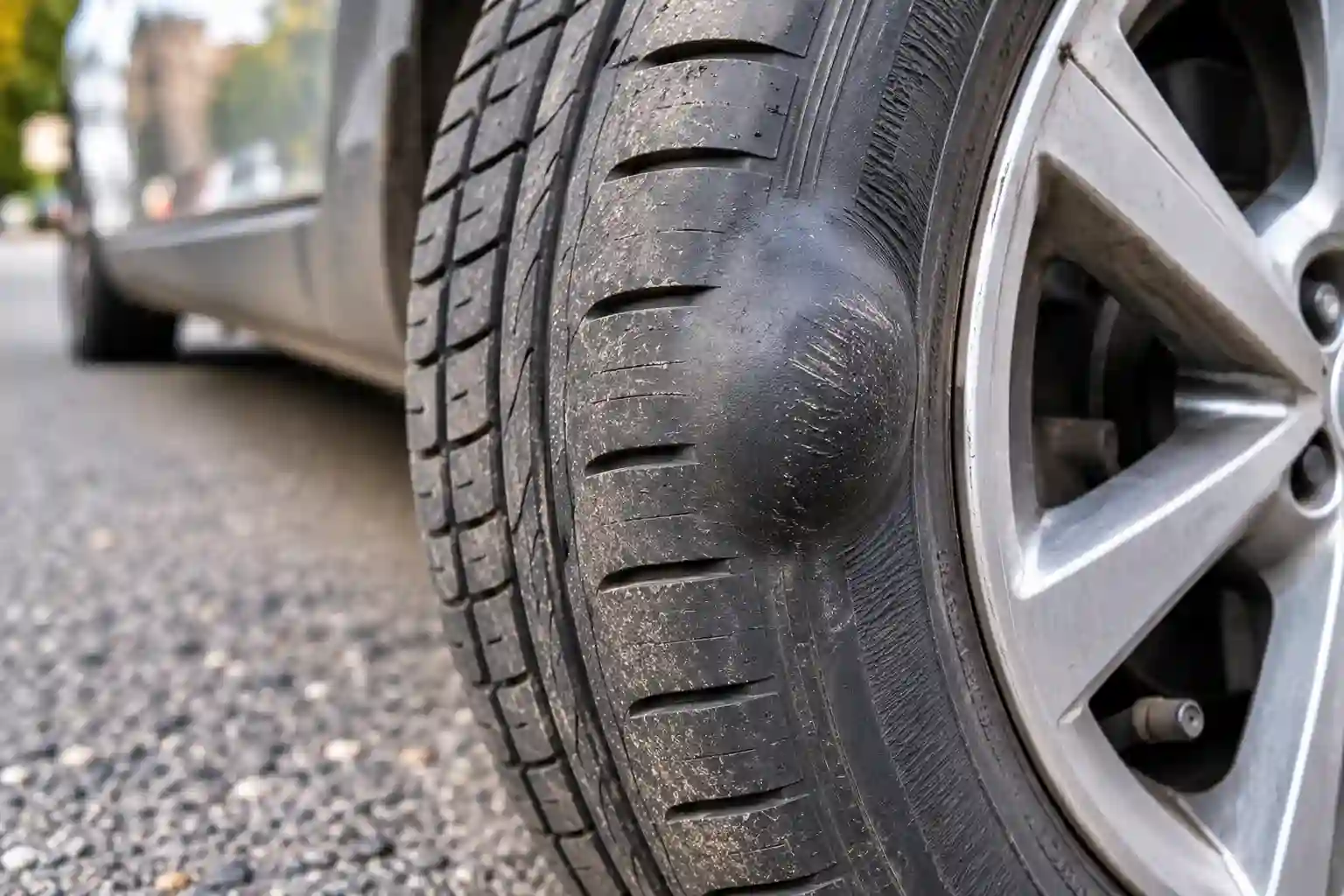
A bulge on the sidewall is one of the most important warning signs to look for. It may appear as a raised area or bubble on the side of the tyre. This can indicate that the tyre's internal reinforcing structure has been damaged, allowing the outer rubber to push outwards.
You should not continue driving on a tyre with a suspected structural bulge. It may fail suddenly, particularly under heat, load or at higher speeds. Arrange a professional inspection and replacement where necessary.
2. Sudden Loss of Tyre Pressure
If your tyre pressure drops shortly after hitting a pothole, the impact may have caused a puncture, split or damage around the tyre bead or wheel rim.
You may notice a tyre pressure warning light, a visibly deflated tyre, your car feeling unstable, or having to inflate the same tyre repeatedly. Do not assume that adding air has solved the problem. A damaged tyre may continue losing pressure and could become unsafe.
3. A Cut, Split or Crack in the Sidewall
Inspect the visible sidewall for cuts, splits, deep abrasions or exposed cords. Pothole impacts can damage this area because the tyre is compressed against the wheel. Sidewall damage is particularly serious because the sidewall flexes continuously while the vehicle is moving.
A tyre with structural sidewall damage cannot normally be repaired safely and will generally need replacing following professional inspection.
4. Steering Wheel Vibration
If your steering wheel starts vibrating after hitting a pothole, the impact may have affected the tyre, wheel or wheel balance. Possible causes include a damaged or distorted tyre, a bent alloy wheel, a wheel balancing problem, or wheel alignment/suspension damage.
Do not ignore new vibration, particularly if it becomes stronger as your speed increases. Have the vehicle checked to identify the cause.
5. Your Car Pulls to One Side
If your vehicle starts pulling left or right after a pothole impact, the wheel alignment or suspension may have been affected. Although tyre pressure differences can also cause pulling, the problem should not automatically be treated as an alignment issue. A damaged tyre or wheel needs to be ruled out first.
6. A Cracked or Bent Alloy Wheel
The tyre is not the only component that can be damaged by a pothole. A strong impact can bend, crack or distort an alloy wheel.
Look for visible cracks around the wheel, a bent rim, air escaping around the tyre and rim, new vibration while driving, or repeated loss of tyre pressure. A damaged wheel may prevent the tyre from sealing correctly. A technician should inspect the wheel as well as the tyre before deciding what needs to be replaced.
7. Unusual Noises After Hitting a Pothole
A new knocking, clunking, scraping or humming noise after a pothole impact could indicate damage to the tyre, wheel, suspension or steering components. If the noise is accompanied by vibration, steering changes or pressure loss, stop somewhere safe and arrange an inspection rather than continuing your journey.
Can a Pothole-Damaged Tyre Be Repaired or Does It Need Replacing?
This is one of the most common questions drivers ask after hitting a pothole. The answer depends on the type, location and severity of the damage. Some minor tyre punctures may be repairable, but structural damage caused by an impact often means the tyre needs replacing. A tyre professional must inspect the tyre before deciding whether a repair is safe.
When a Pothole-Damaged Tyre May Be Repairable
- A small puncture in the permitted central tread area.
- The rest of the tyre is in suitable condition.
- No internal structural damage after wheel removal.
- The repair meets the relevant British Standard, BS AU 159.
A tyre should never be repaired simply because the puncture looks small from the outside.
When a Pothole-Damaged Tyre Needs Replacing
- A bulge or bubble on the sidewall.
- A deep cut or split in the tyre, or exposed cords.
- Damage to the tyre casing or internal structure.
- Separation of the tread or sidewall.
- Damage caused by driving on a severely deflated tyre.
- A puncture outside the permitted repair area.
A repair cannot restore a tyre whose structural integrity has been compromised. If you are unsure whether your tyre can be repaired, arrange a professional assessment rather than taking a risk. Read more about our mobile puncture repair service in London.
Why Can't a Tyre Sidewall Be Repaired After Pothole Damage?
The sidewall is the flexible part of the tyre between the tread and the wheel rim. It flexes every time the tyre rotates and helps support the vehicle's weight.
Unlike the central tread area, the sidewall is not suitable for a normal permanent puncture repair under the relevant British repair standard. A patch or plug cannot reliably restore the strength of a structurally damaged sidewall. Continuing to use a tyre with a bulge, deep cut or other structural sidewall damage can increase the risk of sudden tyre failure.
If you notice a bulge or serious cut after hitting a pothole, avoid driving on the tyre and arrange professional assistance.
What Should You Do Immediately After Hitting a Pothole?
If you hit a pothole and suspect tyre damage, take the following steps.
- Slow Down and Find a Safe Place to Stop: Avoid sudden braking or steering movements. If your vehicle feels unstable, or you hear an unusual noise, reduce your speed carefully and stop somewhere safe. Do not stop in a dangerous position or attempt to inspect the tyre in a live traffic lane.
- Check for Visible Tyre Damage: Once safely parked, look at the affected tyre if it is safe to do so. Check for bulges, bubbles, cuts, splits, a visibly flat tyre, objects embedded in the tread, or damage to the wheel rim. Do not put yourself in danger next to moving traffic.
- Check Your Tyre Pressure: If you have a safe place to do so and suitable equipment, check the tyre pressure against the vehicle manufacturer's recommended figures. A tyre that has lost pressure after an impact needs inspection; simply inflating it does not make it safe.
- Do Not Continue Driving on a Damaged Tyre: If the tyre is flat, visibly damaged or losing pressure, do not continue driving on it. Driving on a damaged or underinflated tyre can make the damage worse and affect vehicle control.
- Arrange a Professional Inspection: A tyre specialist can inspect the tyre and determine whether it is repairable or needs replacing. The wheel should also be checked if the impact was severe. If the car pulls to one side or makes unusual noises, arrange an inspection of the steering and suspension.
Need Emergency Tyre Replacement in London?
If your tyre is damaged and your vehicle cannot safely be driven, contact FlatFix Tyre to discuss mobile tyre assistance across London.
Can You Drive with a Bulge in Your Tyre After Hitting a Pothole?
No. You should not drive on a tyre with a suspected structural bulge. A bulge indicates that the internal structure of the tyre has been weakened. Although the tyre may still hold air, that does not mean it is safe.
The risk of failure can increase when the tyre becomes hot or is placed under additional load. If you notice a bulge:
- Stop in a safe location.
- Avoid driving further on the damaged tyre.
- Do not attempt to repair the bulge yourself.
- Arrange professional tyre inspection and replacement if required.
Can a Pothole Damage Your Alloy Wheel?
Yes. A pothole can damage both the tyre and the alloy wheel, especially when the wheel strikes a sharp or deep edge. A bent wheel may cause air to escape between the tyre and the rim. A cracked wheel can also affect the safety of the vehicle.
Signs of possible alloy wheel damage include a visible bend or crack, air escaping around the rim, repeated pressure loss, steering wheel vibration, or a change in the way the vehicle handles.
Replacing the tyre alone may not solve the problem if the wheel is also damaged. The wheel must be inspected before a replacement tyre is fitted.
Why Pothole Damage Is a Concern for London Drivers
London drivers encounter a wide range of road conditions, from busy main roads and junctions to residential streets and roads affected by heavy traffic. Potholes can be difficult to spot, particularly during rainfall, at night or when standing water covers the road surface.
The wider UK problem is significant. According to road safety charity TyreSafe, its analysis estimated the financial impact of pothole-related vehicle repairs at £589 million in 2025. The same analysis reported that the AA attended 613,638 pothole-related breakdowns during that year. These figures cover the UK rather than London alone, but they demonstrate why drivers should take pothole impacts seriously.
For London motorists, checking tyres after a heavy impact is a sensible precaution. Even if your vehicle appears to be driving normally, hidden damage may not be immediately obvious.
How Can You Reduce the Risk of Pothole Tyre Damage?
You cannot avoid every pothole, but a few sensible driving and maintenance habits can help reduce the risk of damage:
- Keep your tyres at the correct pressure: Follow the vehicle manufacturer's recommended figures to reduce unnecessary stress.
- Check your tyres regularly: Look for cuts, bulges, cracks, uneven wear and embedded objects, paying close attention to sidewalls.
- Keep a safe following distance: Gives you more time to identify road hazards and respond safely.
- Adjust your speed to road conditions: Reduce speed where visibility is poor or the road surface is uneven. Avoid sudden swerving that could endanger other road users.
- Avoid driving through deep water where possible: Standing water hides potholes and makes depth impossible to judge.
- Do not ignore changes in your vehicle: Check new vibration, steering problems, unusual noises or repeated tyre pressure loss promptly.
Need Pothole Tyre Replacement in London?
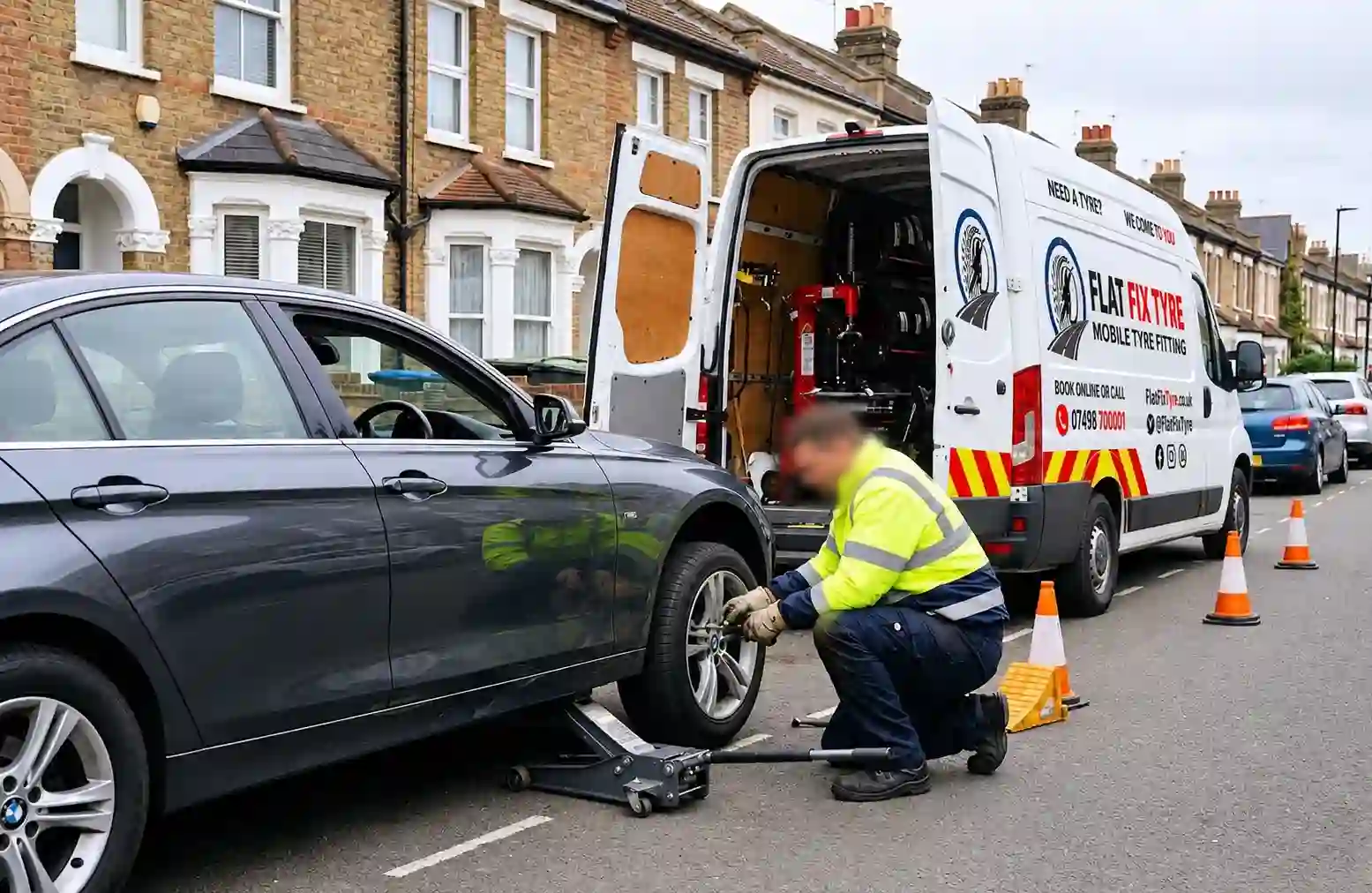
If a pothole has damaged your tyre, you may not want the inconvenience of driving to a garage, especially if your vehicle has a flat tyre or cannot be driven safely. FlatFix Tyre provides mobile tyre services across London, helping drivers who need tyre assistance at a suitable location.
Our Mobile Tyre Services
Mobile Tyre Fitting
Tyre replacement at your location, subject to availability and access.
Explore FlatFix Tyre →Emergency Tyre Replacement
Assistance when a damaged tyre needs replacing across London boroughs.
View emergency replacement →Puncture Repair
Professional assessment to determine whether a puncture can be repaired safely.
Explore puncture repair →Tyre Supply & Fit
Replacement tyre supply and fitting for suitable vehicles and requirements.
View tyre supply and fit →Why Choose FlatFix Tyre?
When you need mobile tyre assistance in London, choosing a service that understands the inconvenience of an unexpected tyre problem matters. FlatFix Tyre helps London drivers with mobile tyre fitting and related tyre services.
You can visit our homepage to learn more about our mobile tyre fitting service in London, or explore emergency tyre replacement and puncture repair. If you need assistance, get in touch to discuss your tyre problem.
Need Help with a Damaged Tyre?
Contact FlatFix Tyre to discuss your tyre damage, vehicle and location. Our team can help you understand the available service options.
24/7 contact • London and surrounding areas
Frequently Asked Questions About Pothole Tyre Damage
1. Can hitting a pothole damage a tyre?
Yes. Hitting a pothole can cause punctures, sidewall cuts, bulges and internal tyre damage. A severe impact may also damage the wheel, steering or suspension.
2. How do I know if my tyre is damaged after hitting a pothole?
Look for a bulge, cut, split, loss of pressure or visible damage to the wheel. You may also notice steering vibration, unusual noises or the vehicle pulling to one side. Some internal damage may not be visible, so professional inspection is important.
3. Can a tyre with a sidewall bulge be repaired?
A structural sidewall bulge cannot be safely repaired as a normal puncture. It usually means the tyre needs replacing. Do not continue driving on a tyre with a suspected bulge.
4. Can a small pothole puncture be repaired?
Possibly. A small puncture may be repairable if it is in the permitted central tread area and the tyre has no other damage. A tyre specialist must inspect it internally and externally and follow the relevant British Standard.
5. Is it safe to drive after hitting a pothole?
It depends on whether damage has occurred. If the tyre is losing pressure, visibly damaged or the vehicle feels unstable, stop somewhere safe and do not continue driving. Arrange an inspection.
6. Can a pothole damage an alloy wheel?
Yes. A strong impact can bend or crack an alloy wheel. This may cause air leakage, vibration or handling problems. The wheel should be inspected alongside the tyre.
7. Can a pothole cause a tyre pressure warning light to come on?
Yes. The impact may cause a puncture, damage the tyre or affect the seal between the tyre and wheel. Check the tyre safely and arrange an inspection if the pressure has dropped.
8. Do I need to replace both tyres after pothole damage?
Not always. It depends on the condition of the other tyre, the vehicle manufacturer's recommendations, tyre specifications and whether the replacement would create an unsuitable difference in tread depth or performance. A tyre professional can advise after checking the vehicle.
9. Can mobile tyre fitting help after pothole damage in London?
Yes, mobile tyre fitting can be a convenient option when a tyre needs replacing and the vehicle cannot safely be driven to a garage. The replacement and any additional wheel or vehicle damage should be assessed before the vehicle is returned to use.
10. What should I do if my tyre goes flat after hitting a pothole?
Stop somewhere safe and avoid driving on the flat tyre. Driving on it can cause further damage to the tyre and wheel. Arrange suitable roadside assistance or mobile tyre support.
Final Thoughts: Do Not Ignore Pothole Tyre Damage
A pothole may seem like a minor road hazard, but the impact can cause anything from a small puncture to serious tyre or wheel damage.
The most important thing is to recognise the warning signs. A bulge, sidewall cut, sudden pressure loss, vibration or change in steering should never be ignored.
Some minor tread-area punctures may be repairable, but a tyre with structural damage will generally need replacing. A professional inspection is the safest way to determine what your vehicle needs.
If you have experienced pothole tyre damage in London and need help, contact FlatFix Tyre to learn more about our mobile tyre fitting and emergency tyre replacement services.
FlatFix Tyre – Mobile tyre assistance across London.