How to Know When Your Car Tyres Need Replacing
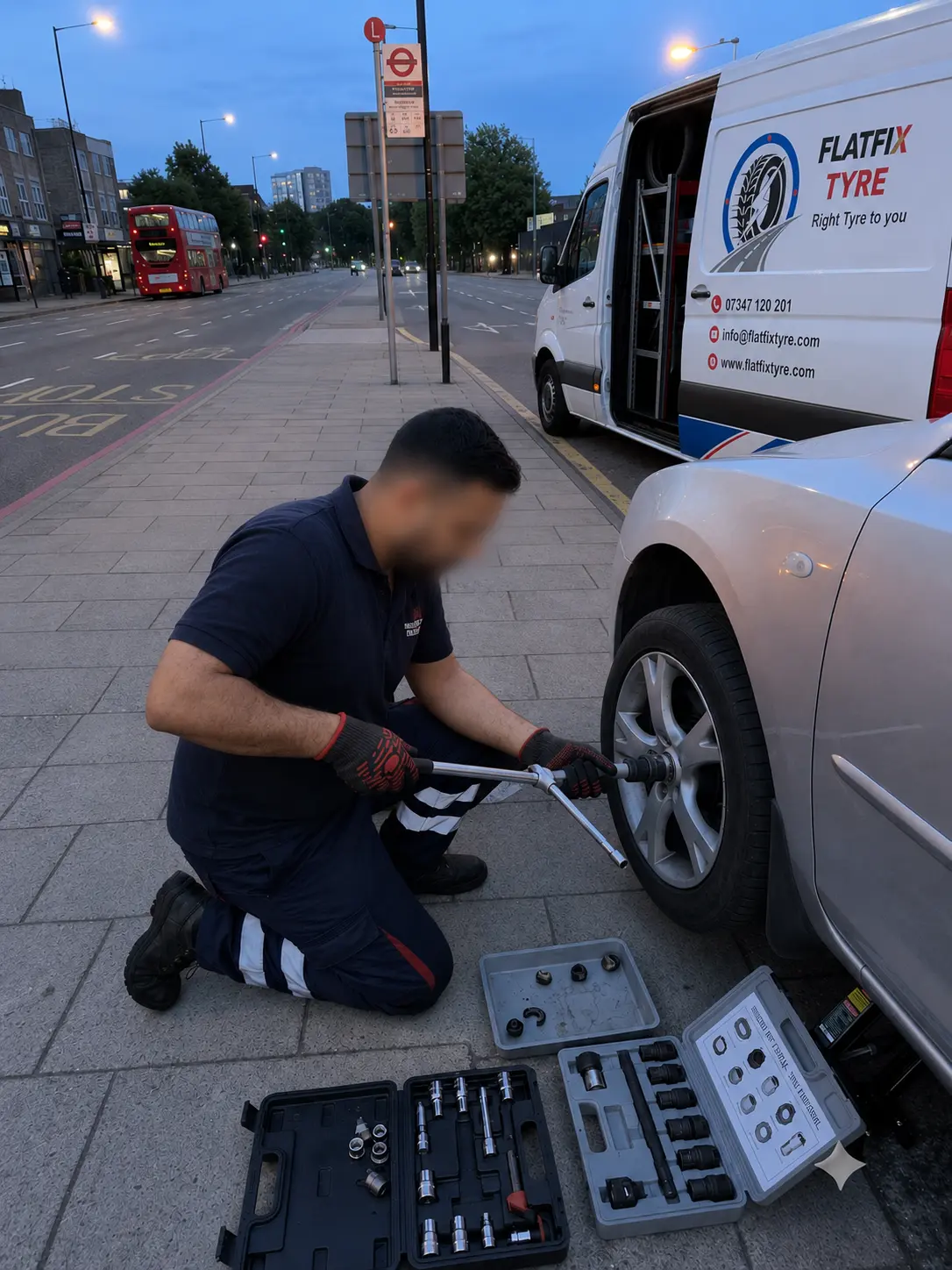
Why Knowing When to Replace Your Car Tyres Matters
Your car tyres are one of the most important safety components on your vehicle. They are the only part of your car that makes direct contact with the road, so their condition can affect braking, steering, handling and overall driving safety.
Tyres do not always fail suddenly. In many cases, they gradually become worn or damaged, giving you warning signs that they may need replacing. Knowing what to look for can help you identify problems before a worn tyre becomes a roadside emergency.
If you are searching for car tyre replacement London , understanding the warning signs can help you decide when it is time to replace your tyres and arrange professional fitting.
FlatFix Tyre provides mobile tyre fitting across London , with technicians able to attend suitable home, workplace, car park and roadside locations.
1. Your Tyre Tread Is Getting Too Low
One of the clearest signs that a tyre may need replacing is reduced tread depth.
For most cars, light vans and light trailers in the UK, the legal minimum tread depth is 1.6 mm across the central three-quarters of the tyre and around the entire circumference.
However, you should not wait until your tyres are at the absolute legal limit before checking their condition or planning a replacement.
As tread wears down, there is less remaining tread available to maintain grip and disperse water from the contact area.
Look at the main grooves running around the tyre. Most modern tyres have tread-wear indicators inside these grooves.
If the tread has worn down close to the indicators, the tyre should be professionally checked.
You can also use a tread-depth gauge for a more accurate measurement. A 20p coin can be used as a quick visual check, but it should not replace a proper tyre inspection.
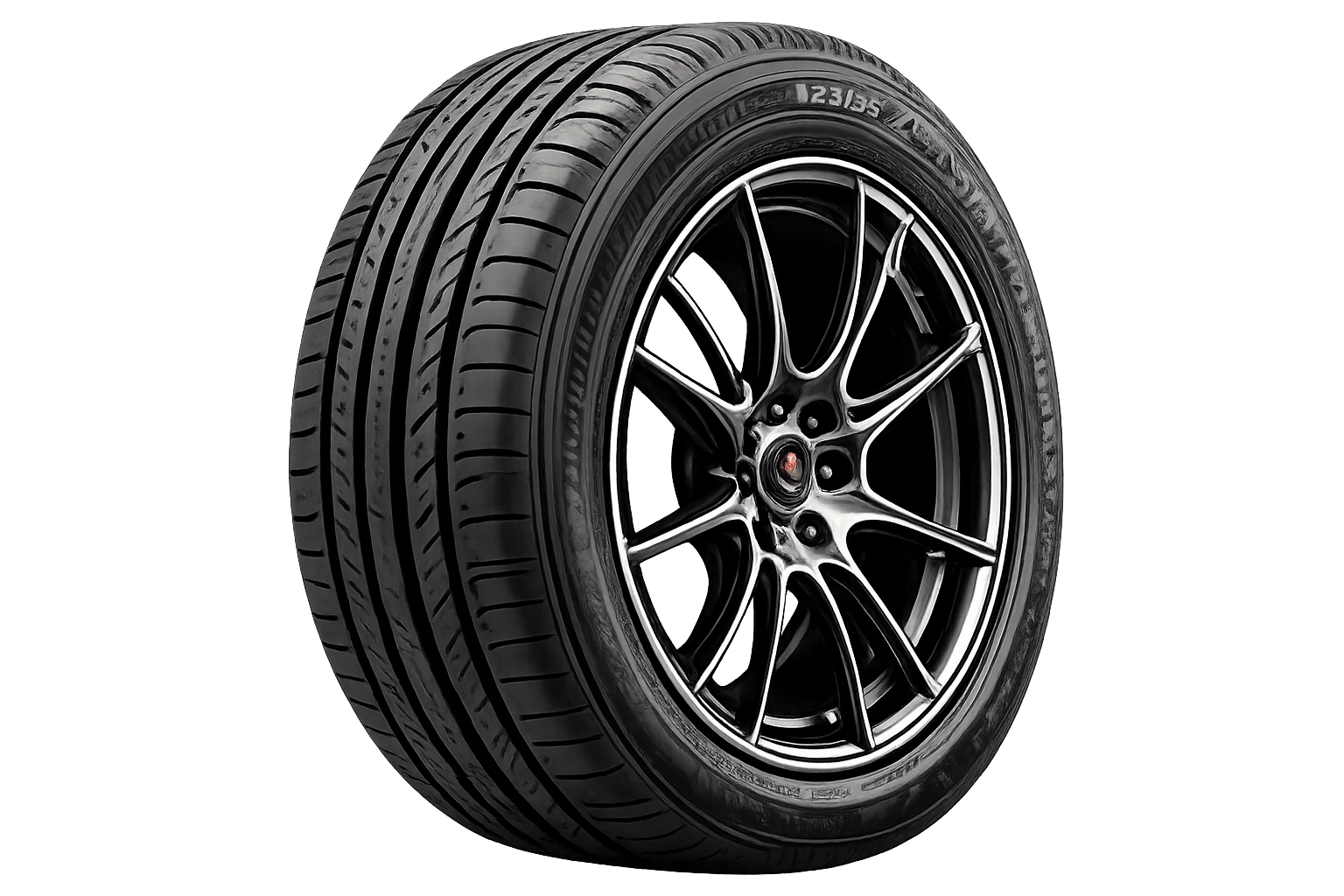
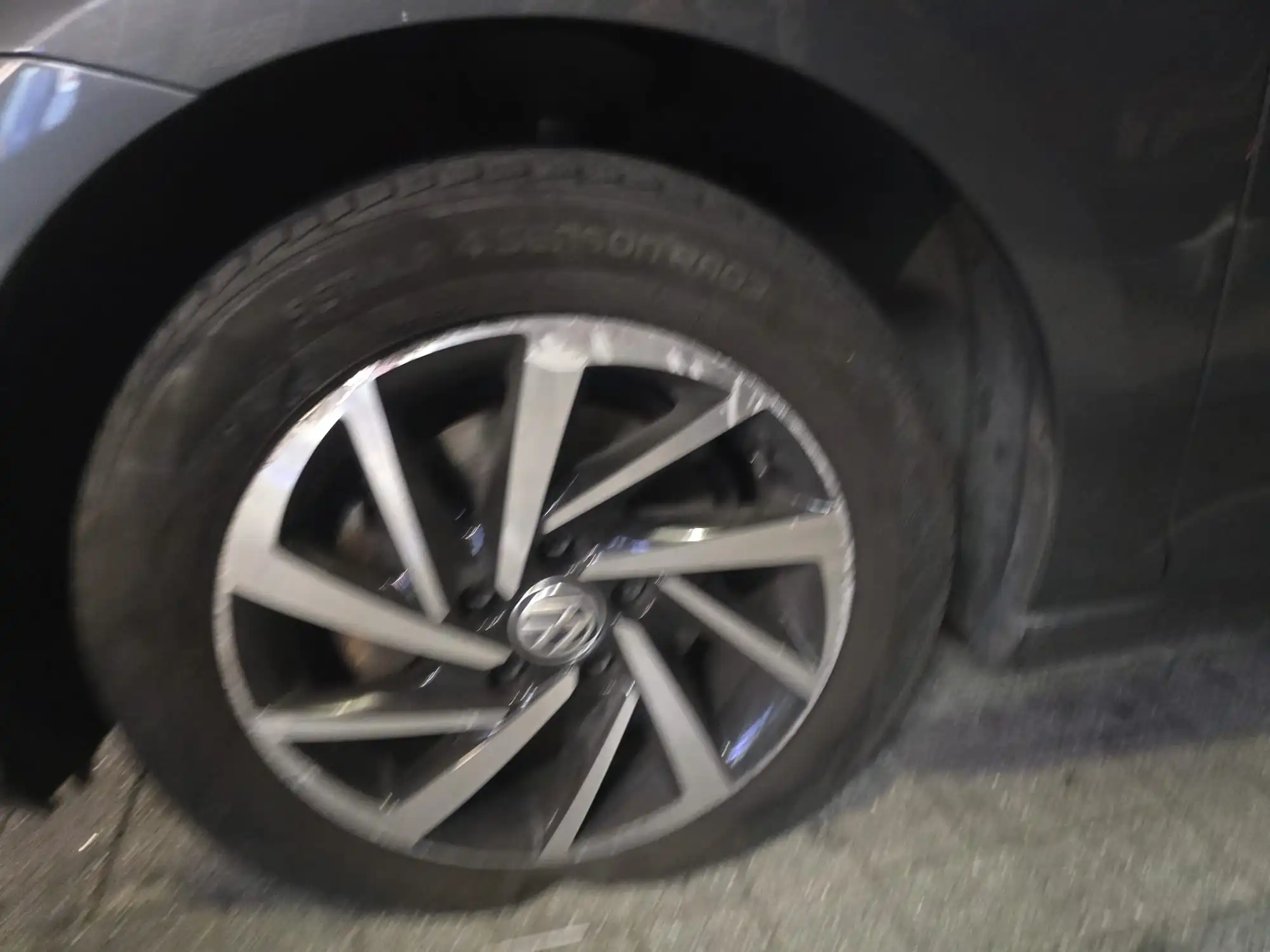 Checking tyre tread can help identify worn tyres before replacement is needed.
2. The Tread-Wear Indicators Are Flush With the Tread
Many tyres have small raised bars inside the main tread grooves called tread-wear indicators.
These indicators help drivers identify when the tyre has reached its minimum tread depth.
When the surrounding tread becomes level with these indicators, the tyre is heavily worn and should be replaced.
Do not judge a tyre only by looking at one section.
Tyres can wear unevenly, meaning one part may have considerably less tread than another.
Check several points around the tyre and across its width.
If you are unsure whether your tyres still have sufficient tread, a professional tyre inspection can help determine whether replacement is appropriate.
3. You Notice Uneven Tyre Wear
Another common warning sign is uneven tread wear.
A tyre should normally wear relatively evenly across its tread. If one side is significantly more worn than another, there may be an underlying issue.
Possible causes can include:
- Incorrect tyre pressures
- Wheel alignment problems
- Suspension issues
- Incorrect wheel balancing
- Regular contact with potholes or kerbs
- Vehicle loading
- Driving conditions
Uneven wear does not necessarily mean the tyre is the only problem.
For example, if the inner edge of a tyre is worn much more heavily than the rest of the tread, simply replacing the tyre may not address the cause.
The vehicle may also require wheel balancing or another mechanical inspection.
If you notice unusual or uneven wear, have the tyre and vehicle checked before fitting a replacement.
4. There Are Cuts, Cracks or Bulges on the Sidewall
Do not ignore visible damage to the tyre sidewall.
Inspect your tyres for:
- Cuts
- Cracks
- Bulges
- Tears
- Exposed cords
- Significant impact damage
A bulge can indicate damage to the tyre's internal structure, while deep cuts or exposed cords can compromise the tyre.
If you find serious sidewall damage, do not assume the tyre can be repaired.
Arrange a professional inspection and avoid driving on a tyre that appears unsafe.
If the damage is a puncture rather than serious sidewall damage, a professional puncture repair inspection can determine whether the tyre is suitable for repair or requires replacement.
5. Your Tyres Keep Losing Pressure
If you repeatedly need to add air to the same tyre, there may be a problem that needs investigating.
Repeated pressure loss can be caused by:
- A puncture
- A damaged valve
- A problem around the wheel rim
- Tyre damage
- Incorrect fitting
- Other air-loss issues
A tyre that is repeatedly losing pressure should not simply be topped up indefinitely.
Driving with incorrect tyre pressure can affect handling, tyre wear and vehicle safety.
If one tyre is losing pressure faster than the others, arrange an inspection to find the cause.
If your vehicle has a tyre pressure monitoring system, professional TPMS checks can help identify whether the system is working correctly.
6. Your Car Feels Different While Driving
Sometimes the first warning sign is not visible on the tyre itself.
You may notice:
- Increased vibration
- Steering pulling to one side
- Reduced handling
- Unusual road noise
- A change in braking feel
- The vehicle feeling less stable
- Vibration through the steering wheel
These symptoms do not automatically mean that the tyres need replacing.
Wheel alignment, balancing, suspension and other vehicle components can also cause similar symptoms.
However, if your vehicle suddenly feels different, it is worth having the tyres and wheels inspected.
A professional inspection can help determine whether you need new tyres, wheel balancing , alignment or another form of repair.
7. Your Tyres Have Been Damaged by a Pothole or Kerb
London driving can involve potholes, raised kerbs, road debris and uneven road surfaces.
A significant impact can damage a tyre even when the damage is not immediately obvious.
After hitting a large pothole or kerb, check for:
- Sidewall bulges
- Cuts
- Cracks
- Loss of tyre pressure
- Uneven tread
- Wheel damage
- New vibration while driving
If you notice anything unusual after an impact, have the tyre inspected.
Do not assume that a tyre is safe simply because it still appears inflated.
If the impact has caused a serious tyre problem and you are safely parked, you can also learn about emergency tyre replacement in London .
8. The Tyres Are Old or Have Been in Use for a Long Time
Tyres do not have one universal replacement date because their condition depends on factors such as use, storage, mileage, climate and maintenance.
However, age is still something worth considering.
As tyres get older, the rubber can deteriorate. You should regularly inspect older tyres for cracking, damage and changes in condition.
You can find the tyre's manufacturing information on its sidewall.
If you are unsure how old a tyre is or whether its condition is acceptable, ask a qualified tyre professional to inspect it.
The important point is that tyre replacement should be based on the tyre's actual condition rather than simply relying on mileage or age alone.
9. The Tyre Has Suffered a Serious Puncture
Not every puncture means you automatically need a new tyre.
Some punctures may be repairable depending on their size, location and the condition of the tyre.
However, a tyre may require replacement if the damage is too severe, located in an unsuitable area or if the tyre has suffered additional damage.
For example, significant sidewall damage is generally a reason to replace rather than repair the tyre.
If you have a puncture, avoid making your own assumptions about whether the tyre is safe to repair. A professional technician should inspect it first.
You can learn more about puncture repair and what to do after suffering a flat tyre.
If you want to understand what to do after suffering a puncture or flat tyre in London, read our guide: what to do if you get a flat tyre on a London road .
10. Your Tyres Are No Longer Performing Well in Wet Conditions
Reduced grip in wet weather can be another reason to have your tyres inspected.
Tread grooves help channel water away from the tyre's contact area. As the tread wears down, the tyre has less tread depth available.
This is particularly important for drivers in London, where wet roads and changing weather conditions are common.
If you notice reduced confidence in wet conditions, excessive road spray or changes in braking and handling, check your tyres.
Remember that road conditions, vehicle condition, speed and driving style also affect stopping distances, so worn tyres should be considered as part of the overall vehicle safety picture.
How Often Should You Check Your Car Tyres?
There is no need to wait until your MOT or annual service to check your tyres.
A simple visual inspection should be part of your regular vehicle checks.
Look for:
- Tread wear
- Uneven wear
- Cuts
- Cracks
- Bulges
- Embedded objects
- Incorrect-looking tyre pressure
- Damage to the sidewall
It is also important to check your tyre pressures according to the vehicle manufacturer's recommended specifications.
Regular tyre checks can help you identify problems earlier and may help prevent an unexpected tyre failure.
If you regularly use your vehicle for business or commercial driving, you can also explore van and commercial tyre fitting for suitable commercial vehicles.
What Is the Legal Minimum Tyre Tread Depth in the UK?
For most cars and light vans, the legal minimum tread depth is 1.6 mm across the central three-quarters of the tread and around the entire circumference of the tyre.
This is the legal minimum, not necessarily the point at which you should first start thinking about tyre replacement.
Tyre condition also matters.
A tyre with sufficient tread may still need replacing if it has serious cuts, bulges, structural damage or another significant defect.
That is why tread depth should always be considered alongside the overall condition of the tyre.
Should You Replace One Tyre or All Four?
The answer depends on the condition of your tyres and the vehicle.
If only one tyre is damaged or worn, replacement of one tyre may sometimes be appropriate.
However, replacing tyres in pairs on the same axle may be recommended depending on the vehicle and the condition of the remaining tyre.
Some vehicles, particularly those with specific four-wheel-drive or all-wheel-drive systems, may have additional requirements regarding tyre size, tread depth and matching.
Always follow your vehicle manufacturer's recommendations and ask a tyre professional if you are unsure.
When replacing a tyre, make sure the replacement has the correct:
- Tyre size
- Load rating
- Speed rating
- Construction
- Specification for your vehicle
You can explore available tyre brands and discuss the correct specification with a tyre professional before ordering.
Why Choose Mobile Car Tyre Replacement in London?
When your tyres need replacing, you do not always need to drive to a tyre centre.
A mobile tyre fitting service can bring the equipment and replacement tyres directly to a suitable location.
This can be particularly useful if you are:
- At home
- At work
- In a car park
- Safely parked roadside
- Dealing with an unexpected tyre problem
With car tyre replacement London , a mobile technician can inspect the tyre, confirm the required replacement and fit the new tyre at your location where the service is suitable.
FlatFix Tyre provides mobile tyre fitting across London, allowing customers to arrange tyre assistance at suitable locations.
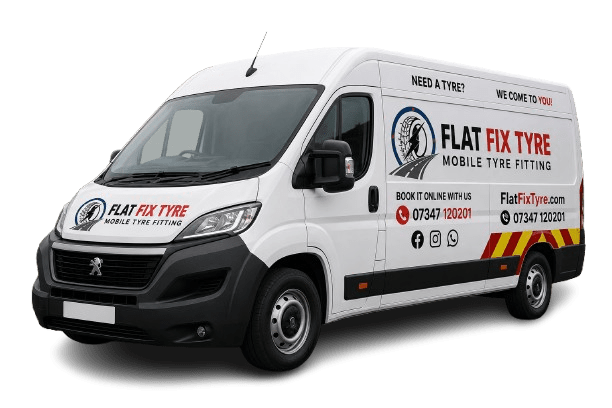 FlatFix mobile technicians can supply and fit replacement tyres at suitable locations across London.
What Happens During a Mobile Tyre Replacement?
The process is designed to make tyre replacement convenient.
Step 1: Contact FlatFix Tyre
Provide your location, vehicle details and tyre requirements.
Step 2: Confirm the Tyre
The technician confirms the appropriate tyre size and specification before fitting.
Step 3: Tyre Removal
The worn or damaged tyre is removed using professional mobile tyre-fitting equipment.
Step 4: New Tyre Fitting
The replacement tyre is fitted to the wheel and inflated to the appropriate pressure.
Step 5: Final Checks
The technician checks the tyre and wheel before completing the job.
Where required, additional services such as wheel balancing can also be considered.
FlatFix Tyre can also provide tyre supply and fit for customers who need replacement tyres.
Why Replace Worn Tyres Instead of Waiting?
Waiting until a tyre becomes completely unusable can leave you with an unexpected breakdown at an inconvenient time.
A tyre that is already showing significant wear or damage may become a bigger problem if ignored.
Replacing tyres before they reach a dangerous or illegal condition can help you avoid unnecessary roadside disruption.
It also gives you an opportunity to choose the correct replacement tyre rather than being forced to deal with an emergency when a tyre fails.
If a tyre has already failed and you need urgent assistance, our emergency tyre replacement service may be more suitable.
How to Choose the Right Replacement Tyre
When replacing your tyres, do not choose based only on price.
Check that the tyre is suitable for your vehicle and matches the manufacturer's required specifications.
Consider:
- Correct tyre size
- Load rating
- Speed rating
- Vehicle requirements
- Driving conditions
- Tyre manufacturer
- Budget
- Intended use
FlatFix Tyre supplies and fits a range of tyre brands and sizes for cars, SUVs, 4x4s and vans.
If you are unsure which tyre is suitable, speak with a tyre professional before ordering and explore the available tyre brands .
Car Tyre Replacement London – FlatFix Tyre
If your tyres are worn, damaged or approaching the end of their usable life, FlatFix Tyre can provide mobile tyre fitting across London.
Instead of taking time out to visit a traditional tyre centre, our mobile service can come to a suitable location such as your home, workplace or safely parked roadside location.
Our tyre services include:
- Mobile tyre fitting
- Car tyre replacement
- Emergency tyre replacement
- Puncture repair
- Wheel balancing
- Run-flat tyre services
- Van and commercial tyre fitting
- Tyre supply and fitting
Whether you need a single replacement tyre or assistance after an unexpected tyre problem, our mobile team can help you arrange the appropriate tyre service.
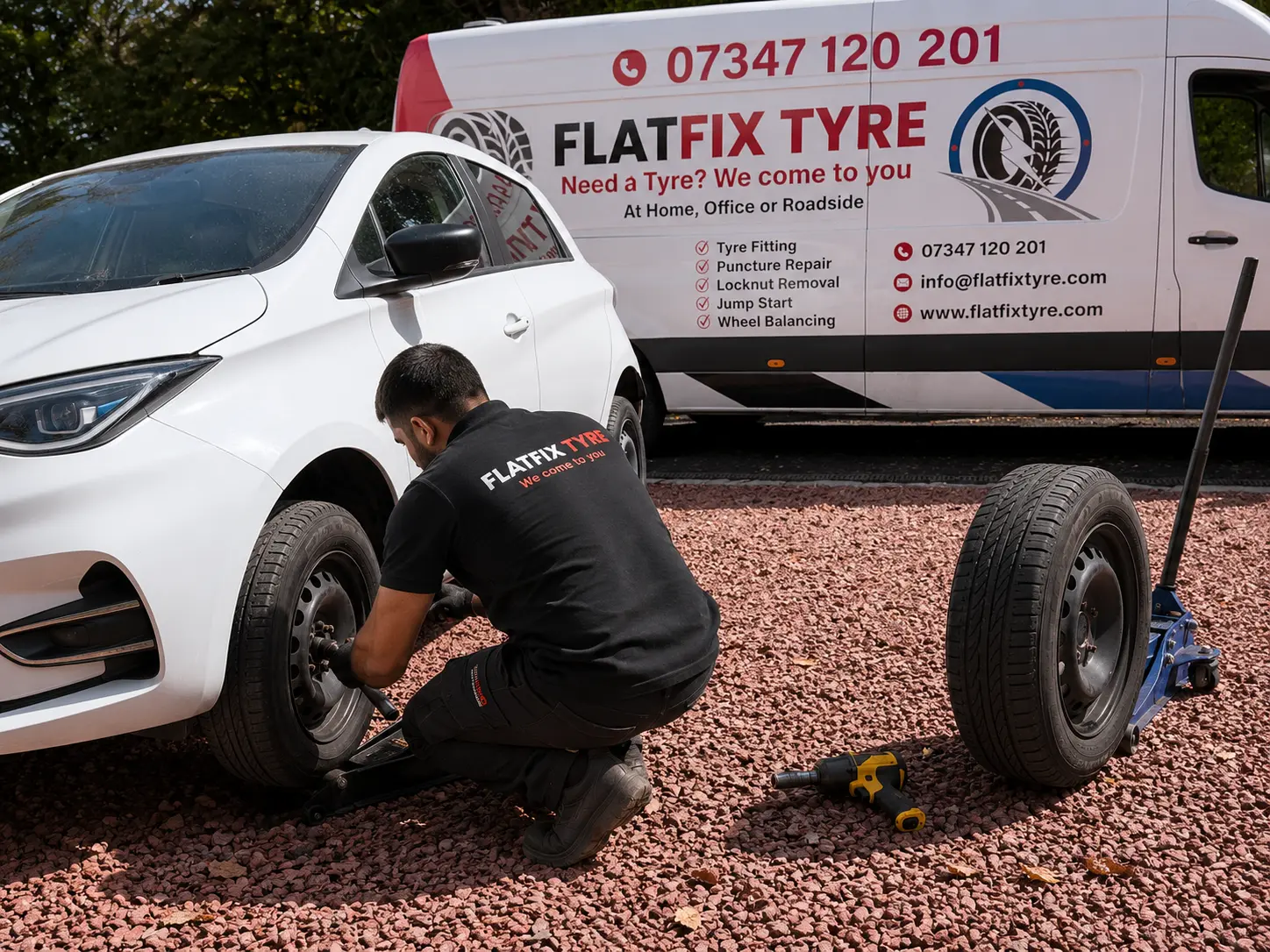 FlatFix Tyre provides mobile tyre replacement at suitable locations across London.
When Should You Replace Your Car Tyres?
There is no single mileage figure that applies to every tyre.
Instead, look at the overall condition of the tyre.
You should arrange a professional inspection if you notice:
- Low or heavily worn tread
- Tread-wear indicators becoming flush with the tread
- Uneven tyre wear
- Cuts or cracks
- Sidewall bulges
- Exposed cords
- Repeated pressure loss
- Serious pothole or kerb damage
- A significant puncture
- Unusual vibration or handling changes
The legal minimum tread depth for most UK cars is 1.6 mm, but tyre condition should also be considered.
If you are unsure about the condition of your tyres, professional inspection is the safest way to determine whether they can continue to be used or need replacing.
Need Car Tyre Replacement in London?
Worn or damaged tyres should not be ignored.
If you think your tyres are approaching the end of their usable life, FlatFix Tyre provides car tyre replacement in London , bringing mobile tyre fitting directly to suitable locations across London.
Whether you need replacement tyres at home, at work or following a tyre emergency, our mobile tyre service is designed to make the process simple and convenient.
Get Mobile Tyre Replacement in LondonFrequently Asked Questions About Car Tyre Replacement
Here are answers to some common questions about worn, damaged and replacement car tyres.
1. How do I know when my car tyres need replacing?
Look for low tread, uneven wear, cuts, cracks, bulges, exposed cords, repeated pressure loss or other visible damage. A professional tyre inspection can determine whether the tyre needs replacing.
2. What is the legal minimum tread depth for car tyres in the UK?
For most cars and light vans, the legal minimum is 1.6 mm across the central three-quarters of the tread and around the entire circumference.
3. Should I replace my tyres at 1.6 mm?
1.6 mm is the legal minimum for most cars, not necessarily the point at which you should first start considering replacement. Tyre condition should also be considered.
4. Can I replace just one tyre?
Sometimes, yes. It depends on the vehicle, the condition of the other tyres and the manufacturer's recommendations. In some circumstances, replacing tyres in pairs on the same axle may be appropriate.
5. Can a damaged sidewall be repaired?
Significant sidewall damage generally requires tyre replacement rather than a repair. A professional tyre technician should inspect the damage before the vehicle is driven.
6. How long do car tyres last?
There is no fixed lifespan that applies to every tyre. Mileage, driving style, road conditions, tyre pressure, storage and age can all affect tyre condition. Regular inspection is more useful than relying on a specific mileage figure.
7. Can I get car tyre replacement at home in London?
Yes. A mobile tyre fitting service can attend suitable home locations. FlatFix Tyre provides mobile tyre fitting and replacement across London.
8. Can FlatFix Tyre replace tyres at my workplace?
Yes. Where the location is suitable and safe for mobile fitting, FlatFix Tyre can provide tyre replacement at workplaces and other suitable locations.
9. Can FlatFix Tyre replace a tyre after a puncture?
Yes. If a punctured tyre is not suitable for repair, a replacement tyre may be fitted depending on availability and the vehicle's requirements. You can also learn more about our puncture repair service .
10. Does FlatFix Tyre provide emergency tyre replacement in London?
Yes. FlatFix Tyre provides mobile emergency tyre replacement across London, subject to tyre availability and a suitable location.
Final Thoughts
Your tyres can gradually become worn without causing an obvious problem until their condition has significantly deteriorated.
Checking tread depth, tyre pressure, sidewalls and overall tyre condition regularly can help you identify problems earlier.
If you notice excessive wear, uneven tread, damage or repeated pressure loss, arrange a professional inspection rather than waiting for the tyre to fail.
For drivers searching for car tyre replacement London , FlatFix Tyre provides a mobile solution, bringing tyre fitting and replacement to suitable locations across London.
Ready to Replace Your Car Tyres?
Contact FlatFix Tyre for mobile tyre replacement at a suitable location across London.
Contact FlatFix Tyre for Mobile Tyre Replacement