- Vans & light commercials
- 24/7 mobile service
- All London
Van Tyres: How to Choose the Right Tyres for Your Commercial Vehicle
Last updated: October 2026
A van only earns money when it is moving. So the right tyres matter more than they do on a family car: they carry heavier loads, work harder in stop-start traffic, and every flat or failed tyre costs you a day.
- Use tyres made for vans, marked with a C on the sidewall
- Never go below the load index your van needs
- Match the tyre to your kind of work, not just the price
- Replace tyres in pairs or sets, and check pressure for your load
If you need van tyre fitting in London, we come to your depot, yard, home or roadside: van tyre fitting London.
Step 1
Read what is on your tyre
Look at the sidewall. A typical van tyre says 215/65 R16 C 109/107 T. Tap each part to see what it means.
215: width in mm
How wide the tyre is, in millimetres.
For vans: it must match what your van is made for. Do not change the size without advice.
65: height as a % of the width
The sidewall height is 65% of the width. A higher number means a taller, softer sidewall.
For vans: this affects ride and fit, so keep it as the manufacturer says.
R: radial
The way the tyre is built. Radial is standard on modern vans.
16: wheel size in inches
The size of the wheel the tyre fits on.
For vans: it must match your wheel exactly.
C: commercial (van) tyre
The most important letter on the tyre. It means the tyre is built to carry the heavier loads of a van.
For vans: look for the C. Car tyres are not built for the same weight, even when the size looks the same.
109/107: load index
The first number is for single wheels and the second for twin (dual) rear wheels. 109 means each tyre can carry up to 1,030 kg.
For vans: never go below the load index your van needs. If your van has single rear wheels, the first number is the one that counts. Use the lookup below to check.
T: speed rating
The top speed the tyre is built for. T means up to 118 mph.
Where to find the right size for your van: the handbook, the inside of the driver's door or door frame, or the fuel flap. Or send us your registration and we will check.
Quick toolWhat does your load index mean in kilos?
Never go below the index your van needs. If you are not sure what it needs, ask us or check the handbook.
Step 2Six questions that choose the tyre for you
How much do you carry?
Check the load index your van needs and never go lower. A tyre with a lower load index than the manufacturer says is unsafe, and it can fail under a full load.
Is it a van tyre or a car tyre?
It should be a van tyre (marked C). Car tyres are not built for the same weight and are not a good swap, even if the size looks the same.
Where do you drive most?
City stop-start, motorway miles, rough sites and yards all wear tyres differently. Use the picker below.
Which season are you driving in?
Summer tyres are fine for most London driving. An all-season tyre (look for the three-peak mountain snowflake mark) is a good middle choice if your van is out all year and you do not want to swap.
What is your budget over time, not just today?
A cheaper tyre that wears out sooner or needs replacing early can cost more per mile than a better one. Think about the cost per mile.
Is it safe and legal?
Tread must be at least 1.6 mm across the central three-quarters of the tyre on vans up to 3,500 kg, and the tyre must be free of cuts, bulges and damage. Do not wait for the legal limit. Many drivers replace earlier, because grip in the wet drops as the tread gets low.
Step 3Which tyre for which job?
What does your van do most?
City courier or delivery
Look for: a tough sidewall and good wear life. Kerbs and stop-start driving are hard on tyres.
Trades with tools and materials
Look for: the right load index, and reinforced tyres. You are carrying weight steadily all day.
Long motorway miles
Look for: stability and low wear, and the correct pressure. A tyre made for high mileage saves money.
Mixed work, sites and yards
Look for: grip on wet or muddy ground and cut resistance. A stronger tread and sidewall, and possibly an all-season tyre.
Run by a fleet
Look for: the same tyre across all vans of the same type, so it is easy to manage, plus regular checks.
The bars show how much each quality matters for that kind of work. They are a guide, not a tyre test result.
PricePremium or budget?
Neither is always right.
Often worth it when
Premium tyres
- The van is loaded most days
- You do high mileage
- Wet-weather grip matters
- You want longer wear
Can make sense when
Budget tyres
- The van does low mileage
- It carries light loads
- It is a short-term vehicle
- The tyre still meets the load index and C marking
What to avoid: the cheapest tyre with the wrong load index. That is never a saving.
We fit a wide range of brands
Send us your registration and we will suggest options for your van.
Avoid theseFive mistakes that cost vans money
See wheel balancing and the signs a vehicle needs it.
Every shiftThe two-minute check before you set off
Know whenWhen to replace a van tyre
- Tread is near the legal limit, or the wet grip feels poor
- A cut, bulge or crack in the sidewall
- Uneven wear
- A puncture that cannot be repaired. See puncture repair
- Repeated pressure loss
- The tyre is old. Some tyre makers advise replacing at around 10 years whatever the tread, and having older tyres inspected. The date is in the four-digit code on the sidewall
Shaking at speed? Read what causes a car to vibrate while driving.
We come to youVan tyre fitting in London: at your depot, yard or roadside
A van in the garage is a van not earning. That is why our van tyre fitting London service comes to you.
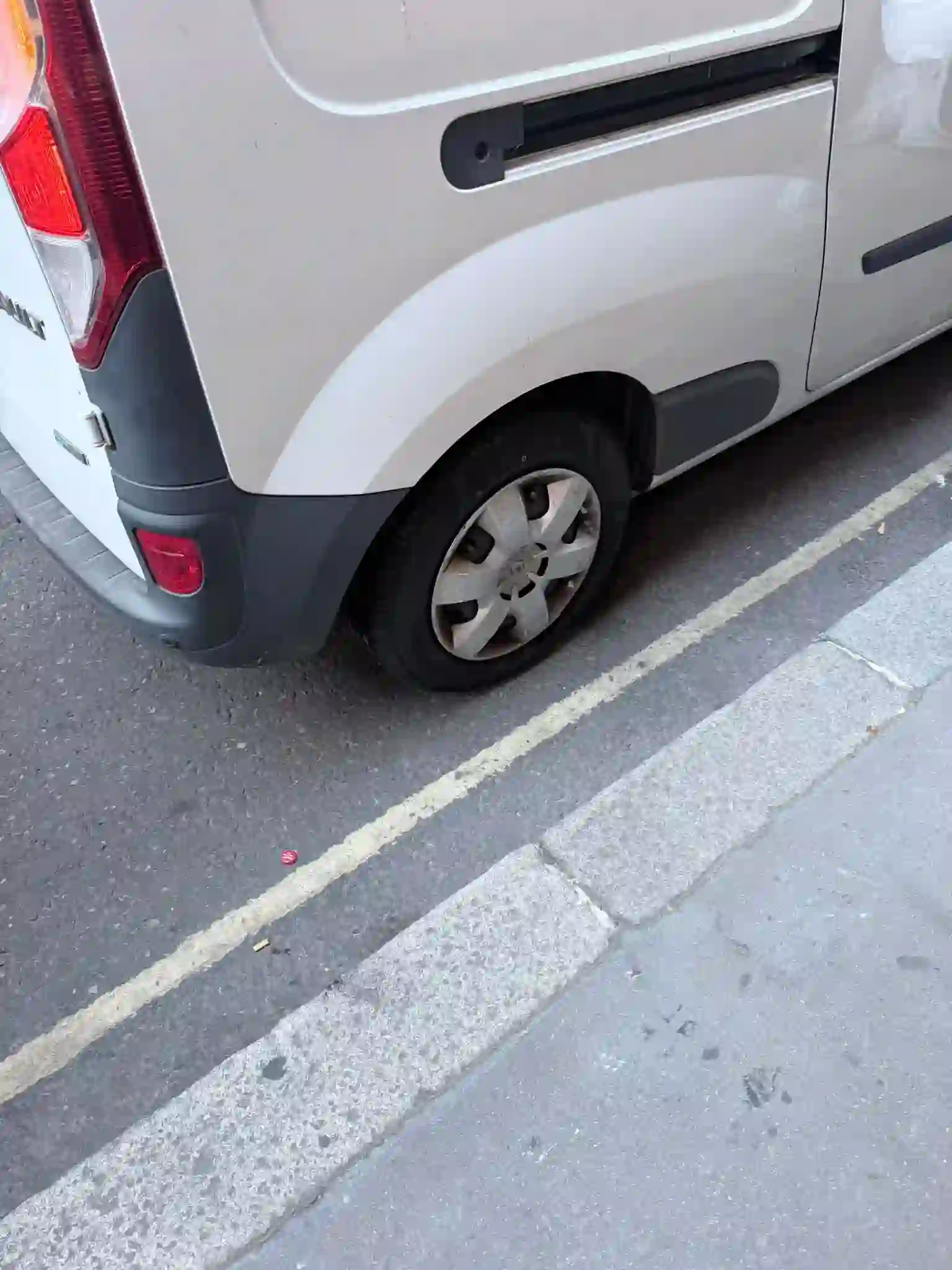
- 24/7, day or night, with a typical arrival of 15 to 30 minutes
- At your depot, yard, workplace, home or a safe roadside spot
- Fitting and replacement on vans and light commercial vehicles
- Balancing and TPMS checks in the same visit: wheel balancing, TPMS checks
- Emergency help if a tyre fails mid-job: emergency tyre replacement and roadside assistance
Drive a Transit, Sprinter, Vivaro, Transporter, Trafic, Ducato or Partner?
We cover all 32 London boroughs. See all areas we cover, or mobile tyre fitting in Harrow. New to mobile fitting? Read why every London driver needs to know about 24/7 mobile tyre fitting.
Quick answersQuick questions
Do vans need special tyres?
Yes. Van tyres are marked with a C and built to carry heavier loads than car tyres.
What does the C on a van tyre mean?
It means it is a commercial tyre, made for the weight and workload of vans.
What does a load index of 109/107 mean?
The first number is for single wheels and the second for twin wheels. 109 means each tyre can carry up to 1,030 kg.
Can I put car tyres on my van?
It is not a good idea. Car tyres are not built for the same loads, and the load index must meet what your van needs.
How do I find the right size for my van?
Check the sidewall, the handbook or the driver's door frame. Or send us your registration and we will confirm it.
How often should I check van tyre pressure?
At least weekly, and whenever your load changes. Many vans need a higher pressure when fully loaded.
What is the legal minimum tread on a van?
For vans up to 3,500 kg it is 1.6 mm across the central three-quarters of the tyre. Many drivers replace earlier.
Can you fit van tyres at my depot or home?
Yes. We come to your depot, yard, workplace, home or a safe roadside spot. See van tyre fitting London.
How much does it cost to fit van tyres in London?
It depends on the tyre and the van. Send us your registration and tyre size, and we will quote you before any work starts.
Van tyre due or failed right now?
Tell us your location, your van and what the tyre looks like. We will come to you. Running several vans? Ask us about visiting your depot.