What to Do If You Get a Tyre Blowout on the Motorway
What to Do If You Get a Tyre Blowout on the Motorway
A tyre blowout on the motorway can be one of the most frightening problems a driver can experience. A sudden bang, loss of steering control, vibration or rapid loss of tyre pressure can happen without much warning, leaving you unsure what to do next.
Knowing how to react can make a significant difference.
If you experience a tyre blowout on the motorway, your first priority should always be safety. Do not immediately attempt to inspect the tyre, change the wheel or continue driving simply because you are trying to reach the next garage. A damaged tyre can affect the vehicle's stability, braking and steering, particularly at motorway speeds.
The correct response depends on where your vehicle stops, whether you can safely move away from live traffic and whether you can reach a place of relative safety.
In the UK, the Highway Code advises motorists with a motorway breakdown or vehicle problem to try to leave the carriageway at the next exit or reach a service area where possible.
If that is not possible, drivers should move left towards an emergency area or hard shoulder where available, switch on hazard warning lights and get themselves and passengers away from moving traffic if it is safe to do so.
Do not attempt tyre repairs or a tyre change in a dangerous motorway location. If your vehicle remains in a live lane or you cannot safely reach a place of relative safety, emergency services should take priority.
This guide explains exactly what to do after a motorway tyre blowout, when to call tyre blowout roadside assistance, whether you can drive after a blowout and how to reduce the chances of experiencing another tyre emergency.
What Is a Tyre Blowout?
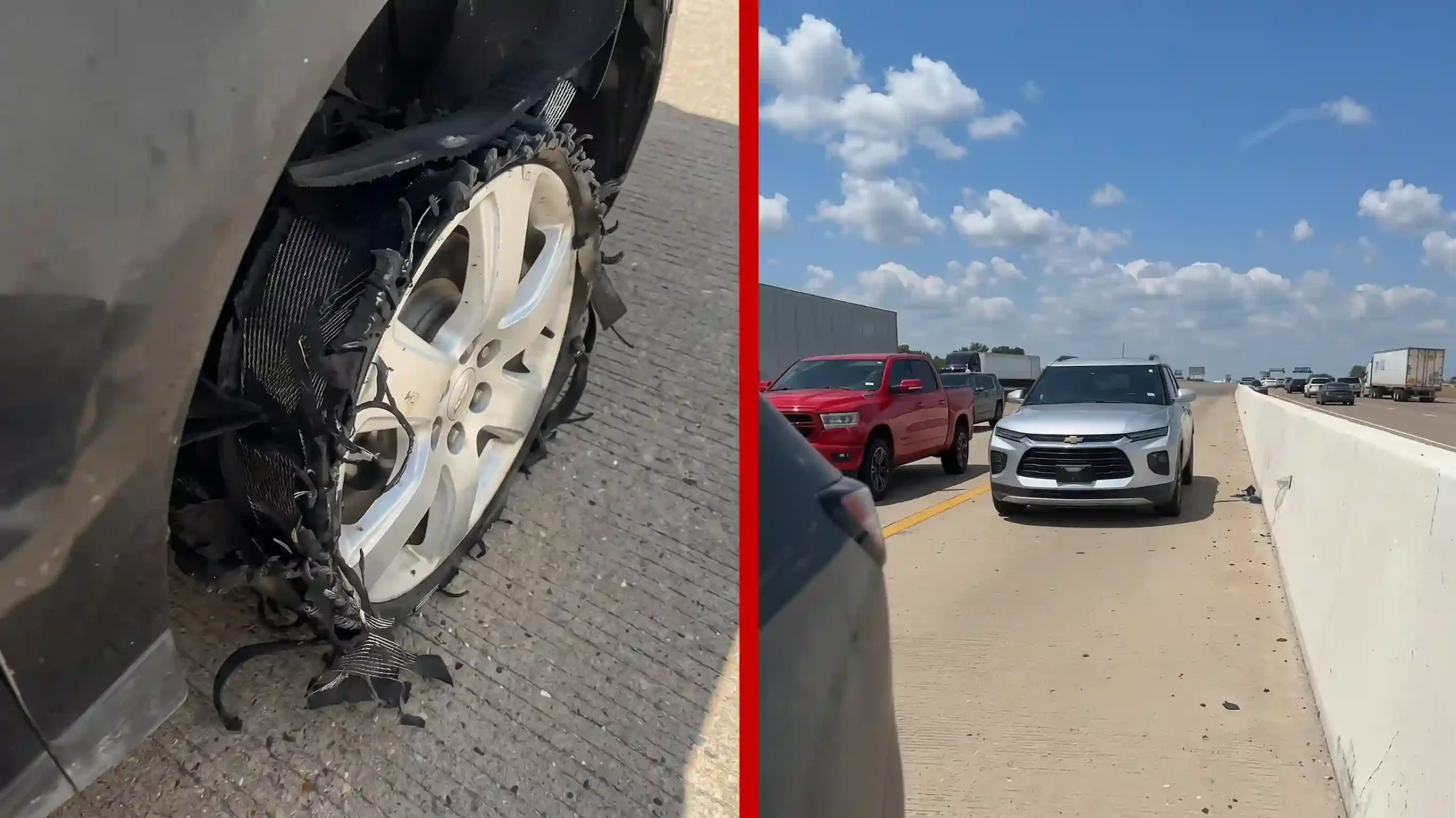
A tyre blowout is a sudden and significant failure of a tyre.
Unlike a slow puncture, where the tyre gradually loses air, a blowout can cause a rapid loss of air pressure and may involve damage to the tyre's tread, sidewall or internal structure.
Drivers may experience several warning signs, including:
- A loud bang or popping sound
- Sudden loss of tyre pressure
- Heavy vibration
- Pulling or instability
- Difficulty maintaining the vehicle's direction
- A change in steering response
- Flapping or unusual tyre noise
- Pieces of damaged rubber around the wheel
- A tyre pressure warning
- Visible damage to the tyre
A blowout does not always happen because of one single cause. Tyre age, under-inflation, excessive wear, impact damage, overheating, overloading and previous damage can all contribute to tyre failure.
The important thing is that once a tyre has suffered a serious blowout, it should not simply be treated as an ordinary puncture.
What Should You Do If You Get a Tyre Blowout on the Motorway?
If you experience a blowout, try to remain calm.
Your immediate objective is to keep control of the vehicle and move to a safer location if you can do so without creating additional danger.
The safest response depends on whether your vehicle remains controllable and whether you can reach a place of relative safety without crossing traffic lanes dangerously.
Step 1: Stay Calm and Keep Control
A sudden blowout can cause the vehicle to feel unstable.
Do not make sudden steering movements.
Keep both hands firmly on the steering wheel and concentrate on maintaining a controlled direction.
Avoid sudden braking unless braking is necessary to prevent an immediate collision.
A sudden steering input or harsh braking manoeuvre can make an already unstable vehicle harder to control.
Instead, gradually reduce your speed while maintaining control of the vehicle.
Step 2: Turn on Your Hazard Warning Lights
Once you have identified that the vehicle has suffered a serious tyre problem, switch on your hazard warning lights as soon as it is safe to do so.
This helps alert other motorists that your vehicle has a problem.
If it is dark or visibility is poor, additional vehicle lighting may also be appropriate.
Step 3: Move Towards the Left If It Is Safe
If the vehicle remains controllable, gradually move towards the left-hand side of the motorway.
Where possible, you should try to reach:
- A motorway service area
- An emergency area
- The hard shoulder where available
- Another suitable place of relative safety
The safest option may be to leave the motorway at the next exit or enter a service area if you can do so safely.
Do not attempt to cross several lanes suddenly.
Your priority is to reach a safer position without putting yourself or other road users at additional risk.
What If Your Tyre Blowout Happens in a Live Lane?
This is one of the most important situations to understand.
Sometimes a tyre blowout can leave a vehicle unable to reach the hard shoulder or emergency area.
If your vehicle is stopped in a live motorway lane and you cannot safely move it to a place of relative safety, do not attempt to get out into moving traffic.
If you cannot get your vehicle into the left lane or a place of relative safety and cannot safely exit, remain in the vehicle with your seat belt fastened and hazard warning lights on and call 999, asking for the police.
This is a situation where emergency services take priority over arranging an ordinary tyre repair.
Do not attempt to walk across motorway lanes.
Do not attempt to retrieve items from the boot.
Do not attempt to repair the tyre.
Do not place yourself between your vehicle and moving traffic.
What If You Reach the Hard Shoulder?
If you can safely reach the hard shoulder, stop as far to the left as possible while leaving yourself a safe way to exit the vehicle.
Switch on your hazard warning lights.
The hard shoulder is not completely safe simply because it is separated from the main carriageway. High-speed traffic can still pass very close to the vehicle.
Keep well away from moving traffic and, where it is safe and possible, exit through the side furthest from traffic.
Do not assume that you should always remain beside the vehicle.
If you can safely get behind a safety barrier, that may provide greater protection from moving traffic.
What If There Is No Hard Shoulder?
Many motorway sections do not have a conventional hard shoulder.
Instead, there may be emergency areas located at intervals along the motorway.
These areas are marked with blue signs featuring an orange SOS telephone symbol.
If your vehicle develops a problem, use an emergency area if you can reach one safely.
Emergency areas are specifically designed for emergency situations and provide a safer place to stop than remaining in a live lane.
If you stop in an emergency area, follow the instructions provided and use the emergency telephone where required before rejoining the motorway.
Should You Get Out of the Car After a Motorway Tyre Blowout?
This depends on your location and whether you can exit safely.
If your vehicle is safely positioned in a place of relative safety and you can exit through the side furthest from traffic, you should generally move away from the vehicle and moving traffic.
If you cannot safely exit the vehicle, stay inside with your seat belt fastened and call 999 if necessary.
Do not put yourself in a more dangerous position simply because you have suffered a tyre failure.
Do not attempt repairs on a motorway and remain well away from moving traffic where it is safe to do so.
Never Try to Change a Tyre in a Dangerous Motorway Location
Many drivers carry a spare wheel, jack or tyre repair kit.
However, having the equipment does not mean it is safe to use it.
A motorway is very different from a residential road or driveway.
Vehicles may pass at high speed only a short distance away, and drivers may not always notice a stationary vehicle in time.
For this reason, you should not attempt a roadside tyre change if doing so would put you or your passengers in danger.
A tyre should only be changed when it can be done without putting yourself or others at risk. Otherwise, a breakdown service should be called.
Do Not Put a Warning Triangle Behind Your Vehicle on a Motorway
One common mistake is assuming that a warning triangle should be placed behind every broken-down vehicle.
That is not appropriate on a motorway.
Do not walk along the motorway carriageway to place one behind your vehicle.
Use your hazard warning lights and follow the motorway breakdown procedure instead.
What Causes a Tyre Blowout on the Motorway?
Tyre blowouts can happen for several reasons.
Understanding the common causes can help you identify problems before they become serious.
1. Under-Inflated Tyres
Driving with insufficient tyre pressure can increase stress and heat within the tyre.
This can contribute to tyre damage and premature failure.
Tyre pressures should be checked regularly and according to the vehicle manufacturer's recommended specifications.
Check pressures before a journey when the tyres are cold.
2. Excessive Tyre Wear
A tyre with heavily worn tread may have reduced grip and reduced ability to deal with road conditions.
As tyres age and wear, drivers should monitor:
- Tread depth
- Uneven wear
- Cracks
- Cuts
- Bulges
- Exposed material
- Other visible damage
If a tyre is approaching the end of its usable life, replacing it before a long motorway journey can reduce the risk of an unexpected tyre problem.
3. Sidewall Damage
Sidewall damage can be particularly serious.
A tyre may suffer sidewall damage after:
- Hitting a kerb
- Driving over a pothole
- Contact with road debris
- Striking another object
Some damage may be visible, while other damage can be harder to identify.
If you notice a bulge, deep cut or other significant sidewall defect, have the tyre professionally inspected.
4. Pothole Damage
A severe pothole impact can damage the tyre and wheel.
You may notice:
- A vibration
- Steering changes
- Pressure loss
- A bulge
- Visible tyre damage
- Wheel damage
If a tyre starts losing pressure after hitting a pothole, do not simply keep inflating it and continue driving without investigating the cause.
5. Overloading
Carrying excessive weight can place additional stress on tyres.
Before a long journey, particularly when carrying several passengers and luggage, check that your vehicle is loaded within the manufacturer's recommended limits.
Correct tyre pressures may also vary depending on vehicle load.
6. Tyre Age and Deterioration
Tyres can deteriorate over time, even when the vehicle is not driven frequently.
Environmental exposure, storage conditions and age can contribute to rubber deterioration.
This is why tyre condition should be assessed based on more than tread depth alone.
7. Previous Tyre Damage
A tyre that has previously suffered significant damage may have underlying problems that are not immediately visible.
For example, driving on a severely under-inflated tyre can cause internal damage.
If you have experienced a serious puncture or driven on a flat tyre, professional inspection can help determine whether the tyre remains suitable for use.
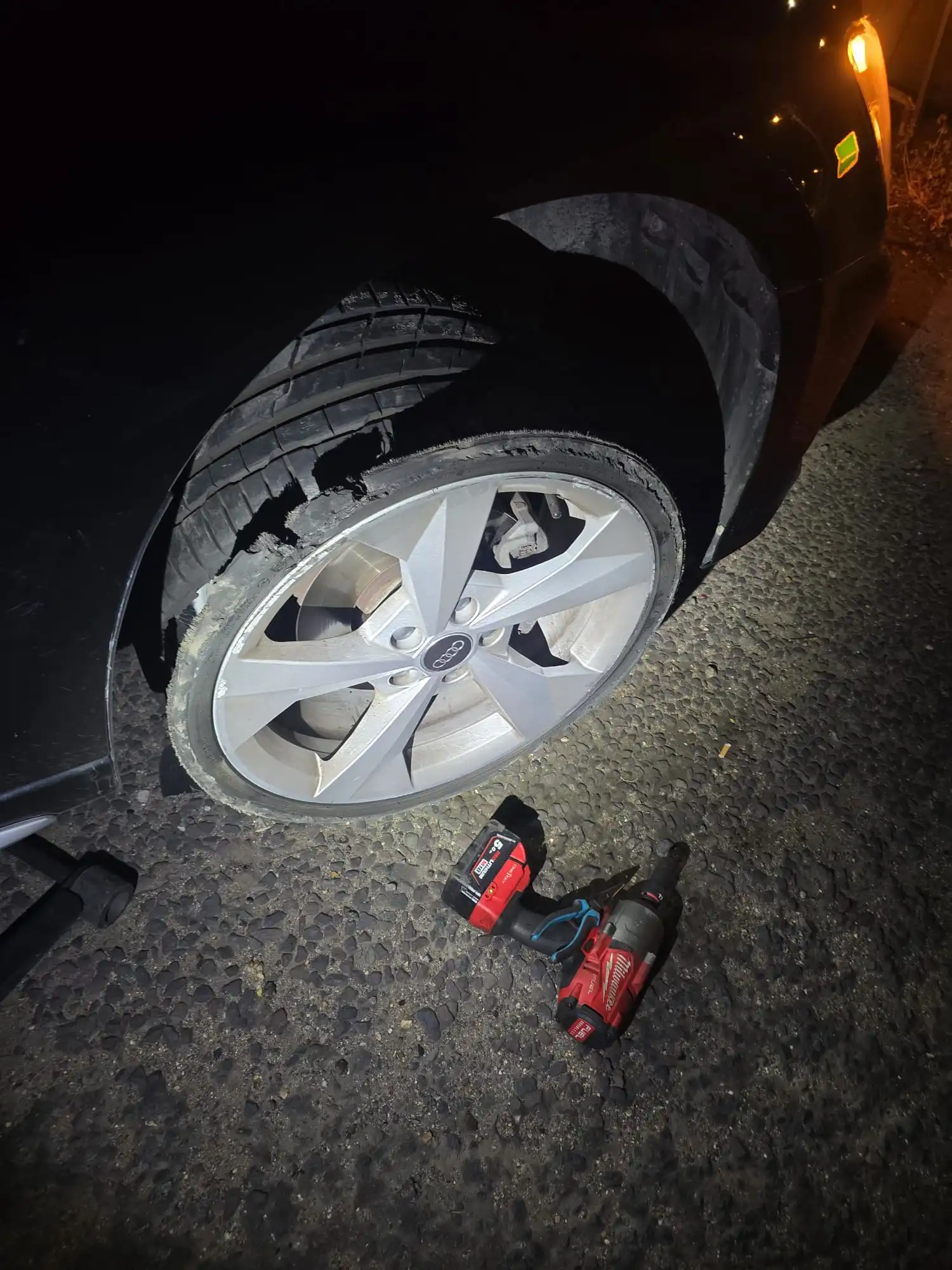 Regular tyre inspections can help identify damage, wear and pressure problems before a serious tyre failure.
What Does a Tyre Blowout Feel Like?
A tyre blowout can feel different depending on which tyre has failed.
You might notice:
- A loud bang
- Sudden vibration
- Steering becoming heavier
- The vehicle pulling to one side
- A feeling that the vehicle is unstable
- A rapid drop in tyre pressure
- Flapping sounds
- Difficulty maintaining a straight line
The vehicle may also feel different depending on whether the affected tyre is on the front or rear axle.
The important point is that any sudden and unexplained change in vehicle behaviour at motorway speed should be treated seriously.
Can You Drive After a Tyre Blowout?
In most cases, you should not plan to continue driving normally after a serious tyre blowout.
A tyre that has suffered a blowout may have structural damage and may no longer be capable of safely supporting the vehicle.
Driving further can also damage the wheel.
The appropriate action is to get the vehicle into a safe location if it remains controllable and then arrange professional assistance.
If the vehicle cannot be moved safely, emergency or motorway recovery assistance may be required.
What Is Tyre Blowout Roadside Assistance?
Tyre blowout roadside assistance refers to help provided when a vehicle suffers a serious tyre failure away from a normal tyre-fitting location.
Depending on the location and circumstances, assistance may involve:
- Assessing the tyre
- Replacing a damaged tyre
- Supplying a suitable replacement tyre
- Carrying out mobile tyre fitting
- Checking the wheel
- Checking tyre pressure
- Assessing additional tyre damage
- Advising whether recovery is required
A standard mobile tyre service is not a substitute for motorway emergency services.
If your vehicle is in a live motorway lane, in a dangerous position or you cannot safely exit the vehicle, contact the appropriate emergency services first.
Once the vehicle is safely accessible, a suitable mobile tyre service may be able to assist with the tyre itself.
When Should You Call Emergency Services Instead of a Tyre Service?
There are situations where you should call 999 rather than treating the problem as a normal tyre replacement.
Call emergency services if:
- Your vehicle is stopped in a live motorway lane
- You cannot safely move away from traffic
- You cannot safely exit your vehicle
- There has been a collision
- Someone is injured
- Your vehicle is creating an immediate danger
- Debris is creating a serious road hazard
- You believe your life or another person's life is in danger
If you cannot safely exit a vehicle or reach a place of relative safety, stay inside, keep your seat belt and hazard lights on and call 999.
When Can a Mobile Tyre Service Help?
Once the vehicle is in a suitable and safe location, a mobile tyre service can be useful for tyre-related problems.
For example, you may have reached:
- Your home
- A workplace
- A private car park
- A service area
- A suitable roadside location
- Another safe location away from moving traffic
A mobile technician can then assess the tyre and determine whether repair or replacement is appropriate.
FlatFix Tyre provides mobile tyre fitting across London for suitable vehicles and locations.
Emergency Tyre Replacement After a Blowout
A serious blowout will often mean that the tyre needs to be replaced rather than repaired.
Replacement may be required when the tyre has:
- Severe sidewall damage
- Major structural damage
- A large tear
- Significant tread damage
- Been driven while severely under-inflated
- Suffered damage that cannot safely be repaired
FlatFix Tyre provides emergency tyre replacement for suitable vehicles and locations.
The replacement tyre should be suitable for the vehicle and meet the required size and specification.
Can a Blowout Tyre Be Repaired?
A genuine blowout is generally very different from a small, repairable tread puncture.
A puncture may sometimes be repairable if the damage is suitable and the tyre remains structurally sound.
However, serious damage to the sidewall or internal structure can make a tyre unsuitable for repair.
FlatFix Tyre also provides puncture repair where the tyre is suitable for a safe repair.
A professional inspection should be carried out before deciding whether repair or replacement is appropriate.
What If the Wheel Is Damaged Too?
A motorway tyre blowout can sometimes result in damage to the wheel.
This may be particularly relevant if the original tyre failure followed:
- A pothole impact
- A kerb strike
- Road debris
- A collision
Signs of possible wheel damage include:
- Persistent vibration
- Repeated tyre pressure loss
- Visible deformation
- Difficulty maintaining pressure
- Changes in steering behaviour
Replacing the tyre alone may not solve the problem if the wheel has also been damaged.
This is why the wheel should be checked as part of the overall assessment.
What If the Tyre Pressure Warning Comes On?
A tyre pressure monitoring system can alert you when pressure falls below an expected level.
If a TPMS warning appears while travelling on a motorway, do not automatically assume that it is only a sensor problem.
The tyre itself may have:
- A puncture
- A slow leak
- Structural damage
- A valve issue
- A pressure problem
Reduce your speed safely and find a suitable place to stop.
If the tyre appears damaged or has lost significant pressure, arrange professional assistance rather than continuing the journey unnecessarily.
FlatFix Tyre also provides TPMS checks for suitable vehicles.
What If You Have Run-Flat Tyres?
Run-flat tyres are designed to provide limited mobility after pressure loss under specific conditions.
However, run-flat technology does not mean that a driver can ignore a tyre warning or continue driving indefinitely.
You should follow your vehicle manufacturer's instructions regarding the permitted speed and distance after pressure loss.
If a run-flat tyre has suffered damage, it should be professionally assessed.
FlatFix Tyre provides services for suitable run-flat tyre requirements.
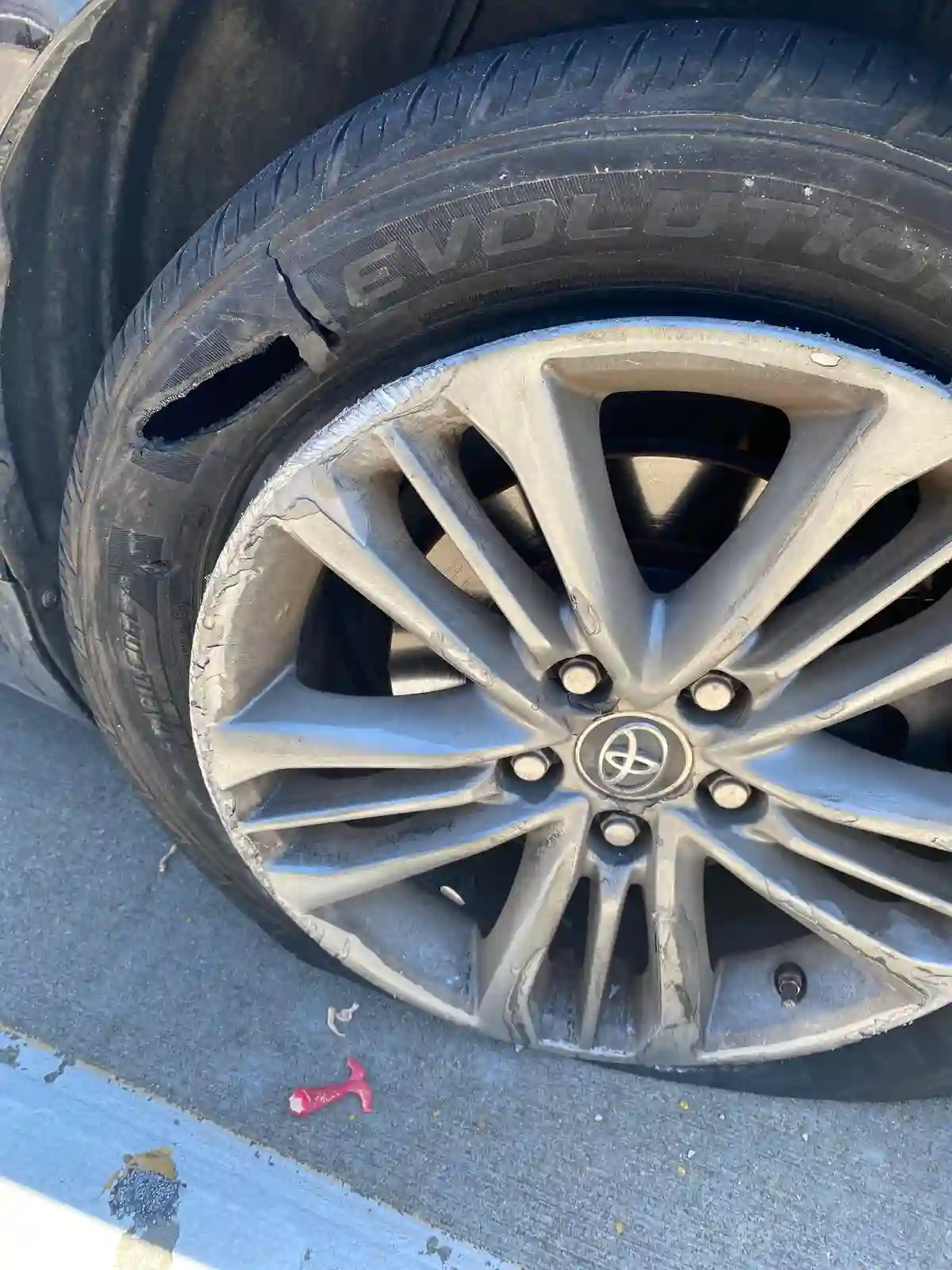 Professional tyre inspection can help determine whether a damaged tyre requires repair or replacement.
How Can You Reduce the Risk of a Motorway Tyre Blowout?
Although not every tyre failure can be prevented, regular maintenance can reduce the likelihood of serious tyre problems.
Check Tyre Pressure Regularly
Correct tyre pressure is important for handling, braking and tyre performance.
Check pressures when the tyres are cold and follow the manufacturer's recommended settings.
Check Tread and Tyre Condition
Look for:
- Uneven tread wear
- Cuts
- Cracks
- Bulges
- Embedded objects
- Excessive wear
- Visible damage
Do not rely on tread depth alone.
Inspect Tyres Before Long Motorway Journeys
Before a long journey, spend a few minutes checking the tyres.
This is particularly important before:
- Holiday trips
- Airport journeys
- Long-distance business travel
- Motorway-heavy journeys
- Driving with a heavily loaded vehicle
A problem that is easier to deal with at home can become much more difficult when you are travelling at motorway speed.
What Should You Carry in Your Car?
Being prepared can make a breakdown less stressful.
Useful items may include:
- A charged mobile phone
- Breakdown provider details
- A high-visibility jacket
- A torch
- Water
- Basic vehicle information
- Vehicle registration details
- Insurance and breakdown information
However, carrying tools does not mean you should attempt a repair in an unsafe motorway location.
Only change a tyre if it can be done without putting yourself or others at risk.
Tyre Blowout on the M25, M1, M4, M40 or Other Motorways
London drivers can experience tyre emergencies on a wide range of major routes.
A blowout may happen while travelling on:
- M25
- M1
- M4
- M40
- M3
- M11
- M20
- M23
- M2
- A1 and other high-speed routes
The exact motorway does not change the basic safety principle.
First, get the vehicle to a safe location if you can do so safely.
Then get yourself and your passengers away from moving traffic where possible.
Then arrange appropriate assistance.
Do not prioritise reaching a tyre centre over your own safety.
Can FlatFix Tyre Come to a Motorway Blowout?
FlatFix Tyre provides mobile tyre services across London and surrounding areas.
If your vehicle has suffered a blowout on a live carriageway, follow the Highway Code and motorway safety procedures first.
If emergency services or motorway recovery are required to make the location safe, those services should take priority.
Once the vehicle is in a suitable location where a technician can safely work, a mobile tyre service may be able to provide tyre assistance.
This may include:
- Mobile tyre fitting
- Emergency tyre replacement
- Puncture assessment
- Puncture repair where appropriate
- Tyre pressure checks
- TPMS checks
- Run-flat tyre services
- Wheel and tyre checks
You can learn more about the full range of mobile tyre services from FlatFix Tyre .
Where Does FlatFix Tyre Cover?
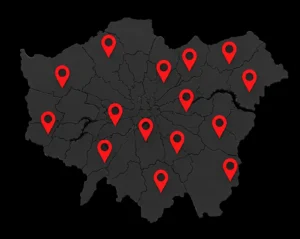
FlatFix Tyre provides mobile tyre services across London and suitable surrounding areas.
The service can be useful for drivers who need tyre assistance at locations such as home, workplace, private car parks and suitable roadside locations.
For the full list of locations covered by FlatFix Tyre, visit our Areas We Cover page.
When requesting assistance, always provide your exact location so the technician can determine whether the vehicle is in a suitable place for the requested service.
What Information Should You Give When Calling for Tyre Blowout Assistance?
When your vehicle is safely positioned, providing accurate information can help the tyre service understand what you need.
Your Exact Location
Tell the technician where the vehicle is located.
If you are in a service area, car park or another identifiable location, provide the name if known.
Your Vehicle Details
Provide:
- Vehicle make
- Vehicle model
- Registration number
- Vehicle type
Tyre Information
If you know it, provide:
- Tyre size
- Tyre brand
- Tyre type
- Run-flat specification
- Load rating
- Speed rating
What Happened?
Explain:
- Whether there was a loud bang
- Whether the tyre is completely flat
- Whether you hit a pothole
- Whether you hit a kerb
- Whether there is visible damage
- Whether the wheel is damaged
- Whether the vehicle is currently safely parked
This information can help the technician understand whether you are likely to need a tyre replacement, puncture assessment or another service.
How Long Does Emergency Tyre Assistance Take?
There is no single response time that applies to every motorway tyre emergency.
The time can depend on:
- Your location
- Traffic
- Accessibility
- Tyre availability
- Vehicle type
- Tyre size
- Time of day
- Weather
- Whether the vehicle is already in a safe location
- Whether recovery or emergency services are required first
If your vehicle is safely positioned, ask the tyre service for an estimated arrival time when arranging assistance.
Why You Should Not Ignore a Damaged Tyre
A tyre problem that appears minor can become more serious if it is ignored.
Continuing to drive with a damaged or severely under-inflated tyre may result in:
- Further tyre damage
- Wheel damage
- Poor handling
- Reduced braking performance
- Additional vehicle damage
- Increased risk of losing control
Under-inflated or over-inflated tyres can adversely affect braking and steering.
If something does not feel right after a tyre impact or pressure warning, have the vehicle checked rather than assuming the problem will disappear.
Common Mistakes After a Motorway Tyre Blowout
Trying to Drive to the Next Garage
A severely damaged tyre should not automatically be driven to a garage.
Trying to Change the Tyre on the Motorway
Do not attempt a tyre change if the location is dangerous.
Standing Beside the Vehicle
A stationary vehicle on the motorway can still be struck by another road user.
Walking Along the Motorway
Do not walk along live motorway lanes to find help or place warning devices.
Placing a Warning Triangle on the Motorway
Warning triangles should not be placed on motorways.
Continuing to Drive on a Run-Flat Without Checking the Limits
Run-flat tyres still have specific operating limitations.
Ignoring a TPMS Warning
A warning may indicate a genuine tyre problem rather than simply a sensor issue.
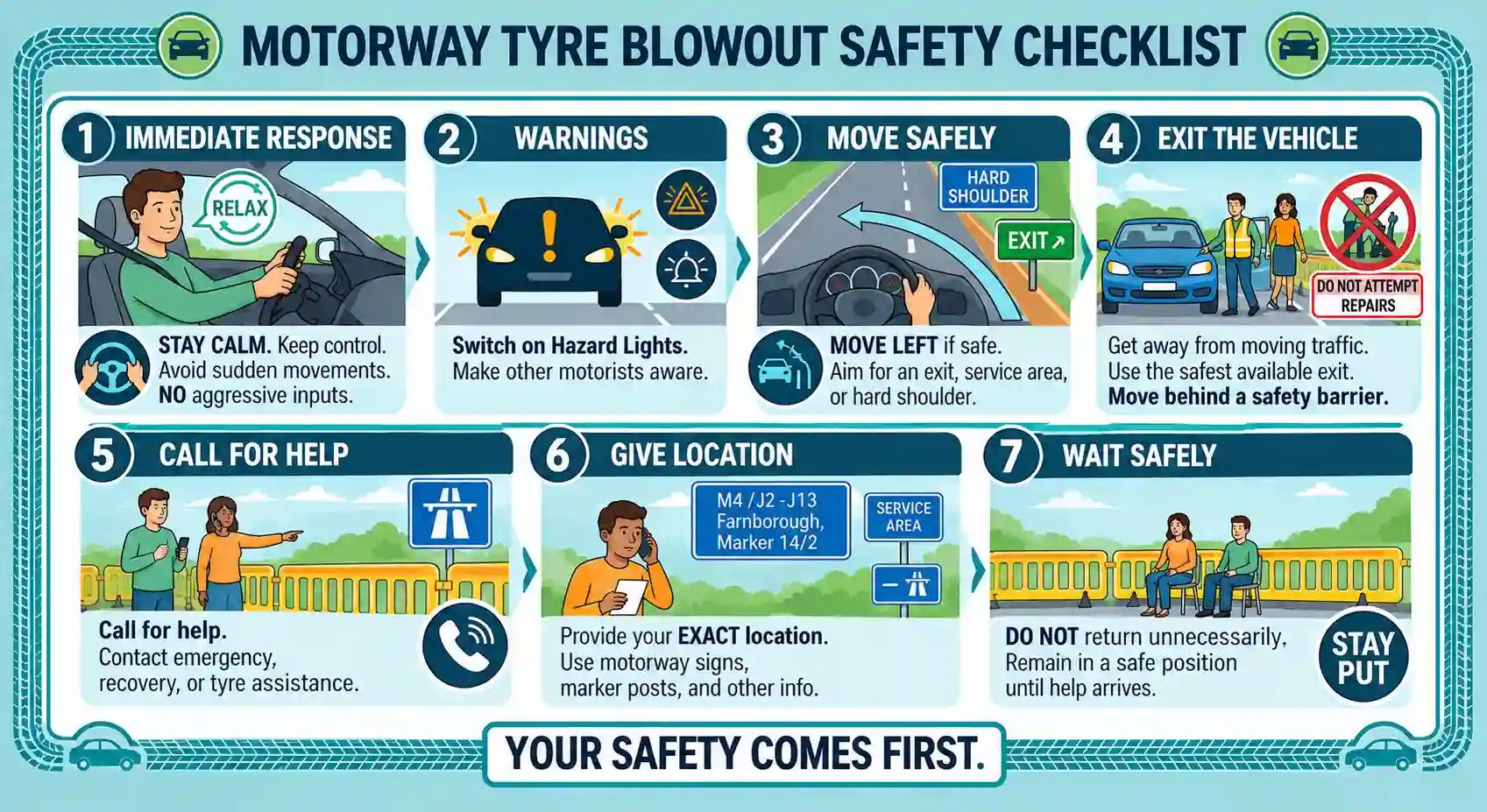
A Simple Tyre Blowout Safety Checklist
If you experience a tyre blowout on a motorway, remember:
-
Stay calm.
Keep control of the vehicle. -
Avoid sudden movements.
Do not make aggressive steering or braking inputs. -
Switch on your hazard warning lights.
Make other motorists aware that you have a problem. -
Move left if you can do so safely.
Aim for an exit, service area, emergency area or hard shoulder where appropriate. -
Get away from moving traffic if it is safe.
Use the safest available exit from the vehicle and move behind a safety barrier where appropriate. -
Do not attempt repairs in a dangerous location.
Your safety comes first. -
Call for help.
Contact appropriate emergency, motorway recovery or tyre assistance. -
Provide your exact location.
Use motorway signs, marker posts, driver location signs or other available information. -
Do not return to the vehicle unnecessarily.
Remain in a safe position until help arrives.
 FlatFix Tyre provides mobile tyre assistance at suitable and accessible locations across London.
FlatFix Tyre – Mobile Tyre Assistance Across London
A tyre blowout can turn an ordinary journey into a stressful situation.
Whether you are travelling to work, heading to the airport, driving across London or preparing for a longer motorway journey, a serious tyre failure needs to be handled carefully.
FlatFix Tyre provides mobile tyre services across London for suitable vehicles and locations.
Our services include:
Mobile Tyre Fitting
Replacement tyres can be supplied and fitted at a suitable location where access and safety conditions allow.
Learn more →Emergency Tyre Replacement
Damaged tyres may be replaced where the required tyre is available and the location is suitable for safe work.
Learn more →Puncture Repair
A technician can assess puncture damage and determine whether the tyre may be suitable for repair.
Learn more →Wheel Balancing
Wheel balancing can help address suitable wheel and tyre vibration issues when balancing is appropriate.
Learn more →TPMS Checks
Tyre pressure monitoring systems can be checked as part of suitable tyre-related servicing.
Learn more →Run-Flat Tyres
Suitable run-flat tyre services can be provided for vehicles that require compatible run-flat tyre specifications.
Learn more →Van & Commercial Tyre Fitting
Suitable vans and commercial vehicles can receive mobile tyre fitting and replacement services.
Learn more →Tyre Supply & Fit
Tyres can be supplied and fitted according to the vehicle's required tyre size and specification.
Learn more →If your vehicle has suffered a motorway blowout, make safety your first priority. Get to a place of relative safety if you can do so safely, follow the Highway Code and arrange appropriate assistance.
Once the vehicle is safely accessible, FlatFix Tyre can help with suitable mobile tyre fitting and replacement requirements.
Need Tyre Blowout Roadside Assistance?
If your vehicle has reached a safe and accessible location after a tyre emergency, speak with the FlatFix Tyre team about your tyre, vehicle and location.
Phone: 07347 120201
WhatsApp: Message FlatFix Tyre on WhatsApp
Email: info@flatfixtyre.com
Contact FlatFix Tyre Call 07347 120201Final Thoughts: What to Do After a Tyre Blowout on the Motorway
A motorway tyre blowout can be frightening, but knowing what to do can help you respond safely.
The most important thing is not to panic or make sudden decisions.
Keep control of the vehicle, reduce your speed carefully and use your hazard warning lights. If possible, move towards the left and reach a service area, emergency area or hard shoulder where appropriate.
Once you are in a safe location, get yourself and your passengers away from moving traffic if it is safe to do so.
Do not attempt to repair or change the tyre in a dangerous motorway location.
If you cannot safely get out of the vehicle or your vehicle remains in a live lane, stay inside with your seat belt fastened and call 999 as advised by the Highway Code.
After the immediate danger has been dealt with, a suitable tyre service can assess the damaged tyre and determine whether replacement or another tyre service is required.
Regular tyre pressure checks, inspections and maintenance can also help reduce the risk of tyre failure before a long journey.
If you need tyre blowout roadside assistance, emergency tyre replacement or mobile tyre fitting after your vehicle has been moved to a safe and accessible location, FlatFix Tyre provides suitable mobile tyre services across London.
Frequently Asked Questions About Tyre Blowouts on the Motorway
Here are answers to common questions about motorway tyre blowouts, roadside assistance, emergency tyre replacement and mobile tyre fitting.
1. What should I do if I get a tyre blowout on the motorway?
Stay calm, keep control of the vehicle, avoid sudden steering or braking, switch on your hazard warning lights and move towards a place of relative safety if you can do so safely. This may be a motorway exit, service area, emergency area or hard shoulder where available.
2. Can I drive after a tyre blowout?
You should not assume that a vehicle with a blown or severely damaged tyre is safe to drive. If possible, move the vehicle to a safe location only when you can do so safely. Once safely stopped, arrange appropriate assistance.
3. Should I change my tyre on the motorway?
Not if doing so would put you or other road users at risk. A tyre should only be changed when it can be done safely. Otherwise, contact an appropriate breakdown or recovery service.
4. What should I do if my car stops in a live motorway lane?
If you cannot safely move to the left or reach a place of relative safety, stay in the vehicle with your seat belt and hazard warning lights on and call 999, asking for the police.
5. Should I put a warning triangle behind my car?
No. Warning triangles should never be placed on a motorway. Do not walk along the motorway to place one behind your vehicle.
6. What should I do if there is no hard shoulder?
If you can safely reach one, use an emergency area. Emergency areas are marked with blue signs showing an orange SOS telephone symbol.
7. Can a mobile tyre service replace a blown tyre?
Yes, a mobile tyre technician may be able to replace a damaged tyre when the vehicle is in a safe and suitable location and the correct replacement tyre is available.
8. Can a blown tyre be repaired?
A serious blowout may require replacement rather than repair. A technician should inspect the tyre before deciding whether any repair is appropriate.
9. What causes tyre blowouts?
Common contributing factors can include under-inflation, excessive wear, impact damage, sidewall damage, overloading, age and previous tyre damage.
10. Can a pothole cause a tyre blowout?
Yes. A significant pothole impact can damage a tyre or wheel. If you notice pressure loss, vibration or visible damage after hitting a pothole, the vehicle should be assessed.
11. Can a run-flat tyre be driven after losing pressure?
Run-flat tyres can provide limited mobility under specified conditions, but you must follow the vehicle and tyre manufacturer's speed and distance limitations. A damaged run-flat tyre should be professionally assessed.
12. Can TPMS warn me about a tyre blowout?
TPMS can warn you about low tyre pressure, but it does not replace a physical tyre inspection. A warning may indicate a puncture, pressure loss or another tyre problem.
13. What information should I provide when calling tyre blowout roadside assistance?
Provide your exact location, vehicle make and model, registration, tyre size if known, what happened, whether the tyre is completely flat and whether there is visible damage.
14. Can FlatFix Tyre help after a motorway tyre blowout?
FlatFix Tyre provides mobile tyre fitting and suitable emergency tyre replacement services across London. If your vehicle is still in a dangerous motorway position, follow motorway safety procedures and contact the appropriate emergency or recovery service first.
15. Where does FlatFix Tyre provide mobile tyre services?
FlatFix Tyre provides mobile tyre services across London and suitable surrounding areas. You can view the complete service area through the FlatFix Tyre Areas We Cover page.
Need Tyre Blowout Roadside Assistance?
Have you suffered a tyre blowout, sudden pressure loss or serious tyre damage?
First make sure you and your passengers are in a safe location away from moving traffic. Once the vehicle is safely accessible, FlatFix Tyre can help with suitable mobile tyre fitting, puncture assessment and emergency tyre replacement across London.
If your vehicle remains in a live motorway lane or you cannot safely exit, contact the appropriate emergency services first.
Get Tyre Assistance in London Call 07347 120201WhatsApp: Message us on WhatsApp
Email: info@flatfixtyre.com