Why Does My Car Pull to One Side? Tyres, Wheel Alignment and Other Causes
Have you noticed your car pulling to the left or right when driving, even when you are trying to keep the steering wheel straight? This can be more than just an annoying driving issue. It may indicate a problem with your tyres, wheel alignment, brakes or suspension.
A vehicle that constantly drifts to one side can become difficult to control, particularly at higher speeds or when braking. Sometimes the cause is as simple as incorrect tyre pressure, while other situations may require a professional mechanical inspection.
In this guide, we explain 7 common reasons why your car pulls to one side, how to recognise the warning signs, what you can safely check yourself and when to seek professional help.
Suspect a Puncture, Uneven Wear or Damaged Tyre?
If a flat, underinflated, or damaged tyre is making your car pull to one side in London, FlatFix Tyre can inspect, repair, or replace your tyre at your home or workplace.
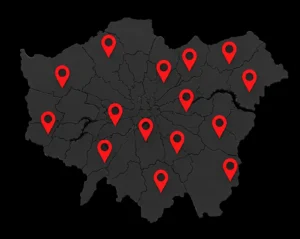
Serving London & Greater London • Home, Workplace & Safe Roadside Attendance
Quick Clues: When Does Your Car Pull to One Side?
Pay attention to when the pulling happens. Select your symptom below to see the most likely causes and recommended next step:
Clue: Pulling During Normal Straight-Line Driving
Likely Causes: Unequal or low tyre pressure, incorrect wheel alignment (toe/camber), uneven tyre tread wear, or worn suspension bushes.
Next Step: Check all four tyre pressures when cold first. If pressures are equal, book an alignment and tyre inspection.
What Does It Mean When Your Car Pulls to One Side?
When a car pulls to one side, it means the vehicle tends to move towards the left or right instead of maintaining its intended direction with normal steering input.
You might notice this in several ways:
- Your car gradually drifts towards the left or right on a relatively straight road.
- You need to keep correcting the steering to maintain your direction.
- The steering wheel appears slightly off-centre when driving straight.
- The vehicle pulls more noticeably when you apply the brakes.
- The car feels unstable or behaves differently after hitting a pothole or kerb.
A slight tendency to move towards the kerb can sometimes be caused by the road's natural slope, known as road camber. Many roads are designed with a slope to help rainwater drain away. However, if your vehicle consistently pulls to one side across different roads, or the steering suddenly feels different, it should be investigated.
7 Common Reasons Why Your Car Pulls to One Side
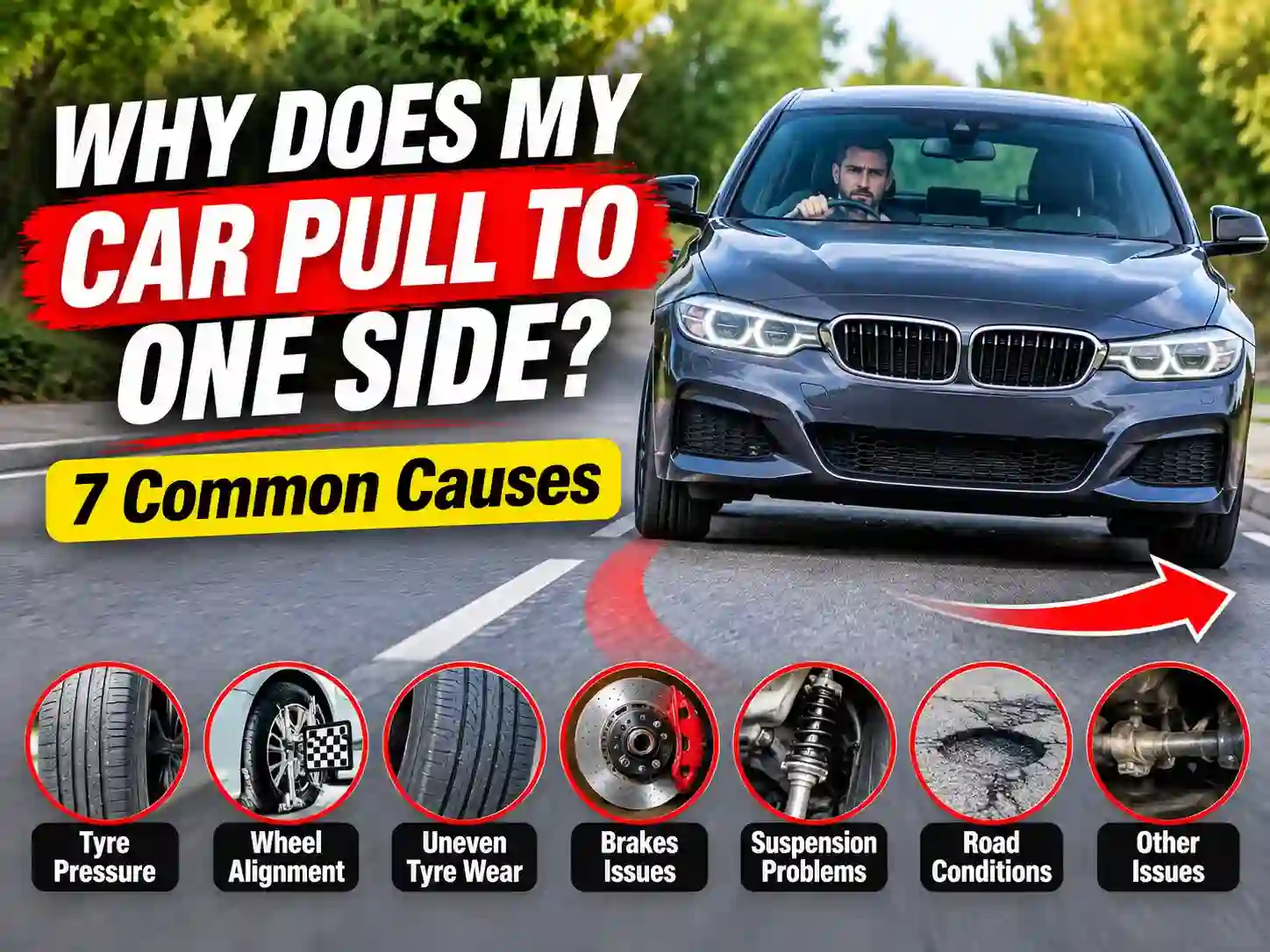
There are several possible reasons why a vehicle may pull towards the left or right. The following are seven common areas worth considering.
1. Uneven or Incorrect Tyre Pressure
One of the first things to check when your car pulls to one side is tyre pressure. If one tyre has significantly lower pressure than the corresponding tyre on the opposite side, the vehicle may handle differently. Incorrect inflation can affect how the tyre contacts the road, its rolling resistance and overall steering behaviour.
For example, if your front-left tyre is underinflated compared with your front-right tyre, you may notice a change in how the vehicle steers.
Common signs of incorrect tyre pressure include:
- Your car drifting or pulling towards one side.
- Uneven tyre wear.
- Reduced steering response.
- A tyre pressure warning light appearing on the dashboard.
- One tyre looking visibly lower than the others.
What should you do? Check all four tyre pressures when the tyres are cold. Compare the readings with the manufacturer's recommended pressures, which are usually displayed on a sticker inside the driver's door, on the fuel flap or in the vehicle handbook. Do not use the maximum pressure printed on the tyre sidewall as your normal inflation target.
For more information, read our guide: How Often Should You Check Your Tyre Pressure? If one tyre repeatedly loses pressure, it may have a puncture, damaged valve or another air leak that needs inspection.
2. Incorrect Wheel Alignment
Incorrect wheel alignment is another possible reason why a car pulls to one side. Wheel alignment refers to the angles at which your vehicle's wheels are positioned in relation to each other and the vehicle. If these angles move outside the manufacturer's recommended settings, the car may not travel straight as intended.
Alignment problems can develop after hitting a deep pothole, striking a kerb or driving over a significant road obstruction. Worn steering and suspension components can also affect alignment.
Common signs of incorrect wheel alignment include:
- The car consistently pulling towards the left or right.
- The steering wheel sitting off-centre.
- Uneven wear on the inside or outside edges of tyres.
- The vehicle feeling less stable when driving.
- Tyres wearing out more quickly than expected.
What are toe, camber and caster?
- Toe: Describes whether the wheels point slightly towards or away from each other when viewed from above.
- Camber: Describes the inward or outward tilt of a wheel when viewed from the front of the vehicle.
- Caster: Describes the angle of the steering axis when viewed from the side, helping influence steering stability and self-centring.
A professional wheel alignment check uses specialist equipment to measure the vehicle's wheel angles against the manufacturer's specifications. If you have recently hit a pothole or noticed uneven tyre wear, arranging an inspection is sensible.
3. Uneven or Damaged Tyres
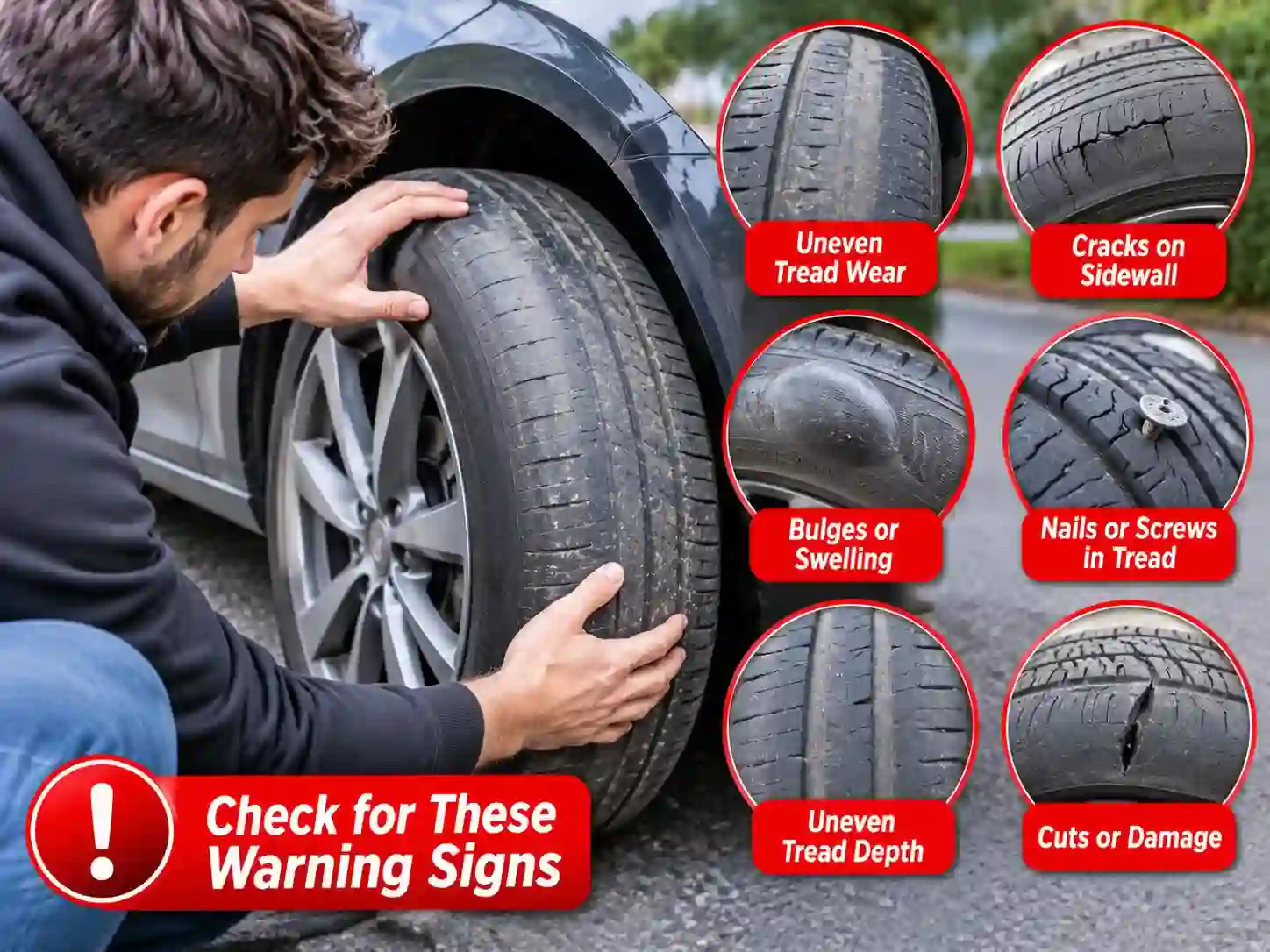
Your tyres play an important role in steering, braking and road grip. If one or more tyres are worn unevenly or damaged, the vehicle may not handle as expected. Uneven tyre wear can develop gradually because of incorrect pressure, alignment problems, suspension faults or other mechanical issues.
Look out for the following warning signs:
- One edge of a tyre wearing faster than the other.
- Cracks or cuts on the tyre sidewall.
- Bulges or swelling on the tyre.
- Uneven tread depth.
- Nails, screws or other objects embedded in the tread.
- Repeated pressure loss.
A tyre with a sidewall bulge or serious structural damage should not be treated as safe to continue using. Can uneven tyre wear cause a car to pull? Yes, depending on the type and extent of the wear. It is important to identify the underlying cause rather than simply replacing a worn tyre without investigating why it has worn unevenly.
Read our related guide: Uneven Tyre Wear: Causes, Warning Signs and How to Fix It
4. Sticking Brake Caliper or Other Brake Problems
If your car pulls to one side mainly when you press the brake pedal, a braking system fault could be responsible. One possible cause is a sticking brake caliper. Brake calipers help press the brake pads against the brake discs when you apply the brakes. If a caliper sticks or does not release correctly, one wheel may experience more braking force than the others.
Other possible brake-related issues include: uneven brake pad wear, a sticking brake piston, damaged or restricted brake components, problems with brake hoses, or uneven braking force between the wheels.
What are the warning signs?
- The vehicle pulling strongly when braking.
- A burning smell coming from near a wheel.
- Unusual grinding or scraping sounds.
- Excessive heat around one wheel.
- Reduced or unusual braking performance.
If your vehicle pulls to one side when braking, do not assume that the problem is simply wheel alignment. The Highway Code advises drivers to consult a garage or mechanic immediately when a vehicle pulls to one side during braking, as this may indicate a brake fault or incorrectly inflated tyres. Do not continue driving if you suspect a serious brake problem. Stop somewhere safe and arrange professional assistance.
5. Worn Steering or Suspension Components
Your vehicle's steering and suspension systems work together to maintain control, stability and handling. When certain components become worn, loose or damaged, the wheels may not remain in their correct positions while driving.
Some components that may be responsible include:
- Ball joints: Connect suspension components and allow controlled movement.
- Track rod ends: Help transfer steering movement to the wheels.
- Suspension bushes: Absorb movement and reduce unwanted vibration.
- Control arms: Help maintain the position and movement of the wheels.
- Shock absorbers: Help control suspension movement and maintain tyre contact with the road.
Possible warning signs include: clunking noises over bumps, loose or unusual steering, uneven tyre wear, excessive bouncing, changes in handling, or the vehicle pulling towards one side. These problems generally require inspection by a qualified mechanic. Replacing tyres alone will not correct a worn steering or suspension component.
6. Road Camber or Uneven Road Surfaces
Not every slight steering pull means your car has a mechanical problem. Road surfaces are not always perfectly level. Many roads slope slightly towards the edges to help rainwater drain away. This slope is known as road camber.
How can you tell the difference? A slight drift that changes depending on the road surface may be related to road camber. However, a vehicle that consistently pulls strongly in the same direction on different roads may have an underlying tyre, alignment, steering, suspension or braking issue. Do not dismiss a noticeable change in handling as normal road camber without checking the vehicle.
7. Different Tyre Types or Tyre Construction Issues
The tyres fitted to your vehicle need to be suitable for its specifications and operating requirements. Differences in tyre size, construction, tread condition or design can sometimes affect how a vehicle handles. For example, fitting an unsuitable tyre size or using tyres with significantly different characteristics on the same axle may affect stability and steering behaviour.
Other possible issues include: incorrect tyre sizes, different tread depths between tyres, incorrect directional tyre fitment, tyre damage or manufacturing defects, or unsuitable replacement tyres. Always follow your vehicle manufacturer's recommendations when selecting replacement tyres.
Does Your Car Pull to One Side When Braking?
If your vehicle only pulls to one side when you apply the brakes, it may indicate a braking system problem. For example, a sticking brake caliper can cause one wheel to brake more strongly than the other. Incorrect tyre pressure can also affect braking and steering behaviour.
Pay attention to when the pulling happens:
- Pulling during normal driving: Could involve tyre pressure, wheel alignment, tyre condition or suspension.
- Pulling mainly when braking: Could indicate a brake fault or incorrect tyre pressure.
- Pulling after hitting a pothole: Could involve tyre damage, wheel alignment or suspension components.
- Pulling with vibration: May involve tyre, wheel or suspension-related problems.
These symptoms are clues, not a reliable diagnosis. If the car pulls sharply when braking, the brakes feel unusual or the vehicle becomes difficult to control, stop somewhere safe and arrange professional assistance. Do not continue driving to see whether the problem disappears.
How to Check Why Your Car Is Pulling to One Side
Although some causes require specialist equipment, there are a few basic checks you can carry out safely while your vehicle is parked:
- Check Your Tyre Pressure: Check the pressure of all four tyres when they are cold. Use the recommended figures from your vehicle handbook or manufacturer's pressure label. If one tyre is repeatedly losing pressure, arrange an inspection to identify the cause.
- Inspect the Tyre Condition: Look at the visible tread and sidewalls of each tyre. Check for uneven tread wear, cuts and cracks, bulges, embedded objects, or visible damage. Do not drive on a tyre with serious damage or a suspected structural defect.
- Look for Uneven Tyre Wear: Compare the inner, middle and outer sections of the tread where visible. Uneven wear may indicate incorrect pressure, alignment issues or worn suspension components. If the inner edge of a tyre is difficult to see, do not put yourself underneath the vehicle to inspect it.
- Think About Recent Road Impacts: Consider whether the steering problem started after hitting a pothole, mounting a kerb, driving over a road obstruction, having new tyres fitted, or having steering or suspension work carried out. This information can help a mechanic identify where to begin an inspection.
- Arrange a Professional Inspection: If the vehicle continues to pull to one side after checking the tyre pressures and visible tyre condition, arrange a professional inspection. A qualified mechanic can assess the steering, suspension, braking system and wheel alignment to identify the underlying cause.
Is Wheel Alignment the Same as Wheel Balancing?
No. Wheel alignment and wheel balancing are two different procedures, although both are important for vehicle handling and tyre performance.
| Wheel Alignment | Wheel Balancing |
|---|---|
| Adjusts wheel angles and geometry | Corrects uneven weight distribution around the wheel and tyre |
| Can help correct pulling caused by incorrect alignment | Helps reduce vibration caused by wheel imbalance |
| Helps prevent alignment-related uneven tyre wear | Helps the wheel and tyre rotate smoothly |
| Requires specialist alignment equipment | Uses a wheel balancing machine |
Can wheel balancing fix a car that pulls to one side? Not usually. Wheel balancing mainly addresses vibration caused by uneven weight distribution. If your vehicle pulls towards the left or right, the problem may involve tyre pressure, wheel alignment, tyre condition, brakes or suspension. It is important to identify the correct problem before paying for a particular service.
You can read more in our guide: Wheel Balancing: Signs Your Car Needs It
When Should You Stop Driving and Get Professional Help?
A slight change in steering behaviour should not automatically be treated as an emergency, but certain warning signs need immediate attention.
Stop somewhere safe and arrange professional assistance if you notice:
- Sudden or severe pulling towards one side.
- The vehicle pulling strongly when braking.
- Difficulty controlling the steering.
- A bulge, deep cut or serious damage to a tyre.
- Rapid tyre pressure loss.
- Smoke or a burning smell near a wheel.
- Severe vibration or unusual grinding noises.
- A noticeable reduction in braking performance.
Do not attempt to continue a journey if you believe the vehicle is unsafe. If you are on a motorway or busy road, follow the appropriate breakdown and road-safety procedures and avoid attempting roadside tyre work in an unsafe location.
Can Mobile Tyre Fitting Help If Your Car Pulls to One Side?
Yes, mobile tyre fitting may help if the problem is related to the condition or pressure of your tyres. For example, you may need professional tyre assistance if a tyre keeps losing air, you have a puncture, a tyre has become damaged, your tyre tread is excessively worn, or you need a replacement tyre fitted.
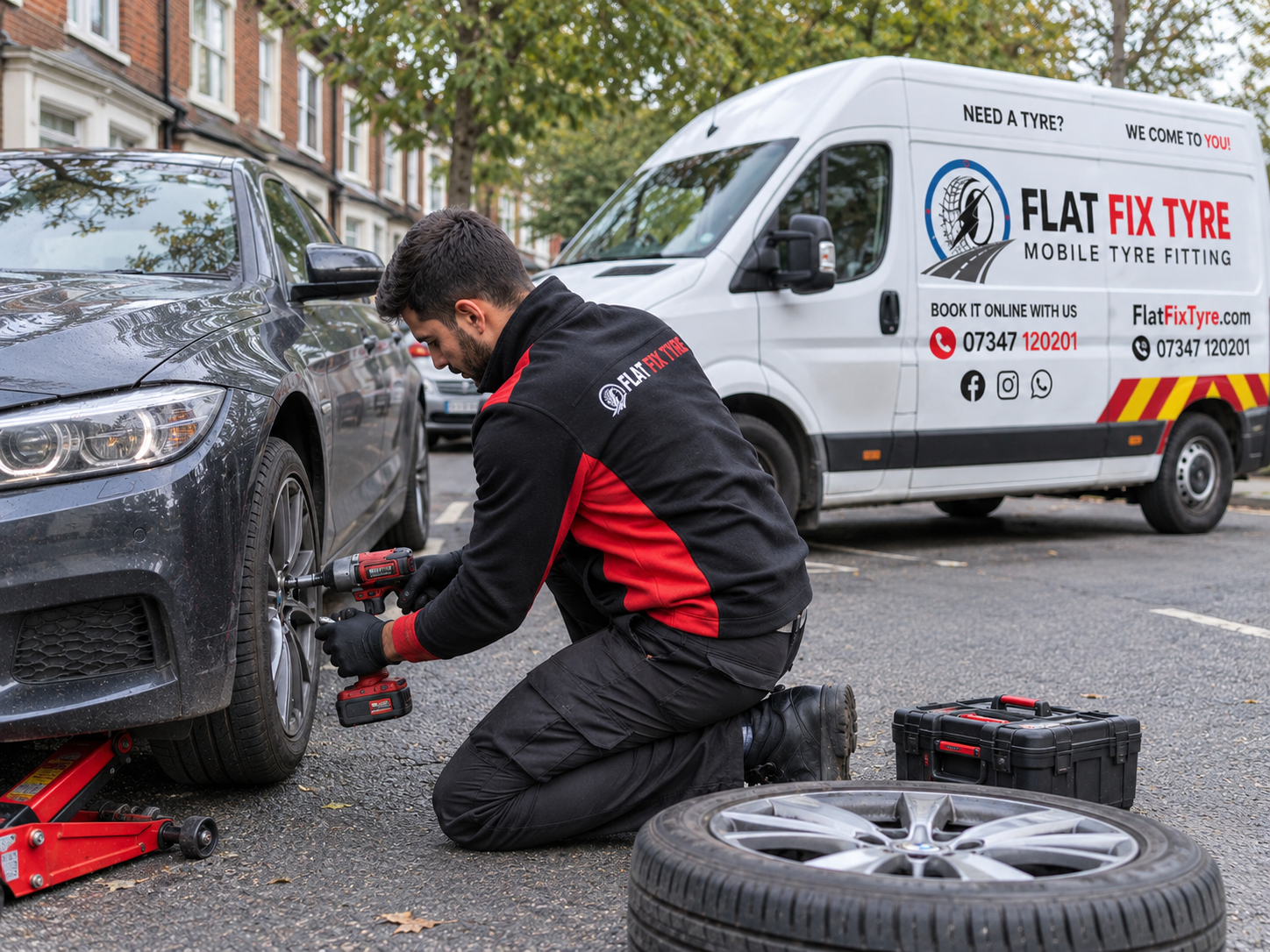
FlatFix Tyre provides mobile tyre services across London, helping drivers arrange suitable tyre assistance at their home, workplace or another accessible location. Our services include:
Frequently Asked Questions
A car pulling to the left may be caused by incorrect tyre pressure, wheel alignment problems, uneven tyre wear, damaged tyres or worn steering and suspension components. Road camber can also create a slight drift on some roads. If the problem continues across different roads, arrange a professional inspection.
Similar issues can make a vehicle pull towards the right, including incorrect tyre pressure, alignment problems, tyre damage or suspension faults. If the pulling is sudden or severe, stop somewhere safe and seek professional assistance.
Yes. Incorrect or unequal tyre pressures can affect how the vehicle handles and how the tyres contact the road. Check your tyre pressures when cold and use the manufacturer's recommended figures. If a tyre repeatedly loses pressure, have it inspected for a possible leak or puncture.
Yes. Incorrect wheel alignment can cause a vehicle to drift towards one side and may contribute to uneven tyre wear. A professional alignment check can measure the wheel angles and identify whether adjustments are needed.
If your car pulls mainly when braking, it could indicate unequal braking force, a sticking brake caliper or incorrect tyre pressure. The Highway Code advises consulting a garage or mechanic immediately if your vehicle pulls to one side when braking.
Yes. Uneven tyre wear can affect how your vehicle handles and may be a sign of incorrect tyre pressure, wheel alignment problems or worn suspension components. The underlying cause should be identified to help prevent further tyre damage.
Wheel balancing is primarily designed to correct uneven weight distribution that causes vibration. It does not normally correct a vehicle pulling to one side. That problem may require a tyre pressure check, wheel alignment assessment or mechanical inspection.
Final Thoughts: Don't Ignore a Car That Pulls to One Side
If your car consistently pulls to the left or right, it is worth finding out why rather than adjusting your steering to compensate. Incorrect tyre pressure, damaged tyres, wheel alignment problems, brake faults and worn suspension components can all affect vehicle handling.
Start with simple checks such as tyre pressure and visible tyre condition. If the problem continues, becomes worse or affects braking and steering, arrange a professional inspection.
If the issue is related to a puncture, damaged tyre or replacement requirement, FlatFix Tyre can help with mobile tyre fitting and tyre assistance across London.
Need Help With a Tyre Problem in London?
Call FlatFix Tyre on 07347 120201 or contact us through WhatsApp to arrange mobile puncture repair or tyre replacement at your location.