7 Signs Your Car Tyres Are Unsafe to Drive On
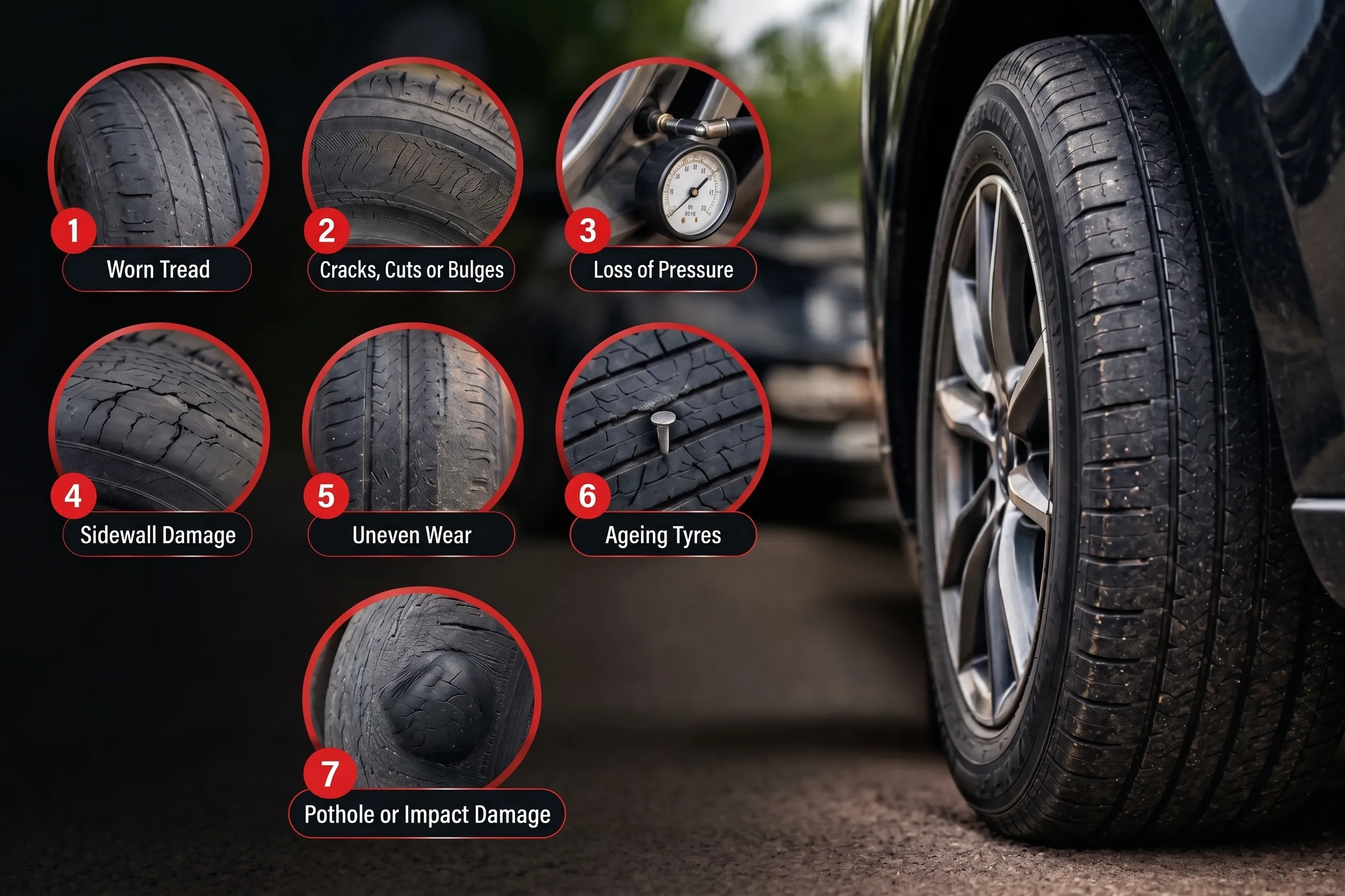
7 Signs Your Car Tyres Are Unsafe to Drive On
Your car tyres are the only parts of your vehicle that make direct contact with the road, so their condition plays an important role in car tyre safety.
Tyres can become unsafe because of excessive wear, incorrect tyre pressure, punctures, sidewall damage, ageing, pothole impacts or other forms of deterioration. Some problems are easy to see, while others may only become noticeable through changes in the way your vehicle handles.
Knowing the signs of unsafe tyres can help you identify a problem before it develops into a roadside breakdown or a more serious safety issue.
In this guide, we explain 7 signs your car tyres may be unsafe to drive on, what to look for and what you should do if you discover a damaged or worn tyre.
If you notice a serious tyre defect such as a large bulge, major sidewall cut, exposed internal material, severe damage or a tyre that has lost significant pressure, avoid driving on it unless you have been advised that it is safe to do so.
If you experience a tyre problem while driving, slow down safely, avoid sudden steering or braking and move to a safe location when possible.
The Highway Code advises drivers with a flat tyre to stop as soon as it is safe to do so and only change the tyre themselves if they can do it without putting themselves or others at risk.
For drivers who experience a flat tyre on a London road, our guide explains what to do and how to get help:
1. Your Tyre Tread Is Too Worn
One of the clearest signs of unsafe tyres in the UK is excessive tread wear.
Tyre tread helps maintain contact with the road and move water away from the tyre's contact area. As tread becomes worn, tyre performance can be affected, particularly in wet conditions.
For cars, light vans and light trailers, UK rules require a minimum tread depth of 1.6mm across the central three-quarters of the tread and around the entire circumference.
However, the legal minimum should not be treated as a target for normal tyre maintenance. A tyre can have other defects that make it unsuitable for use even if the tread depth is above 1.6mm.
Look for:
- Low tread depth
- Tread wear indicators becoming level with the surrounding tread
- Uneven tread wear
- Excessive wear on one edge
- Excessive centre wear
- Bald or heavily worn areas
- Different levels of wear between tyres
Uneven wear can sometimes indicate problems with wheel alignment, suspension, inflation or other vehicle components.
GOV.UK guidance confirms that tyres need the correct tread depth and must be free from cuts and defects that could make them unsafe. :contentReference[oaicite:1]{index=1}
If you are already noticing that your tyres are becoming worn, our guide on replacement can help:
How to Know When Your Car Tyres Need Replacing
2. There Are Cracks, Cuts or Bulges in the Sidewall
The tyre sidewall is an important structural part of the tyre, so visible damage should never be ignored.
Inspect the sidewall for:
- Cracks
- Deep cuts
- Splits
- Bulges
- Lumps
- Tears
- Exposed cords or other internal material
- Unusual deformation
A tyre bulge can indicate damage to the internal structure of the tyre. Similarly, significant sidewall cracking can indicate deterioration of the rubber and underlying structure.
This is particularly important after hitting a pothole or kerb.
A tyre can sometimes appear to be holding air normally while still having damage that requires professional inspection.
Can Cracked Tyres Be Unsafe?
Yes. The severity of the cracking matters.
Fine surface marks are not necessarily the same as deep structural cracks, but significant or worsening cracking should be professionally assessed.
If you can see a significant bulge, deep cut or serious sidewall damage, do not assume that the tyre is safe simply because it is inflated.
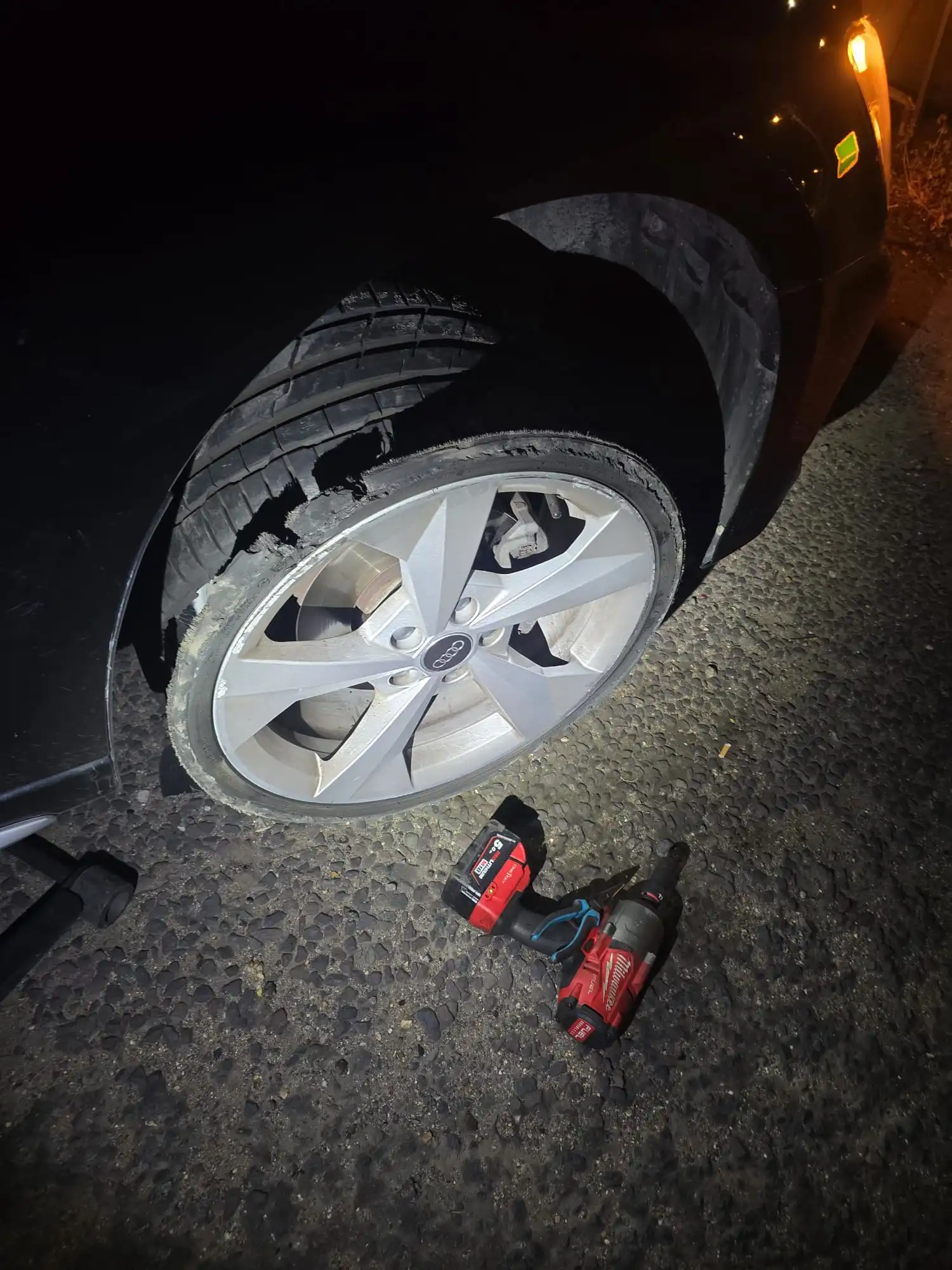 Visible cuts, cracks, bulges and other sidewall damage should be professionally assessed.
3. Your Tyre Keeps Losing Pressure
Repeated pressure loss is another important warning sign of a potentially unsafe car tyre.
If you regularly have to inflate one tyre while the others maintain their pressure, there may be an underlying problem.
Possible causes include:
- A puncture
- Nail or screw penetration
- Valve damage
- Bead leakage
- Wheel damage
- Tyre deterioration
- Other air-loss problems
Driving with an underinflated tyre can affect handling and braking and may increase tyre wear.
The Highway Code states that tyres must be correctly inflated according to the vehicle manufacturer's specification. GOV.UK guidance also recommends checking tyre pressures when the tyres are cold. :contentReference[oaicite:2]{index=2}
Do Not Just Keep Adding Air
Repeatedly topping up a tyre does not fix the cause of the pressure loss.
If one tyre repeatedly loses pressure, have it inspected to establish why.
A TPMS warning can also be useful, but you should still visually inspect your tyres because a tyre-pressure monitoring system does not replace a physical tyre check.
4. There Is a Nail, Screw or Other Object in the Tyre
A nail, screw or other object embedded in your tyre can cause a puncture and gradual or rapid air loss.
You may notice:
- A tyre-pressure warning
- A visibly low tyre
- Repeated pressure loss
- A nail or screw in the tread
- A hissing sound
- A change in vehicle handling
Do not assume that an embedded object automatically means the tyre needs replacing.
A professional tyre technician needs to inspect the damage and determine whether the tyre is suitable for repair.
The location and size of the puncture, the condition of the tyre and whether the tyre has been driven while underinflated can all affect the outcome.
Should You Remove a Nail or Screw Yourself?
It is better to have the tyre professionally assessed rather than simply pulling an embedded object out and continuing to drive.
If the tyre is already losing significant pressure, avoid driving on it.
For more information about dealing with a puncture on the road, see:
Flat Tyre on a London Road: What to Do and How to Get Help
5. Your Car Vibrates, Pulls or Handles Differently
A change in the way your car drives can be an important warning sign.
You may notice:
- Steering-wheel vibration
- The vehicle pulling to one side
- Uneven handling
- Changes in steering response
- Vibration at certain speeds
- A noticeable wobble
- New or unusual tyre noise
These symptoms do not automatically mean that a tyre is unsafe. They can also be caused by wheel imbalance, wheel alignment, suspension problems, incorrect tyre pressure or other vehicle faults.
However, a sudden change should not be ignored.
If the problem started after hitting a pothole or kerb, have the tyres and wheels checked.
What About Wheel Balancing?
If vibration is caused by wheel imbalance, professional wheel balancing may help resolve the problem.
However, balancing is not a substitute for replacing a structurally damaged tyre.
A technician should first establish whether the tyre itself is damaged and whether the wheel and tyre assembly are suitable for continued use.
6. The Tyre Is Cracked, Aged or Showing Signs of Deterioration
Tyres do not last forever.
The rubber can deteriorate over time because of age, weather exposure, sunlight, temperature changes, storage conditions and normal use.
An older tyre may show:
- Fine cracks
- Sidewall cracking
- Cracks between tread blocks
- Dry or brittle-looking rubber
- Discolouration
- General deterioration
- Damage that has developed over time
Tyre age should not be considered on its own. The tyre's condition, usage, mileage, storage and environment all matter.
If you are unsure whether your tyres are reaching the end of their usable life, professional inspection can help.
For a more detailed guide to replacement warning signs, read:
How to Know When Your Car Tyres Need Replacing
 Regular tyre checks can help identify tread wear, cracking and other signs of deterioration.
7. The Tyre Has Been Driven While Flat or Severely Underinflated
A tyre that has been driven while flat or severely underinflated can suffer internal damage.
This damage may not always be visible from the outside.
When tyre pressure becomes extremely low, the sidewalls can flex excessively as the vehicle moves. This can place additional stress on the tyre structure.
That means a puncture that might initially have been repairable could become unsuitable for repair after the vehicle has been driven on it.
If you have driven on a flat or severely underinflated tyre, arrange a professional inspection before continuing normal driving.
A qualified technician can assess the tyre and determine whether it can safely remain in service or needs replacing.
What Makes a Tyre Unsafe to Drive On?
There is not one single symptom that determines whether every tyre is unsafe.
The condition of a tyre depends on the type, location and severity of the defect, as well as its tread, pressure and overall condition.
Potential warning signs include:
- Tread below the legal minimum
- Severe or uneven tread wear
- Deep cuts
- Significant sidewall cracking
- Bulges or lumps
- Exposed cords or internal material
- Repeated pressure loss
- Serious puncture damage
- Damage after hitting a pothole or kerb
- Damage caused by driving while flat
- Significant deterioration
GOV.UK states that tyres must have the correct tread depth and be free from cuts and defects that could make them unsafe. :contentReference[oaicite:3]{index=3}
If you are uncertain about a tyre, professional inspection is safer than guessing.
What Should You Do If You Find an Unsafe Tyre?
The correct response depends on where you discover the problem.
If Your Car Is Parked at Home
Do not automatically drive to a garage if the tyre has serious visible damage or has lost significant pressure.
Arrange appropriate tyre assistance or professional inspection.
If Your Car Is at Work or in a Car Park
A mobile tyre service can be particularly useful because the vehicle does not necessarily need to be driven to a garage.
If You Are on the Roadside
Prioritise your safety.
Move to a safe location when possible and avoid putting yourself in danger by attempting a roadside tyre change in an unsafe position.
If you have a flat tyre, the Highway Code advises stopping as soon as it is safe and calling for assistance if changing the tyre yourself would put you or others at risk. :contentReference[oaicite:4]{index=4}
Depending on the problem, you may need:
- Puncture repair
- Emergency tyre replacement
- Mobile tyre fitting
- Tyre inspection
- Wheel balancing
- TPMS checking
- Roadside assistance
Can You Drive on a Damaged Tyre?
It depends on the type and severity of the damage.
A tyre with a minor, repairable puncture may be treated differently from one with severe sidewall damage, a large bulge, exposed cords or damage caused by driving while flat.
You should not rely only on the fact that the tyre is still holding air.
A tyre can have internal or structural damage that is not immediately obvious from the driver's seat.
If you are unsure whether your tyre is safe to drive on, arrange a professional inspection before continuing your journey.
How to Check Your Tyres for Safety
A regular tyre inspection can help identify problems before they become an emergency.
When your vehicle is parked safely, check each tyre for:
- Tread wear
- Cuts
- Cracks
- Bulges
- Embedded objects
- Uneven wear
- Correct tyre pressure
- Signs of ageing
- Visible damage
- Any recent change in condition
Also remember to check the spare tyre if your vehicle has one.
Tyre pressure should be checked when the tyres are cold and adjusted according to the vehicle manufacturer's recommended settings. :contentReference[oaicite:5]{index=5}
Regular checks are especially useful before:
- Long journeys
- Motorway trips
- Holidays
- Heavy vehicle loading
- Winter driving
- Periods of frequent driving
What Is the Legal Minimum Tyre Tread Depth in the UK?
For cars, light vans and light trailers, the legal minimum tread depth is 1.6mm across the central three-quarters of the tyre and around the complete circumference.
However, tread depth is only one part of tyre safety in the UK.
A tyre can still have adequate tread but have another defect, such as:
- A serious cut
- A dangerous bulge
- Significant cracking
- Structural damage
- Severe deterioration
- A serious puncture
This is why checking the overall condition of your tyres is just as important as checking tread depth.
GOV.UK confirms the 1.6mm requirement for cars, light vans and light trailers and also states that tyres must be free from cuts and defects that could make them unsafe. :contentReference[oaicite:6]{index=6}
When Should You Replace Your Car Tyres?
A tyre may need replacement when it reaches the legal tread limit, develops significant damage or is judged unsuitable for continued use following a professional inspection.
Do not wait for a tyre to fail completely before considering replacement.
Consider arranging a tyre inspection if you notice:
- Low tread
- Uneven tread wear
- Repeated punctures
- Persistent pressure loss
- Cracks
- Bulges
- Steering vibration
- Pothole damage
- Age-related deterioration
- Damage after driving while underinflated
If you are researching whether your current tyres need replacing, our detailed guide covers the main warning signs:
How to Know When Your Car Tyres Need Replacing
How Much Does It Cost to Replace Unsafe Tyres?
The cost of replacing a tyre can vary depending on the tyre size, vehicle, tyre brand, specification, quantity required and fitting requirements.
If you have discovered an unsafe tyre and are comparing your options, you can read our detailed guide:
How Much Does Mobile Tyre Fitting Cost in London?
The article explains the different factors that can affect mobile tyre fitting costs in London, including the tyre itself and the type of service required.
The important point is not to choose a tyre solution based on price alone when the existing tyre may be unsafe. The correct tyre specification and professional fitting are important parts of the replacement process.
Can Mobile Tyre Fitting Help With Unsafe Tyres?
Yes. Mobile tyre fitting in London can be useful when a vehicle has a flat, damaged or potentially unsafe tyre and driving it to a garage may not be appropriate.
Depending on the situation, a mobile tyre technician can attend a suitable location such as:
- Your home
- Workplace
- Car park
- Roadside location
Mobile tyre fitting can be particularly convenient because you do not necessarily have to arrange a separate journey to a tyre centre.
If you are comparing mobile tyre fitting with visiting a traditional garage, you can also read:
Mobile Tyre Fitting vs Garage: Which Is More Convenient?
The right option depends on the vehicle's condition, the tyre problem, location and whether the vehicle can be safely driven.
FlatFix Tyre – Mobile Tyre Assistance Across London
If you have discovered a worn, damaged, punctured or potentially unsafe tyre and are unsure whether you should drive, FlatFix Tyre provides mobile tyre fitting across London .
Our mobile services include:
Mobile Tyre Fitting
Replacement tyres can be supplied and fitted at a suitable location where access and safety conditions allow.
Learn more →Puncture Repair
A technician can assess puncture damage and determine whether the tyre may be suitable for repair.
Learn more →Emergency Tyre Replacement
Damaged tyres may be replaced where the required tyre is available and the location is suitable for safe work.
Learn more →Wheel Balancing
Wheel balancing can be carried out where appropriate and where the service is suitable for the vehicle.
Learn more →Run Flat Tyres
Suitable run-flat tyre services can be provided for vehicles that require compatible run-flat tyre specifications.
Learn more →TPMS Checks
Tyre pressure monitoring systems can be checked as part of suitable tyre-related servicing.
Learn more →Van & Commercial Tyres
Suitable vans and commercial vehicles can receive mobile tyre fitting and replacement services.
Learn more →Tyre Supply & Fit
Tyres can be supplied and fitted according to the vehicle's required tyre size and specification.
Learn more →We can attend suitable home, workplace, car park and roadside locations.
If a tyre has a serious defect, avoid taking unnecessary risks by continuing to drive on it. A professional inspection can help determine whether the tyre can be repaired or whether replacement is required.
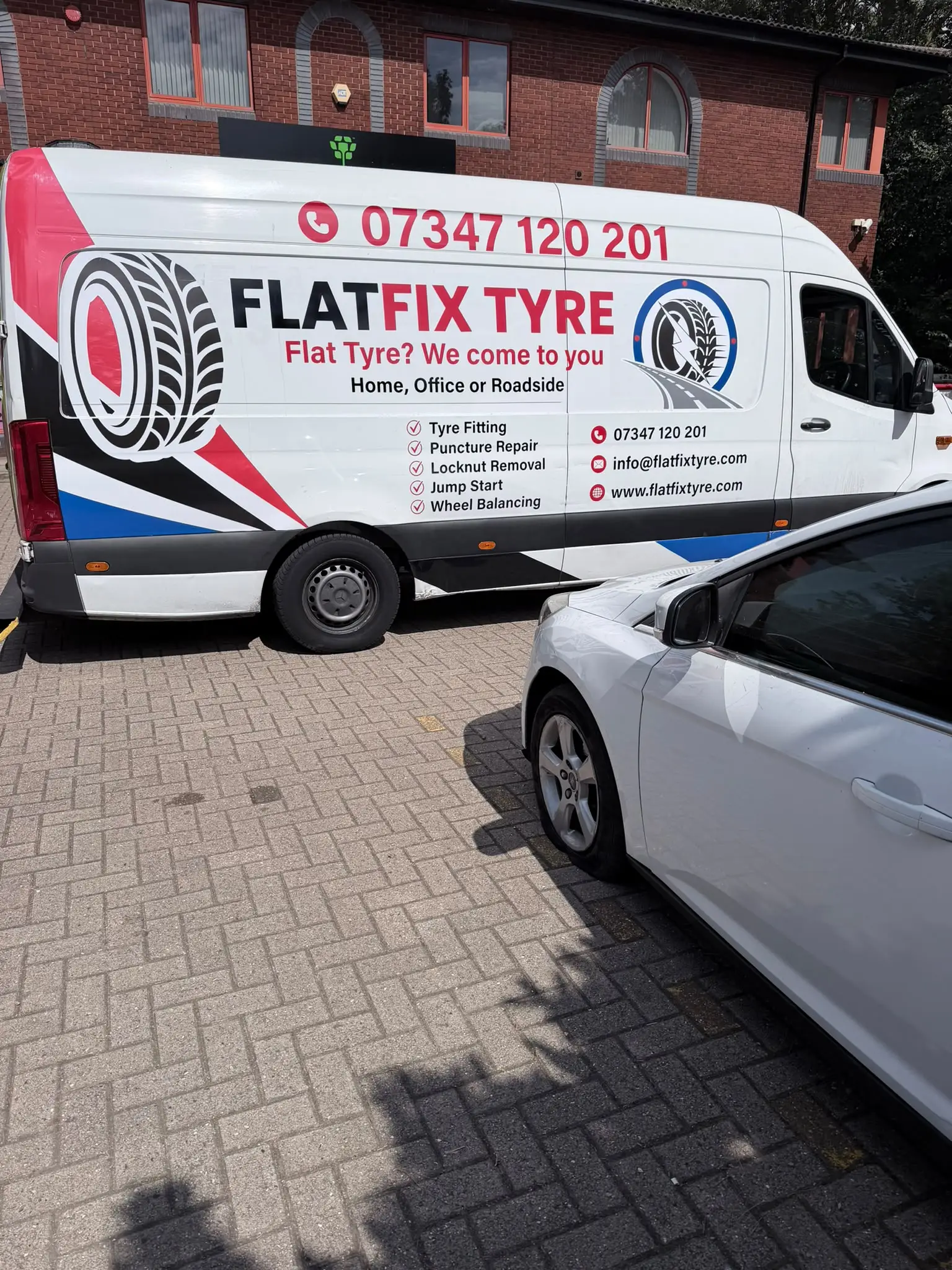
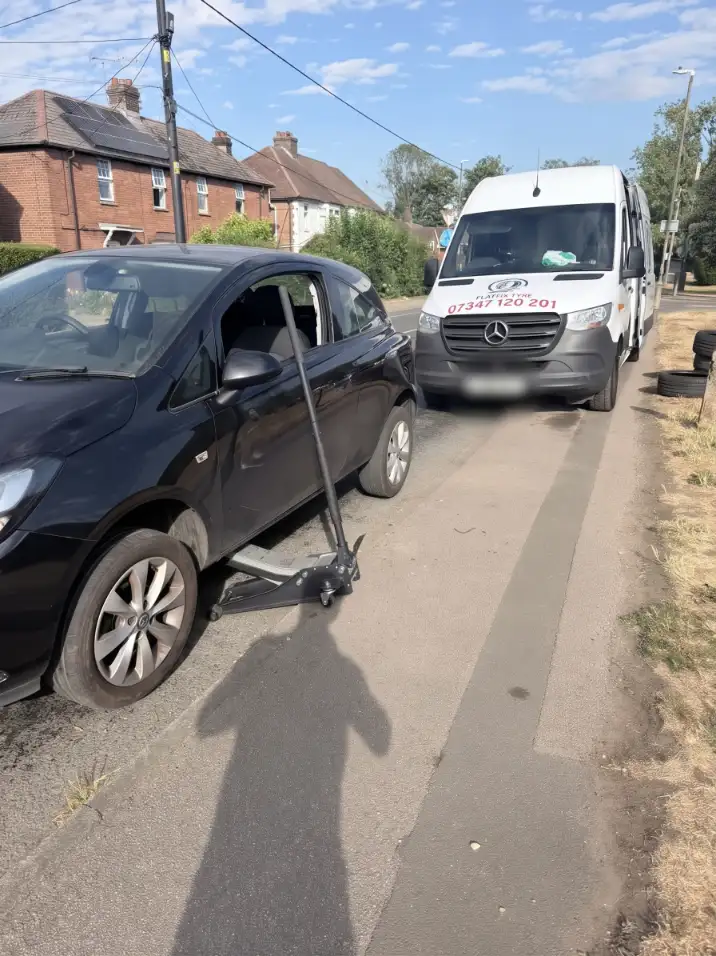 FlatFix Tyre provides mobile tyre assistance at suitable locations across London.
Need Help With a Potentially Unsafe Tyre?
If you are unsure whether your tyre is safe to drive on, speak with the FlatFix Tyre team about your vehicle, tyre condition and location.
Phone: 07347 120201
WhatsApp: Message FlatFix Tyre on WhatsApp
Email: info@flatfixtyre.com
Contact FlatFix Tyre Call 07347 120201Final Thoughts: Recognising Unsafe Tyres in the UK
Recognising the warning signs of unsafe tyres in the UK can help you deal with tyre problems before they become a more serious roadside issue.
The seven warning signs covered in this guide are:
- Excessive tread wear
- Cracks, cuts or bulges
- Repeated tyre pressure loss
- Nails, screws or other embedded objects
- Vibration or changes in handling
- Age-related cracking or deterioration
- Damage caused by driving while flat or severely underinflated
Remember that the legal tread depth is only one part of tyre safety. Your tyres also need to be correctly inflated and free from defects that could make them unsafe.
If you are unsure about the condition of a tyre, do not rely solely on how it looks or feels while driving. Professional inspection can help establish whether it is suitable for continued use, repairable or in need of replacement.
For London drivers, FlatFix Tyre provides mobile tyre fitting, puncture repair and emergency tyre replacement at suitable locations across London.
Frequently Asked Questions About Unsafe Car Tyres
Here are answers to common questions about unsafe tyres, tyre damage, tread depth and tyre safety in the UK.
1. What are the main signs of unsafe tyres?
Common warning signs include excessive tread wear, sidewall cuts or bulges, repeated pressure loss, serious punctures, unusual vibration, cracking and damage caused by driving on a flat or severely underinflated tyre.
2. What is the legal minimum tyre tread depth in the UK?
For cars, light vans and light trailers, the legal minimum is generally 1.6mm across the central three-quarters of the tread and around the complete circumference. Tyres must also be free from defects that could make them unsafe. :contentReference[oaicite:7]{index=7}
3. Can I drive with a bulge on my tyre?
A significant tyre bulge can indicate internal structural damage. You should avoid driving on a seriously damaged tyre and arrange professional inspection.
4. Can cracked tyres be repaired?
It depends on the type and severity of the cracking. Significant or structural cracking may mean the tyre needs replacing. A tyre professional should assess the condition before deciding whether it can remain in service.
5. Is a tyre unsafe if it keeps losing air?
Repeated pressure loss can indicate a puncture, valve problem, bead leak, wheel damage or another issue. The underlying cause should be investigated rather than simply continuing to inflate the tyre.
6. Can I drive on a completely flat tyre?
You should not drive on a completely flat standard tyre. Driving on it can cause additional internal tyre damage and potentially damage the wheel.
7. How often should I check my car tyres?
Regular checks are recommended, particularly before long journeys. Check the tyre pressure, tread depth and overall condition, following the vehicle manufacturer's recommended pressure settings. :contentReference[oaicite:8]{index=8}
8. Can potholes make tyres unsafe?
Yes. A significant pothole impact can damage a tyre or wheel and may cause cuts, bulges, pressure loss or other problems. If you notice damage or a change in vehicle behaviour after hitting a pothole, have the tyre and wheel checked.
9. Can a punctured tyre be repaired?
Some punctures may be repairable depending on their size, location and the condition of the tyre. A professional inspection is needed before deciding whether repair or replacement is appropriate.
10. Can mobile tyre fitting replace an unsafe tyre?
Yes. A mobile tyre fitting service can replace a tyre at a suitable location when the required replacement tyre is available and the location is safe for the technician to work.
11. Does FlatFix Tyre provide mobile tyre fitting in London?
Yes. FlatFix Tyre provides mobile tyre fitting and tyre assistance across London, including tyre replacement, puncture repair, wheel balancing and other mobile tyre services.
12. What should I do if my tyre becomes unsafe while driving?
Stay calm, avoid sudden steering or braking and reduce speed safely. Stop as soon as it is safe to do so and move to a suitable location. If changing the tyre yourself would put you or others at risk, call for appropriate assistance. :contentReference[oaicite:9]{index=9}
13. Can a tyre look fine but still have internal damage?
Yes. Some damage may not be obvious from a visual inspection, particularly after driving on a flat or severely underinflated tyre. Professional inspection may be required to determine whether the tyre is suitable for continued use.
14. Does FlatFix Tyre provide emergency tyre replacement in London?
Yes. FlatFix Tyre provides emergency tyre replacement across London, subject to tyre availability, location and safe working conditions.
Not Sure If Your Tyres Are Safe to Drive On?
Have you noticed a tyre bulge, crack, puncture, pressure loss or excessive tread wear?
FlatFix Tyre provides mobile tyre fitting, puncture repair and emergency tyre replacement at suitable home, workplace, car park and roadside locations across London.
If a tyre appears seriously damaged or has lost significant pressure, avoid unnecessary driving and arrange appropriate professional assistance.
Get Tyre Assistance in London Call 07347 120201WhatsApp: Message us on WhatsApp
Email: info@flatfixtyre.com