What Is the Legal Tyre Tread Depth in the UK?
Your car tyres play an essential role in keeping you safe on the road. They help your vehicle grip the surface, steer accurately and stop when you apply the brakes. However, as tyres wear down, their ability to perform these jobs can become reduced, particularly in wet weather.
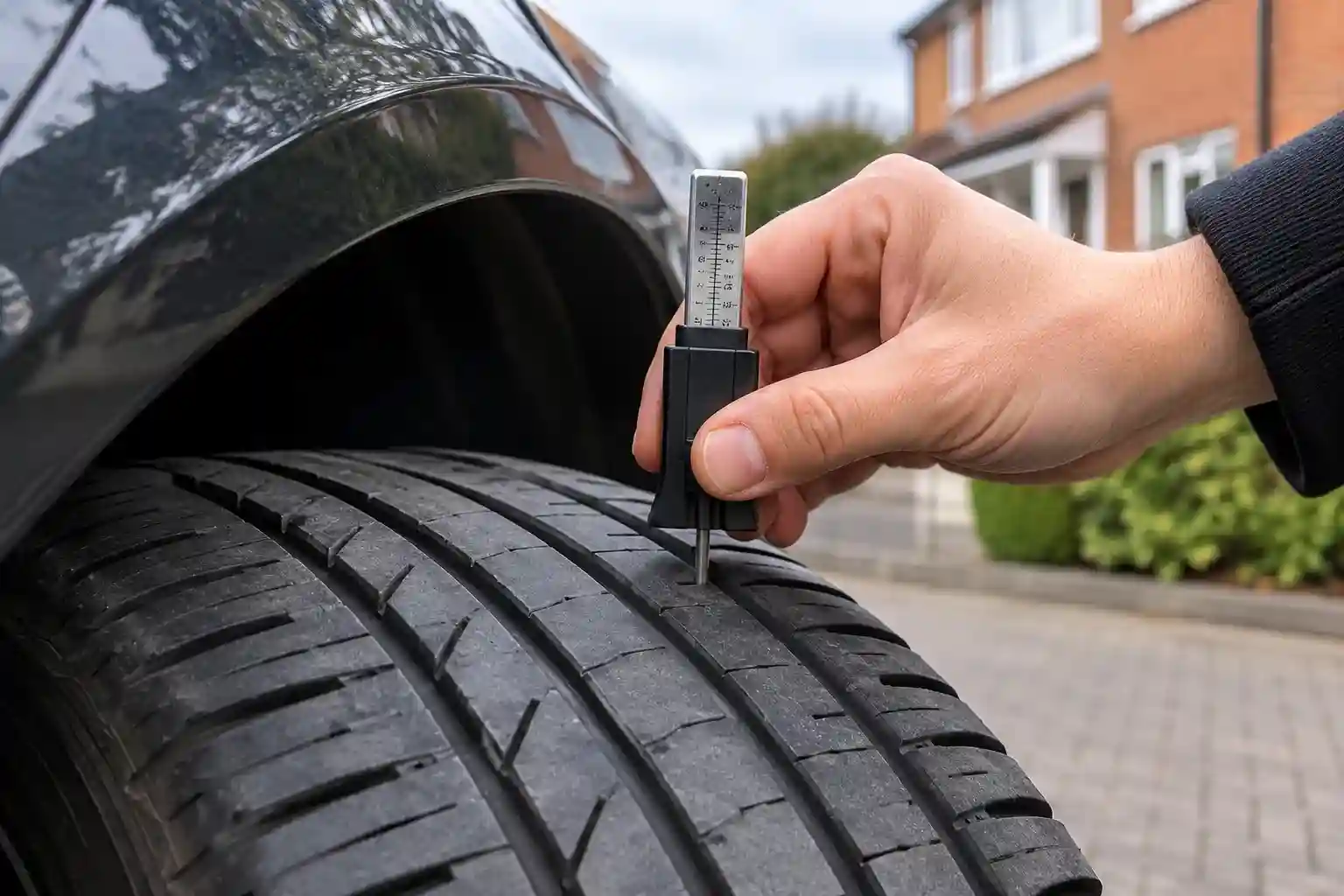
Understanding the legal tyre tread depth UK requirements is important for every driver. Driving with tyres below the legal limit is against the law and can put you, your passengers and other road users at risk.
For most cars, the minimum legal tyre tread depth is 1.6mm across the central three-quarters of the tread and around the entire circumference of the tyre.
In this guide, FlatFix Tyre explains the legal requirements, how to check your tyres using a 20p coin, the possible penalties for illegal tyres and when you should consider replacing them.
If you have noticed worn tyres and are unsure whether they are safe, FlatFix Tyre can help. We provide mobile tyre fitting and tyre replacement across London, bringing assistance to your home, workplace or a suitable roadside location.
Concerned About Your Tyre Tread?
Need help with worn or damaged tyres? Speak to FlatFix Tyre about mobile tyre assistance across London.
Interactive Check: Is Your Current Tyre Tread Depth Safe?
Select your current tread measurement or 20p coin test result below to see what action you should take:
Status: Legal & Good Wet-Weather Margin
What this means: If the outer border of a 20p coin is hidden inside the main tread grooves, your tyre likely has around 2.7mm or more of tread.
Recommended action: Continue checking all four tyres monthly across the inner, middle, and outer sections.
What Is the Legal Tyre Tread Depth in the UK?
The minimum legal tyre tread depth for most cars in the UK is 1.6 millimetres (mm).
However, this measurement does not apply to every part of the tyre. The law requires the primary grooves to maintain a minimum depth of 1.6mm across the central three-quarters of the tyre's tread width and around its entire outer circumference.
In simple terms, the main grooves in the middle 75% of your tyre must not wear below 1.6mm at any point around the tyre.
This requirement helps ensure that tyres retain sufficient tread to perform their intended function on the road.
For most cars, the requirement applies to the tyres fitted to the vehicle. Other vehicle categories can have different legal requirements, so drivers of motorcycles, larger goods vehicles and passenger-carrying vehicles should check the rules that apply to their particular vehicle.
Where Must the 1.6mm Minimum Tread Depth Be Maintained?
One important detail of the UK tyre tread depth law is that the 1.6mm minimum must be maintained across the central three-quarters of the tyre's tread width. It must also be maintained around the entire circumference.
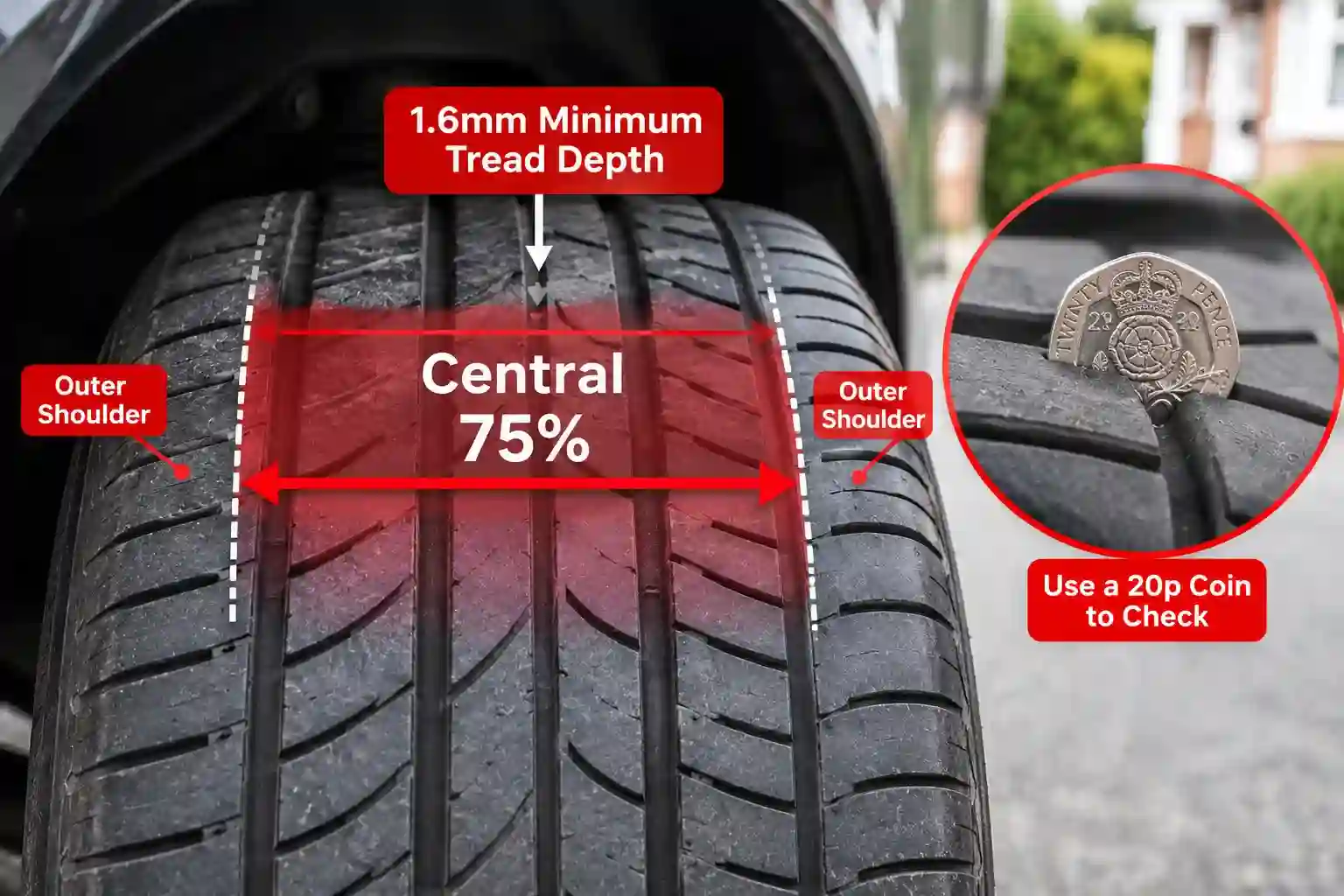
Imagine looking directly at the surface of your tyre. The central three-quarters refers to the main area between the two outer shoulders of the tread. The legal requirement applies to the primary tread grooves within this area.
This means that checking only one small section of your tyre is not enough. A tyre may appear to have plenty of tread in one place but be dangerously worn in another. For example:
- The outer shoulder may look relatively new.
- The centre of the tyre may have worn down significantly.
- One section of the circumference may have less tread than the rest.
- The inside edge may be more worn than the outside edge.
This is why it is important to inspect the full tyre rather than judging its condition from a single visible area. If you notice uneven wear, it is worth arranging a professional inspection. Uneven tyre wear can sometimes indicate incorrect tyre pressure, wheel alignment problems or other vehicle issues.
How to Check Tyre Tread Depth Using a 20p Coin
The 20p tyre tread test is a simple way to get an initial indication of whether your tyres may be approaching the legal limit. You do not need specialist equipment to carry out this basic check—all you need is an ordinary 20p coin.
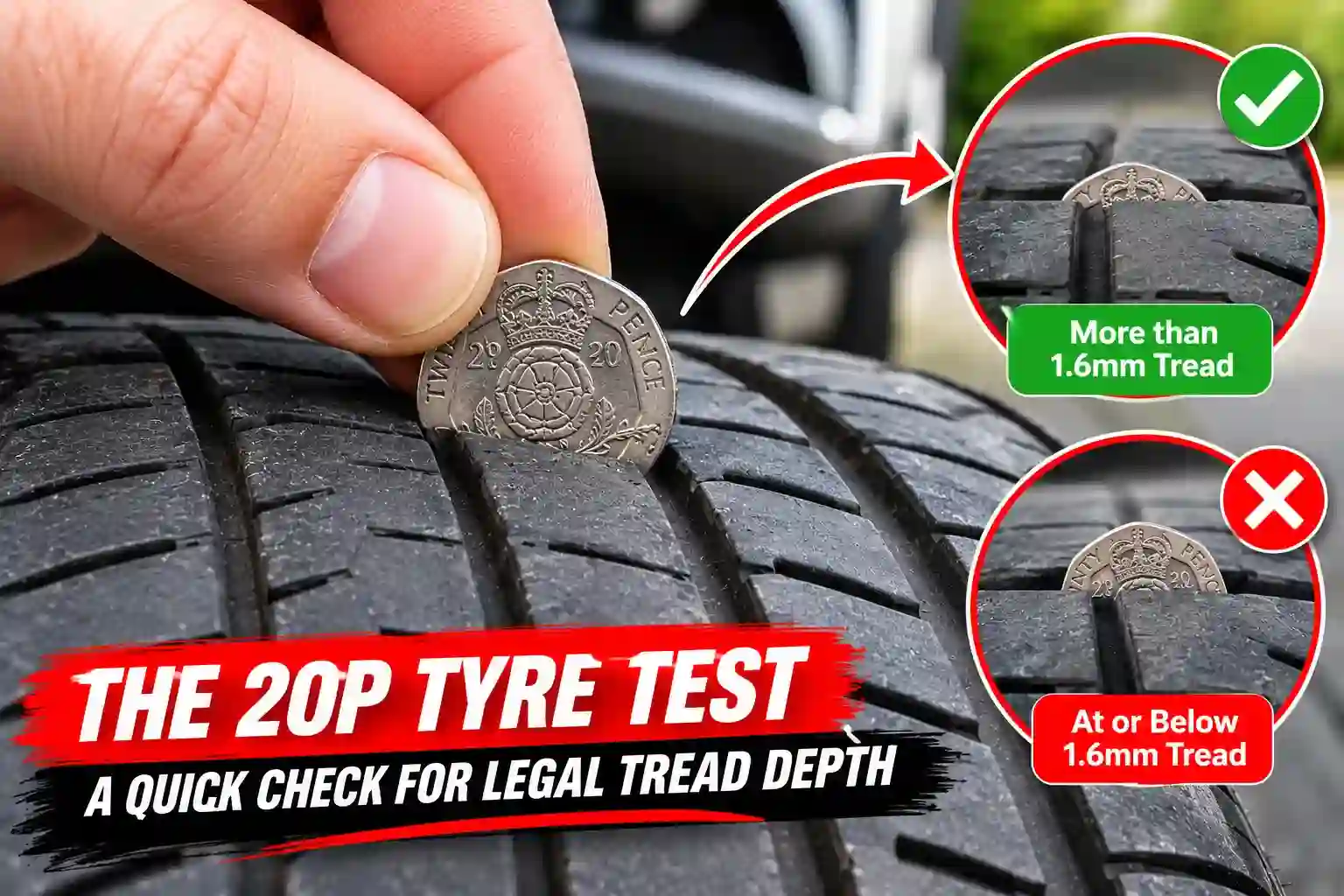
How to perform the 20p tyre tread test
- Find a clean 20p coin.
- Place the coin into one of the main grooves in your tyre tread.
- Look at the outer border of the coin.
- If the outer border is hidden by the tyre tread, that section is likely to have approximately 2.7mm or more of tread.
- If you can see the outer border, the tyre may be approaching the replacement point and needs a more accurate check.
Important: The 20p coin test is a screening check, not an exact measurement of the 1.6mm legal limit. The coin's outer border is approximately 2.7mm wide. Use a tread depth gauge or ask a tyre professional to measure the actual depth.
Do not check just one section. Repeat the test at several points around the circumference of each tyre and across different parts of the tread width.
Is the 20p test completely accurate?
No. The 20p coin test is a useful initial check, but it is not a substitute for measuring the actual tread depth. A tyre tread depth gauge provides a more accurate measurement in millimetres.
If the coin's outer border is visible, arrange a proper inspection rather than assuming the tyre is definitely illegal. Equally, passing the coin test in one location does not prove that the entire tyre meets the legal requirement.
What Happens If You Drive With Tyres Below the Legal Limit?
Driving with tyres below the minimum legal tread depth is an offence. Tyres that are worn beyond the legal limit may struggle to maintain grip, particularly when the road is wet. This can affect braking, steering and your ability to control the vehicle in difficult conditions.
If you discover that your tyres are below the legal limit, do not ignore the problem or continue driving as normal. Arrange a professional assessment and replacement where necessary. If you believe a tyre is unsafe, avoid driving the vehicle and arrange suitable assistance.
Can You Fail an MOT Because of Low Tyre Tread?
Yes. A car can fail its MOT if its tyres do not meet the required tread depth or other applicable tyre safety requirements. During an MOT inspection, the tester checks the tyres fitted to the road wheels, including their condition and tread depth.
For most cars, the primary tread grooves must meet the 1.6mm minimum across the central three-quarters of the tread and around the entire circumference. A tyre that does not meet the required standard is classed as a dangerous defect under the MOT inspection criteria.
Other tyre problems can also cause an MOT failure, including certain cuts, bulges, exposed cords and unsuitable or incorrectly fitted tyres. Remember that having a valid MOT certificate does not mean your tyres will remain legal indefinitely. Tyres continue to wear after an MOT, so regular checks are still your responsibility.
What Are the Penalties for Illegal Tyres in the UK?
Driving with tyres below the legal tread depth can result in serious penalties.
For a defective tyre offence involving a vehicle up to 3.5 tonnes, the maximum penalty can include:
- A fine of up to £2,500 per defective tyre.
- Three penalty points on your driving licence per defective tyre.
These penalties can apply to each defective tyre. If more than one tyre is illegal, the consequences can therefore be considerably more serious.
The exact outcome depends on the offence and circumstances. The Sentencing Council provides the relevant guidance for defective tyre offences.
How Does Low Tyre Tread Affect Braking and Driving Safety?
Tyre tread is not just a legal requirement. It plays an important role in how your vehicle behaves on different road surfaces. The grooves in your tyres help move water away from the contact area between the tyre and the road. When the tread becomes worn, the tyre has less ability to manage water effectively.
1. Reduced Grip in Wet Weather
Worn tyres can struggle to maintain contact with the road when driving through standing water or on wet surfaces, increasing the risk of losing traction during heavy rainfall.
2. Increased Risk of Aquaplaning
Aquaplaning happens when a layer of water builds between the tyre and the road surface, causing the tyre to lose road contact and making steering and braking difficult.
3. Longer Stopping Distances
When tread depth is low, particularly in wet conditions, the tyre may not grip the road as effectively, increasing stopping distances and making emergency braking less predictable.
4. Reduced Vehicle Control
Worn tyres can affect how confidently your vehicle handles when cornering, changing direction or braking suddenly on wet, slippery or uneven London roads.
How Often Should You Check Your Tyre Tread?
It is sensible to check your tyre tread regularly rather than waiting until your MOT is due. A practical routine is to inspect your tyres at least once a month and before longer journeys. You should also check them if you notice changes in how your vehicle drives.
Look out for:
- Tread that appears unusually shallow.
- Uneven wear across the tyre.
- Visible tread wear indicators.
- Cracks, cuts or bulges.
- Objects embedded in the tread.
- Changes in handling or braking.
Check all four tyres, including the inner and outer edges where possible. If you cannot inspect the inside edges safely, ask a tyre professional to do so. It is also important to maintain the correct tyre pressure, as incorrect pressure can contribute to uneven wear. Read our guide: How Often Should You Check Your Tyre Pressure?
When Should You Replace Car Tyres Before They Reach 1.6mm?
The legal minimum is not necessarily the best point at which to replace your tyres. Many tyre safety organisations and manufacturers advise drivers to consider replacing tyres before they reach 1.6mm, particularly if they regularly drive in wet conditions.
A tread depth of around 3mm is often used as a sensible point to start considering replacement, although the right decision depends on the tyre, vehicle, driving conditions and manufacturer's advice.
Why consider changing tyres earlier?
- You can maintain a better margin above the legal limit.
- You can avoid leaving replacement until the last moment.
- You may benefit from better wet-weather performance compared with tyres close to the legal minimum.
- You reduce the chance of discovering an illegal tyre during an MOT or roadside check.
You should also consider replacing a tyre if it has serious damage—such as a bulge, significant cut, or exposed tyre cord—even if the tread depth is still above 1.6mm. For more warning signs, read: How to Know When Your Car Tyres Need Replacing.
What Should You Do If Your Tyres Are Worn or Close to the Legal Limit?
If your tyres appear worn, the first step is to establish their actual condition. Do not rely entirely on how the tyre looks from a distance or on a single 20p coin test. Instead:
- Check the tread at several points around each tyre.
- Look for uneven wear across the tread.
- Inspect the sidewalls for cuts, cracks and bulges.
- Use a tread depth gauge if available.
- Arrange a professional inspection if you are unsure.
If a tyre is below the legal minimum, it needs replacing before the vehicle is used on the road. You can also read our guide to tyre punctures and tyre damage to understand why some tyre problems can be repaired while others require replacement.
Need Convenient Tyre Replacement in London?
If your tyres are worn or need replacing, you do not necessarily have to arrange a trip to a traditional garage. FlatFix Tyre can bring mobile tyre assistance to your location.
How Mobile Tyre Fitting Can Help London Drivers
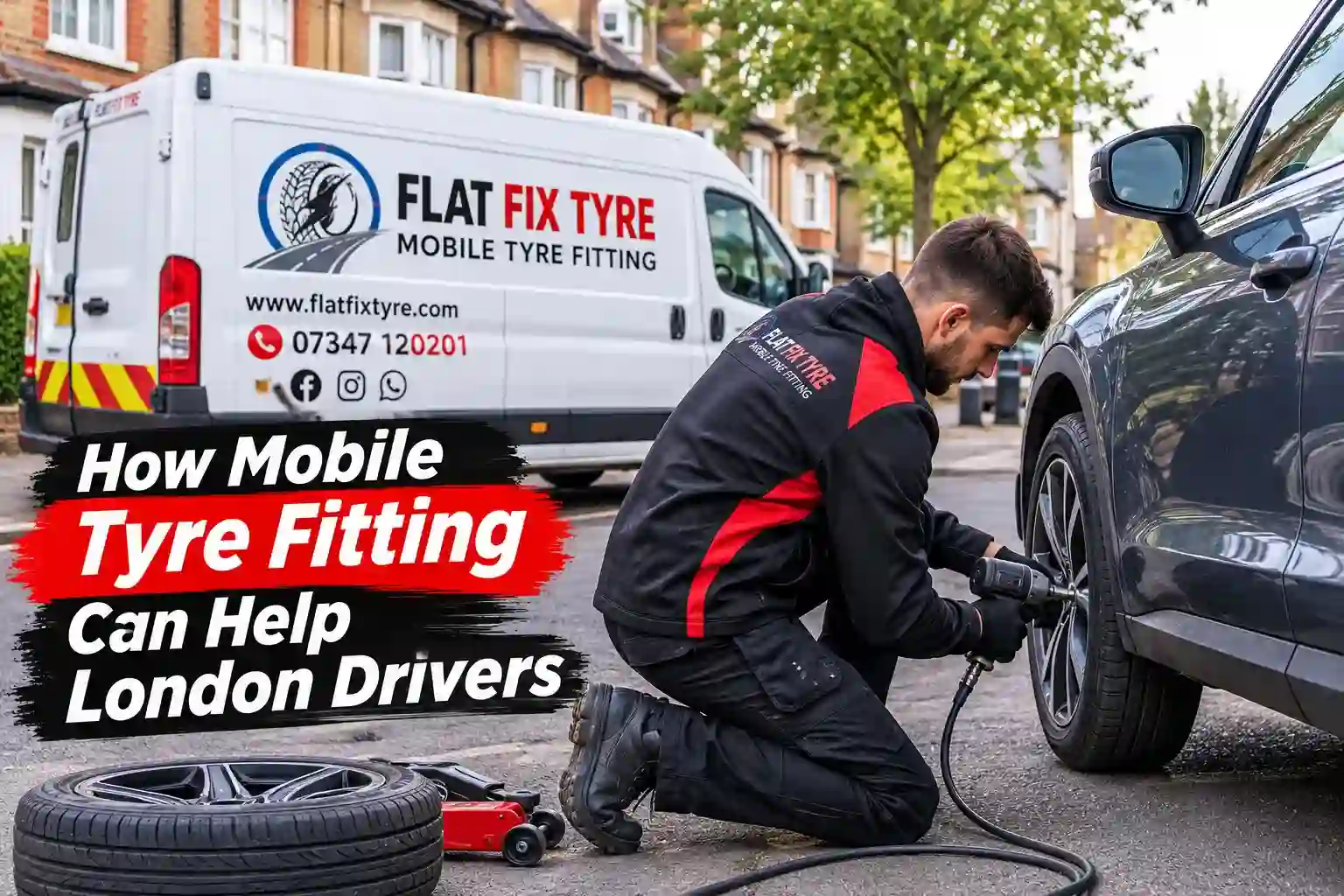
Discovering that your tyres need replacing can be inconvenient, particularly when you have work, family commitments or a busy schedule. Mobile tyre fitting offers a practical alternative to travelling to a tyre garage—instead of driving to a workshop, you can arrange for a mobile technician to attend your home, workplace or a suitable roadside location.
The process generally involves:
- Providing your vehicle details or tyre size.
- Discussing your tyre requirements and receiving a quote.
- Arranging a suitable fitting location and appointment.
- Having the technician attend and assess the tyres.
- Completing the replacement and relevant fitting checks.
FlatFix Tyre provides mobile tyre fitting, tyre replacement and puncture repair across London. For information about pricing, read How Much Does Mobile Tyre Fitting Cost in London?
Frequently Asked Questions About Legal Tyre Tread Depth in the UK
For most cars, the minimum legal tyre tread depth is 1.6mm. This must be maintained across the central three-quarters of the tread and around the entire circumference of the tyre.
Yes. A tyre with 2mm of tread can meet the legal minimum, provided the required primary grooves maintain at least 1.6mm across the central three-quarters and around the entire circumference. However, 2mm is relatively close to the legal limit, so replacement should be considered.
No, not if the primary tread grooves fall below 1.6mm in the legally required area. For most cars, this would mean the tyre does not meet the legal tread depth requirement and must be replaced before driving on the road.
Place a 20p coin into the main grooves of your tyre. If the coin's outer border is hidden by the tread, that section is likely to have approximately 2.7mm or more of tread. If the border is visible, the tyre may be approaching the replacement point and should be checked with a tread depth gauge.
Yes. If a car tyre does not meet the minimum legal tread depth requirement, it can receive a dangerous defect classification during an MOT and the vehicle will fail.
Check your tyre tread at least once a month and before long journeys. You should also inspect your tyres if you notice unusual handling, uneven wear or visible damage.
It is often sensible to replace tyres before they reach the legal minimum. Many tyre safety organisations recommend considering replacement at around 3mm, particularly for drivers who regularly travel in wet conditions.
Keep Your Tyres Legal and Stay Safe With FlatFix Tyre
Your tyres are one of the most important safety features on your vehicle. Checking their tread depth regularly can help you identify wear early, avoid unnecessary MOT problems and reduce the risk of driving with unsafe tyres.
Remember, the legal tyre tread depth in the UK for most cars is 1.6mm across the central three-quarters of the tread and around the entire circumference.
FlatFix Tyre provides mobile tyre fitting, tyre replacement and suitable tyre repair services across London. We come to your home, workplace or a suitable roadside location, helping you deal with tyre problems without the need to visit a traditional garage.
Need new tyres or mobile tyre assistance in London?
07347 120201FlatFix Tyre – Mobile Tyre Fitting Across London.