Why Do Electric Car Tyres Wear Out Faster? Causes, Signs and Solutions
Electric cars are known for their quiet driving experience, instant acceleration and lower tailpipe emissions. However, one question many EV owners ask is: why do electric car tyres wear out faster than conventional car tyres?
Protect Your EV Tyres & Range
Understand how instant electric torque and battery pack weight affect your tyre lifespan, and what you can do to prevent rapid tread wear across London.

Need Expert EV Tyre Assistance in London?
Whether you need an EV-rated tyre replacement or emergency roadside fitting, our mobile technicians come directly to you.
24/7 Mobile Service • Covering All 32 London Boroughs
Electric vehicles can put extra demands on their tyres because of their battery weight, instant motor torque and the way they deliver acceleration. These factors can contribute to faster tread wear, particularly when combined with incorrect tyre pressure, aggressive driving or poor wheel alignment.
However, not every electric car wears through tyres at the same rate. Tyre lifespan depends on the vehicle, tyre specification, driving habits, road conditions and maintenance.
For EV drivers in London, where stop-start traffic, potholes and frequent braking can all affect tyre condition, understanding these factors is important.
Do Electric Cars Really Wear Tyres Faster Than Petrol and Diesel Cars?
Electric cars can experience faster tyre wear than comparable petrol or diesel vehicles, but it is not true in every case.
The main difference is how an electric vehicle delivers its power and how much weight its tyres may need to support. Many EVs carry heavy battery packs and produce strong torque from a standstill. This can increase the forces acting on the tyres, especially during acceleration.
Modern electric vehicles are designed with these characteristics in mind. Choosing tyres with the correct specifications and maintaining them properly can make a significant difference.
A well-maintained EV with suitable tyres and smooth driving habits may achieve good tyre life. A petrol or diesel car can also wear its tyres quickly if its alignment, pressure or driving style is poor.
Why Do Electric Car Tyres Wear Out Faster?
There are several reasons why electric car tyre wear can become a concern. Some relate to the vehicle itself, while others are connected to driving habits and maintenance.
1. Higher Vehicle Weight Due to the Battery
One of the biggest differences between many electric cars and conventional cars is the battery pack. EV batteries can add considerable weight to a vehicle, meaning the tyres must support and manage a greater load.
More weight can increase the forces placed on the tyre during cornering, braking and acceleration. Over time, these forces may contribute to tread wear.
2. Instant Electric Motor Torque
Electric motors can deliver strong torque almost immediately when the driver presses the accelerator. This gives EVs their responsive acceleration, but it can also place additional stress on the tyres.
Rapid acceleration can cause the driven wheels to work harder against the road surface. Smooth acceleration helps reduce unnecessary stress on the tyres.
3. Driving Style and Aggressive Acceleration
Driving habits make a significant difference to tyre lifespan, regardless of whether a vehicle is electric, petrol or diesel.
Repeated hard acceleration, sharp cornering and sudden braking can all contribute to increased tyre wear. Frequently accelerating hard away from traffic lights in London can put additional demands on the driven tyres.
- Accelerate progressively rather than pressing the accelerator sharply.
- Avoid taking corners aggressively.
- Leave enough distance to brake smoothly.
- Drive at a speed appropriate for the road conditions.
4. Incorrect Tyre Pressure
Tyre pressure is one of the most important factors affecting tyre condition. Underinflated tyres can flex more, increasing heat build-up, rolling resistance and uneven tread wear. Overinflated tyres can also affect the contact patch and handling.
Do not guess the correct pressure. Check your vehicle handbook or manufacturer's recommended pressure label.
Read our guide on how often you should check your tyre pressure.

5. Wheel Alignment and Suspension Problems
Incorrect wheel alignment can cause tyres to wear unevenly. If the wheels are not pointing in the correct direction, the tyres may scrub against the road instead of rolling as intended.
London roads can include potholes, uneven surfaces and raised road features. A significant impact can sometimes affect wheel alignment or damage suspension components.
- Uneven wear across the tyre tread.
- The steering wheel sitting off-centre.
- The vehicle pulling to one side.
- Handling that feels unusual.
If you notice these symptoms, arrange a professional inspection. A new tyre may also wear prematurely if the underlying alignment problem is not addressed.
6. Choosing Unsuitable Replacement Tyres
Not all tyres are designed for the same vehicle requirements. Electric cars may need tyres that accommodate their weight, performance and efficiency requirements.
- Correct tyre size.
- Suitable load index.
- Appropriate speed rating.
- Compatibility with the vehicle manufacturer's specifications.
- Suitable performance for the intended road conditions.
Some tyres are specifically developed for electric vehicles. However, a tyre does not have to carry an EV-specific label to be suitable. The key is selecting a tyre approved for the particular vehicle.
How Long Do Electric Car Tyres Usually Last?
There is no single mileage figure that applies to every electric car tyre. Some EV owners may need replacement sooner than expected, while others can achieve a good lifespan from their tyres.
Vehicle weight
Heavier vehicles place greater loads on their tyres.
Driving style
Frequent rapid acceleration and harsh braking can increase wear.
Road conditions
Rough roads, potholes and frequent cornering affect tyre condition.
Maintenance
Incorrect pressure and poor alignment can shorten tyre life.
Rather than relying on a general mileage estimate, inspect your tyres regularly and monitor how their tread condition changes.
Warning Signs Your EV Tyres Need Replacing
Recognising tyre wear early can help you deal with a problem before it becomes a safety concern.
1. Uneven Tread Wear
If one edge of a tyre is more worn than the other, it could indicate incorrect wheel alignment, unsuitable pressure or a suspension issue. Check the inner and outer edges as well as the centre of the tread.
Read our guide to the common causes of uneven tyre wear.
2. Low Tyre Tread Depth
Tyre tread helps provide grip, particularly on wet roads. In the UK, car tyres must have at least 1.6mm of tread across the central three-quarters of the tyre and around its entire circumference.
This is the legal minimum, not necessarily the point at which every driver should wait before replacing a tyre. If your tread is approaching the limit, arrange an inspection.
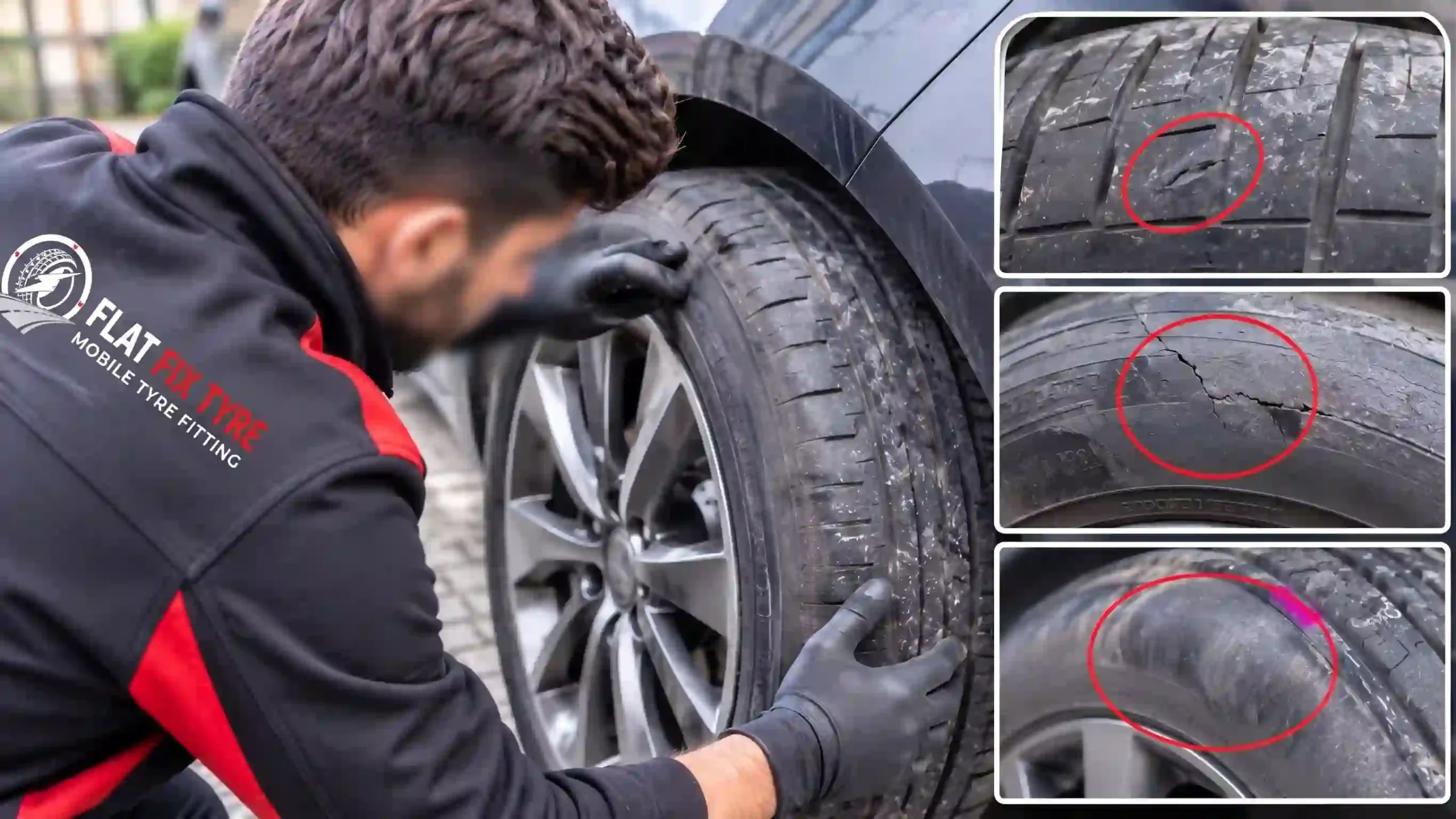
3. Cracks, Cuts or Bulges
Look for cuts in the sidewall, cracks in the rubber, bulges, exposed cords or damage following an impact with a pothole or kerb.
4. Vibrations or Unusual Road Noise
If your electric car develops unusual vibration, steering wheel shake or a new noise while driving, the tyres and wheels may need checking. Possible causes include uneven tyre wear, wheel imbalance, wheel damage or other mechanical issues.
5. Repeated Loss of Tyre Pressure
If you regularly need to inflate the same tyre, there may be a slow puncture, a damaged valve or a problem with the wheel rim. Do not simply keep adding air without investigating the cause.
How to Make Your Electric Car Tyres Last Longer
Although some EV characteristics cannot be changed, good driving habits and regular maintenance can help reduce unnecessary tyre wear.
Check Tyre Pressure Regularly
Check all four tyres when they are cold, using a reliable pressure gauge. Follow the vehicle manufacturer's recommended pressures rather than the maximum pressure printed on the tyre sidewall.
Read our guide to checking tyre pressure regularly.
Avoid Unnecessarily Hard Acceleration
Electric cars can accelerate quickly, but using maximum acceleration frequently can put additional stress on the driven tyres. Try to accelerate smoothly, particularly when pulling away from traffic lights.
Check Wheel Alignment
If your EV pulls to one side, the steering wheel is not straight or the tread is wearing unevenly, arrange an alignment inspection.
Follow Manufacturer Tyre Rotation Guidance
Some vehicles benefit from rotating tyres to help balance wear between axles. However, not every vehicle uses the same tyre sizes or rotation pattern. Follow the vehicle and tyre manufacturer's instructions.
Inspect Your Tyres Regularly
Check the tread and sidewalls for damage, embedded objects and uneven wear. Pay particular attention after hitting a pothole or kerb.
Choose Tyres With the Correct Specifications
When replacing EV tyres, check the approved size, load index and speed rating. The right tyre needs to be suitable for the vehicle and its intended use.
Are Special EV Tyres Necessary?
Not necessarily. Some electric cars use tyres developed specifically for EV requirements, while others can use conventional tyres that meet the vehicle manufacturer's specifications.
- Load capacity: To accommodate the weight of the vehicle and its battery.
- Lower rolling resistance: To help reduce the energy needed to keep the vehicle moving.
- Noise reduction: To improve comfort in a quieter cabin.
- Suitable construction: To manage the demands of vehicle weight, acceleration and handling.
However, do not assume that every tyre labelled as an EV tyre is automatically the right choice for your car. Check the approved specifications in your vehicle handbook or with the manufacturer.
Can You Replace Just One Electric Car Tyre?
Sometimes, yes. However, whether replacing just one tyre is suitable depends on the condition of the remaining tyres and the vehicle manufacturer's recommendations.
- Does the replacement have the correct size and specification?
- Is its load index and speed rating suitable?
- How much tread remains on the tyre on the same axle?
- Does the vehicle manufacturer require matching tyres?
- Does the vehicle have all-wheel drive (AWD) and specific tyre circumference requirements?
A significant difference in tread depth or rolling circumference can affect vehicle behaviour and may be unsuitable for certain AWD systems. Ask a tyre professional to assess the existing tyres before deciding.
When Should You Get Professional EV Tyre Assistance?
It is worth arranging a professional tyre inspection if you notice any of the following:
- Your EV tyres are wearing unevenly.
- The tyre pressure warning light keeps appearing.
- You have hit a pothole or kerb and suspect damage.
- There is a cut, bulge or crack in the tyre.
- Your vehicle vibrates or pulls to one side.
- The tread is approaching the UK legal minimum.
- You are unsure which replacement tyre specification your EV requires.
Do not continue driving on a tyre that appears structurally damaged, has exposed cords or is losing pressure rapidly. Stop somewhere safe and arrange appropriate assistance.
For more information, see our guide on how to know when your car tyres need replacing.
How FlatFix Tyre Can Help London EV Drivers
Electric vehicle owners need tyres that meet their car's specifications and are suitable for everyday driving.
If your EV tyres are worn, damaged or need replacing, FlatFix Tyre can help with mobile tyre fitting in London. Mobile fitting can be a convenient option when you need tyre replacement without making a separate trip to a traditional tyre-fitting location.
Before arranging a replacement, make sure you have the correct tyre size and vehicle details available. This helps establish which tyre specifications are suitable for your car.
Need Help With Your EV Tyres in London?
Don't risk driving on worn or damaged EV tyres. Contact our team to book doorstep mobile fitting, roadside emergency replacement, or puncture repair across London.
24/7 Mobile Service • All 32 London Boroughs Covered
Frequently Asked Questions
They can. The additional weight of the battery and the instant torque produced by electric motors can increase the demands placed on tyres. However, the rate of wear depends on the vehicle, tyre specification, driving habits and maintenance.
Many EVs need tyres capable of supporting higher vehicle loads. Some also need to manage strong acceleration, low rolling resistance and reduced road noise. The correct load capacity depends on the vehicle manufacturer's specifications.
There is no universal lifespan for EV tyres. Mileage, vehicle weight, driving style, tyre type, road conditions, pressure and alignment all influence how long they last. Regular inspections are more useful than relying on a single mileage estimate.
A conventional tyre may be suitable if it meets the vehicle manufacturer's requirements for size, load index, speed rating and other specifications. Always check the handbook before choosing a replacement.
Not every electric car requires a tyre specifically marketed for EVs. Some EV-specific tyres offer features for load capacity, rolling resistance and noise reduction, but the most important consideration is whether the tyre is approved for your particular vehicle.
Frequent aggressive acceleration can increase the forces acting on the driven tyres and contribute to faster wear. Smooth, progressive acceleration can help reduce unnecessary stress.
Check tyre pressure regularly, ideally at least once a month and before longer journeys. Follow your vehicle manufacturer's recommendations and check pressures when the tyres are cold.
Sometimes. It depends on the remaining tread depth, tyre specification, drivetrain and manufacturer guidance. AWD vehicles may have stricter requirements, so seek professional advice before replacing only one tyre.
There is no single pressure for all electric cars. The correct figures depend on the vehicle, tyre size and load. Check the vehicle handbook or manufacturer's pressure label, often found inside the driver's door area.