Tyre Sidewall Damage: Can It Be Repaired or Does It Need Replacing?
You notice a cut on your tyre after parking, spot a bubble near the wheel rim, or hear a thud after hitting a pothole. It is natural to wonder whether the damage is only cosmetic or whether the tyre has become unsafe.
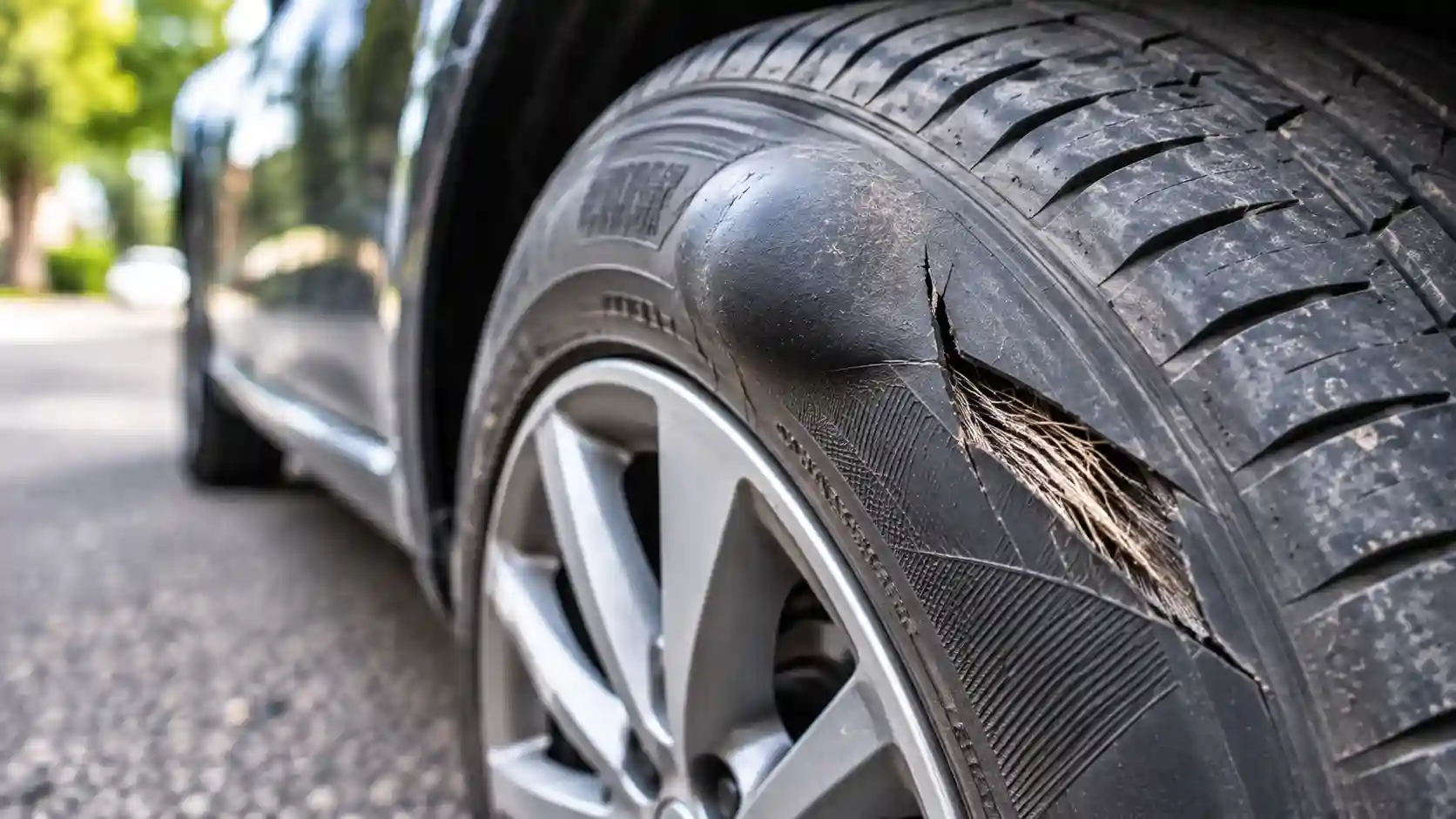
Can tyre sidewall damage be repaired? In most cases, damage that affects the tyre's sidewall structure cannot be safely repaired and the tyre will need replacing. A light surface scuff may not have damaged the structure, but cuts, bulges, exposed cords and splits need prompt professional assessment.
This guide explains what to look for, why sidewall damage matters, whether you can drive on it and what to do if your tyre needs replacing. If you need immediate assistance at home, work or roadside, visit the FlatFix Tyre homepage to explore our London mobile tyre services.
Quick Check: What Does Your Tyre Sidewall Damage Look Like?
Select the type of mark or damage you see on your tyre sidewall for immediate safety guidance:
Sidewall Damage Self-Assessment
Choose an option below. This tool offers general safety guidance and does not replace a physical inspection.
Bulge or Bubble on the Sidewall
Safety Status: Do Not Drive. A bulge indicates that internal reinforcing cords have ruptured—commonly after hitting a pothole or kerb—allowing air pressure to push out the outer rubber.
Recommended Action: Cannot be repaired. Arrange emergency tyre replacement at your parked location rather than driving to a garage.
What Is Tyre Sidewall Damage?
The tyre sidewall is the section between the tread and the wheel rim. It is the part you can usually see when looking at the side of a fitted tyre. It carries important information such as the tyre size, load rating and speed rating.
The sidewall is not simply a protective outer layer. It forms part of the tyre's structure, helps contain air pressure and flexes as the wheel rotates and the vehicle moves over the road.
That repeated flexing is one reason damage in this area needs careful attention. A repair that might be suitable for a small puncture in the central tread area is not automatically suitable for the sidewall.
Sidewall damage can include:
- Scrapes or scuffs from contact with a kerb.
- Cuts caused by sharp objects.
- Cracks caused by deterioration or ageing.
- Bulges or bubbles caused by internal structural damage.
- Splits, tears or exposed internal cords.
A mark on the rubber does not automatically mean the tyre must be replaced. The important question is whether the damage reaches or weakens the tyre's structure. That can be difficult to judge from the outside.
What Causes Tyre Sidewall Damage?
Several everyday driving situations can damage the sidewall. Sometimes the damage is obvious; on other occasions, it only becomes noticeable later.
Hitting Potholes
A hard impact with a pothole can compress the tyre between the road surface and the wheel rim. This can damage internal components and may create a visible bulge or deformation. The wheel itself may also be damaged.
Scraping or Striking Kerbs
Parking close to a kerb or mounting it at an angle can scrape the outer sidewall. A shallow scuff may be cosmetic, but a deeper cut or impact can affect the tyre's internal structure.
Driving Over Sharp Objects
Broken glass, metal fragments, sharp stones and road debris can cut the sidewall. Unlike the central tread area, the sidewall is generally not suitable for an ordinary puncture repair.
Incorrect Tyre Pressure
Driving with pressure that is too low can cause excessive flexing and heat build-up. Always use the vehicle manufacturer's recommended pressure, checking it when the tyres are cold where possible.
Overloading the Vehicle
Carrying more weight than the vehicle or tyre is designed for puts additional strain on the tyres. Check the vehicle's load limits and make sure the fitted tyres have the correct load rating.
Ageing and Deterioration
As tyres age, the rubber can deteriorate. Cracking may appear due to age, environmental exposure or storage conditions. Have uncertain or significant cracking assessed by a tyre professional.
What Are the Signs of Tyre Sidewall Damage?
Look at the visible sidewall when the vehicle is parked safely. If possible, check the inner sidewall too, but do not put yourself in an unsafe position or reach under a vehicle.
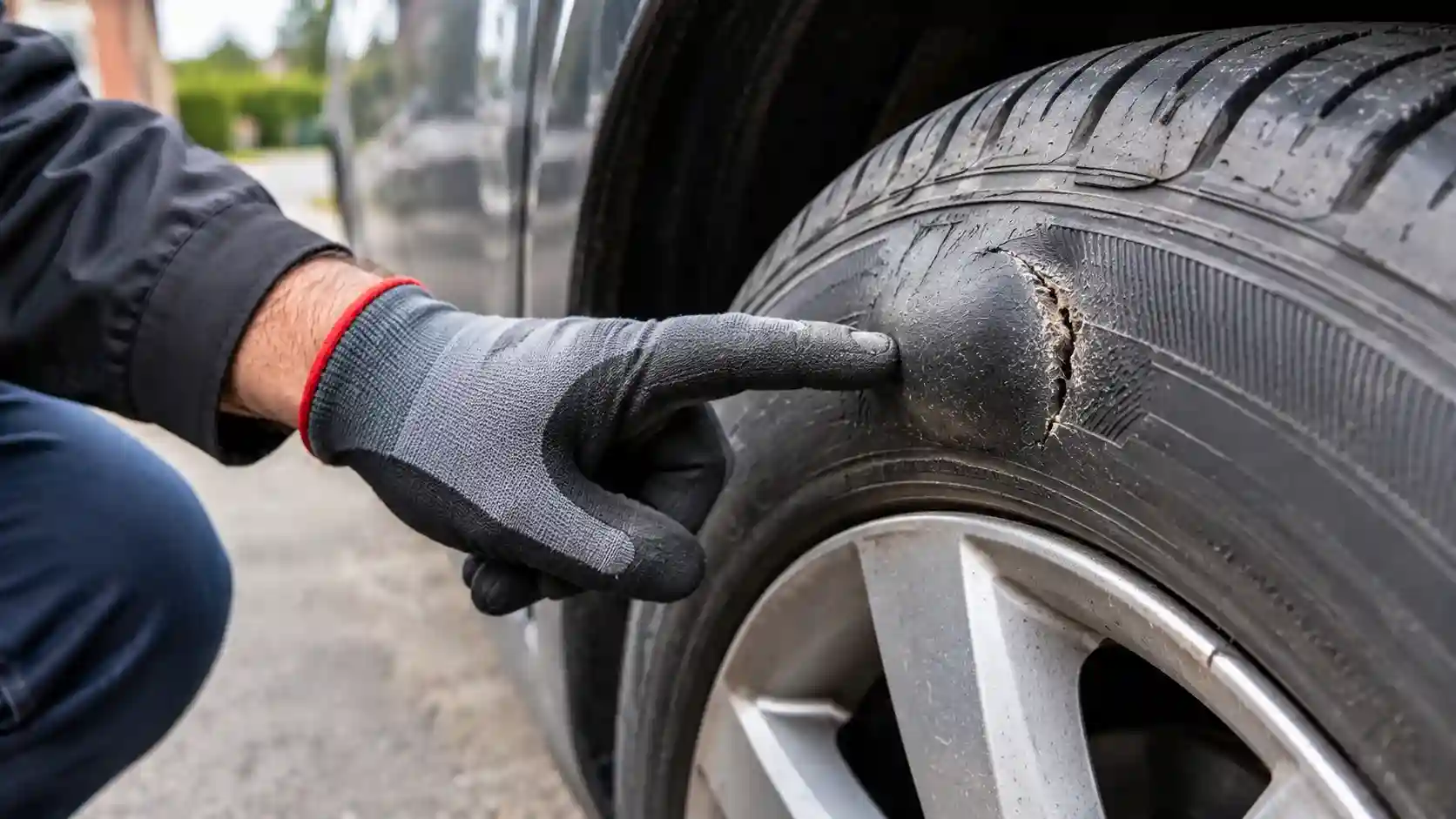
Sidewall bulges or bubbles
A raised bubble or lump can indicate that internal reinforcing components have been damaged or separated. It is a serious warning sign, even if the tyre still appears inflated. Do not drive on a tyre with a suspected structural bulge. Arrange assistance and replacement following professional assessment.
Cuts and deep scratches
A shallow surface scrape may not affect the tyre's structure. A deep cut is different: it may reach the casing or expose reinforcing material beneath the rubber. Do not insert anything into a cut, pull the rubber apart or try to judge its depth by probing it.
Cracks and splits
Small surface lines can be associated with ageing, but deep cracks, splits or cracking that appears to reach the tyre's internal structure need urgent professional attention.
Exposed cords or internal tyre material
If you can see threads, cords or other internal material through damaged rubber, treat the tyre as unsafe and do not continue driving on it.
Unusual pressure loss & visible deformation
A tyre that repeatedly loses pressure or shows any unusual change in shape deserves prompt attention. A bulge, localised distortion or section that looks different from the rest of the sidewall may indicate internal damage.
Can a Tyre Sidewall Be Repaired?
Usually, no. A tyre with structural sidewall damage will normally need to be replaced rather than repaired. The sidewall flexes continually in use, and a conventional puncture repair is not designed to restore the strength and flexibility of a structurally damaged sidewall.
The British Tyre Manufacturers' Association (BTMA) explains that repairs to the shoulder or sidewall, other than cosmetic damage, may not assure the tyre's structural integrity and are not approved under its repair guidance. A tyre must be inspected internally and externally before a repair decision is made.
There is an important distinction:
- Superficial cosmetic scuff: May be limited to the outer rubber and may not require replacement. A professional should assess it if its depth is uncertain.
- Deep cut, split or exposed cords: May have damaged the tyre's casing or reinforcing structure. Replacement will normally be required.
- Bulge or structural deformation: Can indicate internal separation or failure. Do not drive on it; arrange professional assistance.
Do not use a plug, glue, sealant or DIY patch to try to repair sidewall damage. These measures cannot reliably restore a damaged sidewall's structural integrity. Not sure whether the mark is cosmetic or serious? Speak to FlatFix Tyre about a suitable inspection or tyre supply and fitting.
Is It Safe to Drive With Tyre Sidewall Damage?
It depends on the nature of the mark, but you should not drive on a tyre with a suspected structural defect. A weakened sidewall may fail suddenly, potentially causing rapid loss of pressure and affecting the vehicle's handling.
Use this table as a guide, not as a substitute for an inspection.
| Type of Damage | Potential Concern | Recommended Action |
|---|---|---|
| Superficial scuff | May be limited to the outer rubber | Arrange assessment if depth or severity is uncertain |
| Deep cut | May have damaged the casing or cords | Do not continue driving until assessed |
| Sidewall bulge | May indicate internal structural failure | Do not drive; arrange assistance |
| Exposed cords | Indicates serious tyre damage | Do not drive; arrange replacement |
| Cracks or splits | May indicate deterioration or structural damage | Arrange prompt professional inspection |
The DVSA's MOT inspection guidance identifies cuts reaching the ply or cords and bulges caused by structural separation as tyre defects. If the tyre is visibly damaged, losing pressure or changing shape, do not simply inflate it and continue your journey. Find a safe place away from traffic and arrange help.
Can Potholes Cause Sidewall Damage?
Yes. A pothole can cause a sharp impact that traps or compresses the tyre against the wheel rim. This can damage the internal structure even when the outside of the tyre initially looks normal.
After a significant impact, look for:
- A new bulge or bubble on the sidewall.
- A cut, split or scuff near the impact area.
- Loss of tyre pressure.
- A vibration or change in how the vehicle feels.
- Visible damage to the wheel rim.
Do not assume that a tyre is undamaged just because it has not immediately lost air. If the impact was severe or you notice any unusual change, arrange a professional inspection. For more detail, read our guide to what to do after pothole tyre damage in London.
Tyre Sidewall Damage: Repair or Replacement?
The location and nature of the damage are key. A small puncture in the permitted central tread repair area may be repairable after a full inspection. A structural cut or puncture in the sidewall is generally not suitable for an ordinary puncture repair.
| Feature | Suitable Tread-Area Puncture | Structural Sidewall Damage |
|---|---|---|
| Typical location | Permitted central tread area | Sidewall or shoulder |
| Repair possibility | May be repairable after inspection | Normally requires replacement |
| Main concern | Puncture size, location and internal condition | Damage to the flexible tyre structure |
| Next step | Professional internal and external inspection | Avoid driving if structural damage is suspected; arrange assessment and replacement |
The BTMA's repair guidance and the tyre manufacturer's instructions should be followed by the technician. You can read more about the difference between a tyre puncture and tyre damage.
What Should You Do If You Notice Tyre Sidewall Damage?
Whether you are at home, at work, in a supermarket car park or stranded roadside, take a cautious approach:
- Find a safe place: If you notice damage while driving, slow down carefully and stop somewhere safe as soon as you can. Avoid stopping in a live traffic lane if there is a safer option.
- Look without touching: From a safe position, check for a bulge, deep cut, split, exposed cords or obvious loss of pressure. Do not probe the damage or try to pull it open.
- Do not continue on a visibly damaged tyre: A tyre with a suspected structural defect should not be driven to a garage just to save time.
- Do not attempt a DIY repair: Glue, plugs and sealants are not a reliable way to restore a damaged sidewall.
- Record the tyre details if safe: The size is usually printed on the sidewall, for example 205/55 R16. A clear photograph can also help when asking for a quote, but do not put yourself at risk to take one.
- Arrange professional help: Ask for an inspection or suitable replacement. If you are stranded, seek roadside assistance rather than taking an unnecessary risk.
If the vehicle is in a safe driveway or workplace car park, mobile tyre fitting may be a convenient way to arrange a replacement without driving on the damaged tyre.
How Much Does It Cost to Replace a Damaged Tyre?
There is no single price for every replacement. The cost depends on the tyre and vehicle requirements, as well as availability and fitting arrangements:
- Tyre size: Different wheel sizes and tyre specifications have different prices.
- Brand: Premium, mid-range and budget tyres are priced differently.
- Tyre type: Standard, run-flat, reinforced and specialist tyres may cost different amounts.
- Vehicle requirements: The correct load index, speed rating and manufacturer requirements matter.
- Availability: The price and options can depend on which suitable tyres are available.
- Number of tyres: The condition of the other tyres and the vehicle manufacturer's recommendations may affect whether one or more replacements are appropriate.
- Mobile fitting: The quote may include fitting and any applicable call-out or service charges.
For a clearer idea of the factors involved, see our guide to mobile tyre fitting costs in London. When requesting a quote, provide your tyre size, vehicle make and model, location and any relevant markings such as run-flat or reinforced.
Can a Mobile Tyre Fitter Replace a Damaged Tyre at Home or Work?
Yes. A mobile tyre fitter can often replace a damaged tyre at a suitable home, workplace or roadside location, subject to the service area, access, tyre availability and booking conditions.
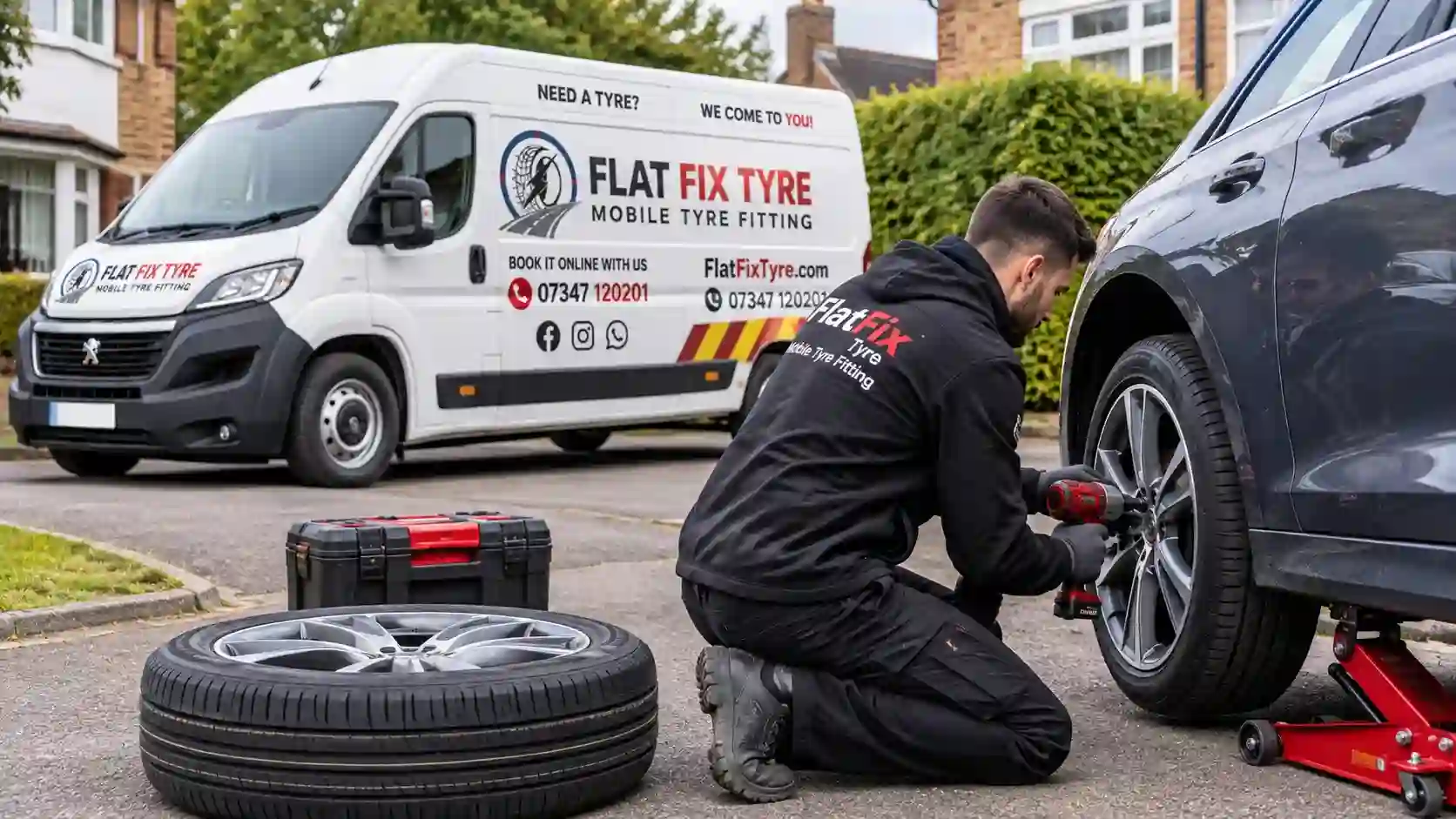
The process usually works as follows:
- Contact the service: Explain what has happened and where the vehicle is located.
- Confirm the tyre details: Provide the tyre size and vehicle information. A photograph of the sidewall markings can help if it is safe to take one.
- Discuss the quote and availability: Confirm the suitable replacement options, price and expected attendance arrangements.
- Arrange the visit: A mobile fitter attends the agreed location if it is suitable and accessible.
- Inspect and replace: The technician checks the tyre and carries out the replacement where appropriate.
- Check the completed work: The replacement is fitted in accordance with the relevant tyre and vehicle requirements.
FlatFix Tyre provides mobile tyre fitting and replacement across London and Greater London, with 24/7 mobile tyre assistance subject to location and availability. If you want to understand the process in more detail, read our guide to mobile tyre fitting at home.
Explore FlatFix Tyre Services in London
Whether you need an urgent replacement on the roadside or a scheduled visit at home, explore our mobile services:
When Should You Contact a Professional?
Arrange professional help promptly if you notice a bulge, bubble, deep cut, split, exposed cords, deep cracks, repeated pressure loss, or damage after a strong pothole or kerb impact. You can also read our guide to the signs that your car tyres need replacing.
Frequently Asked Questions
A tyre with structural sidewall damage will generally need replacing. Ordinary puncture repairs are designed for suitable damage in the permitted tread area, not for restoring a weakened sidewall. Cosmetic marks may be different, but a professional should assess uncertain damage.
Not necessarily. The visible length of a cut does not tell you how deeply it has penetrated. Even a small cut can be serious if it reaches the tyre's internal structure. Do not try to open or measure it yourself.
It can be. A bulge may indicate that the internal reinforcing structure has been damaged or separated. Do not drive on a tyre with a suspected structural bulge; arrange professional assistance.
You should not assume it is safe. Fine surface marks may be cosmetic, but deep cracks or splits can indicate deterioration or structural damage. Have the tyre assessed, and do not drive if the damage appears deep or the tyre is losing pressure.
Common causes include impact with potholes or kerbs, sharp road debris, excessive strain from incorrect pressure or overloading, and deterioration as the tyre ages. The cause and depth of the split affect the level of damage.
Yes. A hard impact can compress the tyre against the wheel rim and damage its internal structure. A bulge may appear, but damage is not always immediately obvious. Arrange an inspection after a significant impact if you notice anything unusual.
Structural damage usually means replacement. A superficial scuff may not require a new tyre, but the depth and condition need to be assessed. Do not make the decision based only on how the mark looks from the outside.
Yes, mobile replacement may be available at a suitable home or workplace location. It depends on the service area, access, tyre specification and stock. FlatFix Tyre offers mobile tyre assistance across London and Greater London, subject to availability.
The price depends on the tyre size, brand, type, vehicle requirements, availability and fitting or service charges. Share your tyre details and location when requesting a quote so the options can be checked.
It depends on the condition and specification of the tyre on the other side of the axle, tread differences, vehicle requirements and manufacturer guidance. A damaged tyre must be dealt with, but a professional should advise whether one or a pair should be replaced.
Conclusion: Do Not Ignore Tyre Sidewall Damage
A small surface scuff is not automatically a reason to replace a tyre, but a bulge, deep cut, split or exposed cord can indicate serious structural damage. Because the sidewall flexes during driving, a conventional puncture repair cannot normally restore a structurally damaged area.
If you are unsure, avoid taking unnecessary risks and arrange a professional assessment. If replacement is needed, mobile fitting may mean you do not have to drive the damaged tyre to a garage.
Need Help With a Damaged Tyre in London or Greater London?
FlatFix Tyre provides 24/7 mobile tyre assistance, including tyre replacement at home, work or roadside, subject to location and availability. Contact FlatFix Tyre to discuss your tyre, get a quote and check the available replacement options.
Call: 07347 120 201
Email: info@flatfixtyre.com
Website: flatfixtyre.com
Tyre Sidewall Damage: Can It Be Repaired or Does It Need Replacing?
You notice a cut on your tyre after parking, spot a bubble near the wheel rim, or hear a thud after hitting a pothole. It is natural to wonder whether the damage is only cosmetic or whether the tyre has become unsafe.
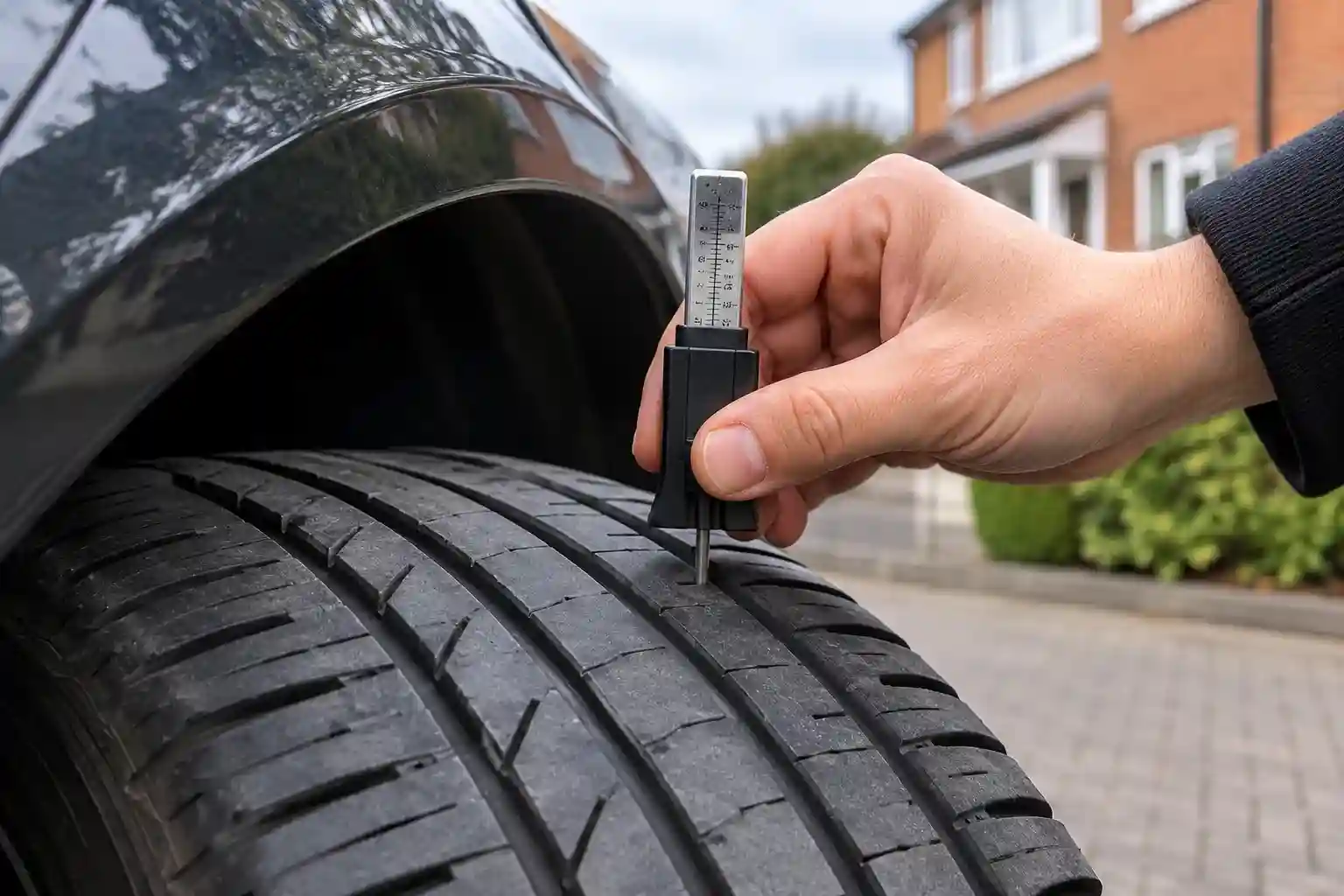
Can tyre sidewall damage be repaired? In most cases, damage that affects the tyre's sidewall structure cannot be safely repaired and the tyre will need replacing. A light surface scuff may not have damaged the structure, but cuts, bulges, exposed cords and splits need prompt professional assessment.
This guide explains what to look for, why sidewall damage matters, whether you can drive on it and what to do if your tyre needs replacing.
Quick Check: What Does Your Tyre Sidewall Damage Look Like?
Select the type of mark or damage you see on your tyre sidewall for immediate safety guidance:
Sidewall Damage Self-Assessment
Choose an option below. This tool offers general safety guidance and does not replace a physical inspection.
Bulge or Bubble on the Sidewall
Safety Status: Do Not Drive. A bulge indicates that internal reinforcing cords have ruptured—commonly after hitting a pothole or kerb—allowing air pressure to push out the outer rubber.
Recommended Action: Cannot be repaired. Arrange mobile tyre replacement at your parked location rather than driving to a garage.
What Is Tyre Sidewall Damage?
The tyre sidewall is the section between the tread and the wheel rim. It is the part you can usually see when looking at the side of a fitted tyre. It carries important information such as the tyre size, load rating and speed rating.
The sidewall is not simply a protective outer layer. It forms part of the tyre's structure, helps contain air pressure and flexes as the wheel rotates and the vehicle moves over the road.
That repeated flexing is one reason damage in this area needs careful attention. A repair that might be suitable for a small puncture in the central tread area is not automatically suitable for the sidewall.
Sidewall damage can include:
- Scrapes or scuffs from contact with a kerb.
- Cuts caused by sharp objects.
- Cracks caused by deterioration or ageing.
- Bulges or bubbles caused by internal structural damage.
- Splits, tears or exposed internal cords.
A mark on the rubber does not automatically mean the tyre must be replaced. The important question is whether the damage reaches or weakens the tyre's structure. That can be difficult to judge from the outside.
What Causes Tyre Sidewall Damage?
Several everyday driving situations can damage the sidewall. Sometimes the damage is obvious; on other occasions, it only becomes noticeable later.
Hitting Potholes
A hard impact with a pothole can compress the tyre between the road surface and the wheel rim. This can damage internal components and may create a visible bulge or deformation. The wheel itself may also be damaged.
Scraping or Striking Kerbs
Parking close to a kerb or mounting it at an angle can scrape the outer sidewall. A shallow scuff may be cosmetic, but a deeper cut or impact can affect the tyre's internal structure.
Driving Over Sharp Objects
Broken glass, metal fragments, sharp stones and road debris can cut the sidewall. Unlike the central tread area, the sidewall is generally not suitable for an ordinary puncture repair.
Incorrect Tyre Pressure
Driving with pressure that is too low can cause excessive flexing and heat build-up. Always use the vehicle manufacturer's recommended pressure, checking it when the tyres are cold where possible.
Overloading the Vehicle
Carrying more weight than the vehicle or tyre is designed for puts additional strain on the tyres. Check the vehicle's load limits and make sure the fitted tyres have the correct load rating.
Ageing and Deterioration
As tyres age, the rubber can deteriorate. Cracking may appear due to age, environmental exposure or storage conditions. Have uncertain or significant cracking assessed by a tyre professional.
What Are the Signs of Tyre Sidewall Damage?
Look at the visible sidewall when the vehicle is parked safely. If possible, check the inner sidewall too, but do not put yourself in an unsafe position or reach under a vehicle.
Sidewall bulges or bubbles
A raised bubble or lump can indicate that internal reinforcing components have been damaged or separated. It is a serious warning sign, even if the tyre still appears inflated. Do not drive on a tyre with a suspected structural bulge. Arrange assistance and replacement following professional assessment.
Cuts and deep scratches
A shallow surface scrape may not affect the tyre's structure. A deep cut is different: it may reach the casing or expose reinforcing material beneath the rubber. Do not insert anything into a cut, pull the rubber apart or try to judge its depth by probing it.
Cracks and splits
Small surface lines can be associated with ageing, but deep cracks, splits or cracking that appears to reach the tyre's internal structure need urgent professional attention.
Exposed cords or internal tyre material
If you can see threads, cords or other internal material through damaged rubber, treat the tyre as unsafe and do not continue driving on it.
Unusual pressure loss & visible deformation
A tyre that repeatedly loses pressure or shows any unusual change in shape deserves prompt attention. A bulge, localised distortion or section that looks different from the rest of the sidewall may indicate internal damage.
Can a Tyre Sidewall Be Repaired?
Usually, no. A tyre with structural sidewall damage will normally need to be replaced rather than repaired. The sidewall flexes continually in use, and a conventional puncture repair is not designed to restore the strength and flexibility of a structurally damaged sidewall.
The British Tyre Manufacturers' Association (BTMA) explains that repairs to the shoulder or sidewall, other than cosmetic damage, may not assure the tyre's structural integrity and are not approved under its repair guidance. A tyre must be inspected internally and externally before a repair decision is made.
There is an important distinction:
- Superficial cosmetic scuff: May be limited to the outer rubber and may not require replacement. A professional should assess it if its depth is uncertain.
- Deep cut, split or exposed cords: May have damaged the tyre's casing or reinforcing structure. Replacement will normally be required.
- Bulge or structural deformation: Can indicate internal separation or failure. Do not drive on it; arrange professional assistance.
Do not use a plug, glue, sealant or DIY patch to try to repair sidewall damage. These measures cannot reliably restore a damaged sidewall's structural integrity. Not sure whether the mark is cosmetic or serious? Speak to FlatFix Tyre about a suitable inspection or replacement.
Is It Safe to Drive With Tyre Sidewall Damage?
It depends on the nature of the mark, but you should not drive on a tyre with a suspected structural defect. A weakened sidewall may fail suddenly, potentially causing rapid loss of pressure and affecting the vehicle's handling.
Use this table as a guide, not as a substitute for an inspection.
| Type of Damage | Potential Concern | Recommended Action |
|---|---|---|
| Superficial scuff | May be limited to the outer rubber | Arrange assessment if depth or severity is uncertain |
| Deep cut | May have damaged the casing or cords | Do not continue driving until assessed |
| Sidewall bulge | May indicate internal structural failure | Do not drive; arrange assistance |
| Exposed cords | Indicates serious tyre damage | Do not drive; arrange replacement |
| Cracks or splits | May indicate deterioration or structural damage | Arrange prompt professional inspection |
The DVSA's MOT inspection guidance identifies cuts reaching the ply or cords and bulges caused by structural separation as tyre defects. If the tyre is visibly damaged, losing pressure or changing shape, do not simply inflate it and continue your journey. Find a safe place away from traffic and arrange help.
Can Potholes Cause Sidewall Damage?
Yes. A pothole can cause a sharp impact that traps or compresses the tyre against the wheel rim. This can damage the internal structure even when the outside of the tyre initially looks normal.
After a significant impact, look for:
- A new bulge or bubble on the sidewall.
- A cut, split or scuff near the impact area.
- Loss of tyre pressure.
- A vibration or change in how the vehicle feels.
- Visible damage to the wheel rim.
Do not assume that a tyre is undamaged just because it has not immediately lost air. If the impact was severe or you notice any unusual change, arrange a professional inspection. For more detail, read our guide to what to do after pothole tyre damage in London.
Tyre Sidewall Damage: Repair or Replacement?
The location and nature of the damage are key. A small puncture in the permitted central tread repair area may be repairable after a full inspection. A structural cut or puncture in the sidewall is generally not suitable for an ordinary puncture repair.
| Feature | Suitable Tread-Area Puncture | Structural Sidewall Damage |
|---|---|---|
| Typical location | Permitted central tread area | Sidewall or shoulder |
| Repair possibility | May be repairable after inspection | Normally requires replacement |
| Main concern | Puncture size, location and internal condition | Damage to the flexible tyre structure |
| Next step | Professional internal and external inspection | Avoid driving if structural damage is suspected; arrange assessment and replacement |
The BTMA's repair guidance and the tyre manufacturer's instructions should be followed by the technician. You can read more about the difference between a tyre puncture and tyre damage.
What Should You Do If You Notice Tyre Sidewall Damage?
Whether you are at home, at work, in a supermarket car park or stranded roadside, take a cautious approach:
- Find a safe place: If you notice damage while driving, slow down carefully and stop somewhere safe as soon as you can. Avoid stopping in a live traffic lane if there is a safer option.
- Look without touching: From a safe position, check for a bulge, deep cut, split, exposed cords or obvious loss of pressure. Do not probe the damage or try to pull it open.
- Do not continue on a visibly damaged tyre: A tyre with a suspected structural defect should not be driven to a garage just to save time.
- Do not attempt a DIY repair: Glue, plugs and sealants are not a reliable way to restore a damaged sidewall.
- Record the tyre details if safe: The size is usually printed on the sidewall, for example 205/55 R16. A clear photograph can also help when asking for a quote, but do not put yourself at risk to take one.
- Arrange professional help: Ask for an inspection or suitable replacement. If you are stranded, seek roadside assistance rather than taking an unnecessary risk.
If the vehicle is in a safe driveway or workplace car park, mobile tyre fitting may be a convenient way to arrange a replacement without driving on the damaged tyre.
How Much Does It Cost to Replace a Damaged Tyre?
There is no single price for every replacement. The cost depends on the tyre and vehicle requirements, as well as availability and fitting arrangements:
- Tyre size: Different wheel sizes and tyre specifications have different prices.
- Brand: Premium, mid-range and budget tyres are priced differently.
- Tyre type: Standard, run-flat, reinforced and specialist tyres may cost different amounts.
- Vehicle requirements: The correct load index, speed rating and manufacturer requirements matter.
- Availability: The price and options can depend on which suitable tyres are available.
- Number of tyres: The condition of the other tyres and the vehicle manufacturer's recommendations may affect whether one or more replacements are appropriate.
- Mobile fitting: The quote may include fitting and any applicable call-out or service charges.
For a clearer idea of the factors involved, see our guide to mobile tyre fitting costs in London. When requesting a quote, provide your tyre size, vehicle make and model, location and any relevant markings such as run-flat or reinforced.
Can a Mobile Tyre Fitter Replace a Damaged Tyre at Home or Work?
Yes. A mobile tyre fitter can often replace a damaged tyre at a suitable home, workplace or roadside location, subject to the service area, access, tyre availability and booking conditions.
The process usually works as follows:
- Contact the service: Explain what has happened and where the vehicle is located.
- Confirm the tyre details: Provide the tyre size and vehicle information. A photograph of the sidewall markings can help if it is safe to take one.
- Discuss the quote and availability: Confirm the suitable replacement options, price and expected attendance arrangements.
- Arrange the visit: A mobile fitter attends the agreed location if it is suitable and accessible.
- Inspect and replace: The technician checks the tyre and carries out the replacement where appropriate.
- Check the completed work: The replacement is fitted in accordance with the relevant tyre and vehicle requirements.
FlatFix Tyre provides mobile tyre fitting and replacement across London and Greater London, with 24/7 mobile tyre assistance subject to location and availability. If you want to understand the process in more detail, read our guide to mobile tyre fitting at home.
When Should You Contact a Professional?
Arrange professional help promptly if you notice a bulge, bubble, deep cut, split, exposed cords, deep cracks, repeated pressure loss, or damage after a strong pothole or kerb impact. You can also read our guide to the signs that your car tyres need replacing.
Frequently Asked Questions
A tyre with structural sidewall damage will generally need replacing. Ordinary puncture repairs are designed for suitable damage in the permitted tread area, not for restoring a weakened sidewall. Cosmetic marks may be different, but a professional should assess uncertain damage.
Not necessarily. The visible length of a cut does not tell you how deeply it has penetrated. Even a small cut can be serious if it reaches the tyre's internal structure. Do not try to open or measure it yourself.
It can be. A bulge may indicate that the internal reinforcing structure has been damaged or separated. Do not drive on a tyre with a suspected structural bulge; arrange professional assistance.
You should not assume it is safe. Fine surface marks may be cosmetic, but deep cracks or splits can indicate deterioration or structural damage. Have the tyre assessed, and do not drive if the damage appears deep or the tyre is losing pressure.
Common causes include impact with potholes or kerbs, sharp road debris, excessive strain from incorrect pressure or overloading, and deterioration as the tyre ages. The cause and depth of the split affect the level of damage.
Yes. A hard impact can compress the tyre against the wheel rim and damage its internal structure. A bulge may appear, but damage is not always immediately obvious. Arrange an inspection after a significant impact if you notice anything unusual.
Structural damage usually means replacement. A superficial scuff may not require a new tyre, but the depth and condition need to be assessed. Do not make the decision based only on how the mark looks from the outside.
Yes, mobile replacement may be available at a suitable home or workplace location. It depends on the service area, access, tyre specification and stock. FlatFix Tyre offers mobile tyre assistance across London and Greater London, subject to availability.
The price depends on the tyre size, brand, type, vehicle requirements, availability and fitting or service charges. Share your tyre details and location when requesting a quote so the options can be checked.
It depends on the condition and specification of the tyre on the other side of the axle, tread differences, vehicle requirements and manufacturer guidance. A damaged tyre must be dealt with, but a professional should advise whether one or a pair should be replaced.
Conclusion: Do Not Ignore Tyre Sidewall Damage
A small surface scuff is not automatically a reason to replace a tyre, but a bulge, deep cut, split or exposed cord can indicate serious structural damage. Because the sidewall flexes during driving, a conventional puncture repair cannot normally restore a structurally damaged area.
If you are unsure, avoid taking unnecessary risks and arrange a professional assessment. If replacement is needed, mobile fitting may mean you do not have to drive the damaged tyre to a garage.
Need Help With a Damaged Tyre in London or Greater London?
FlatFix Tyre provides 24/7 mobile tyre assistance, including tyre replacement at home, work or roadside, subject to location and availability. Contact FlatFix Tyre to discuss your tyre, get a quote and check the available replacement options.
Call: 07347 120 201
Email: info@flatfixtyre.com
Website: flatfixtyre.com