Can You Drive with a Nail in Your Tyre? What to Do and When to Get It Repaired
Finding a nail in your tyre can be worrying, particularly if you need to drive to work, collect the children or continue your journey. Even if the tyre still looks fully inflated, a nail or screw embedded in the rubber could have caused a puncture that allows air to escape gradually.
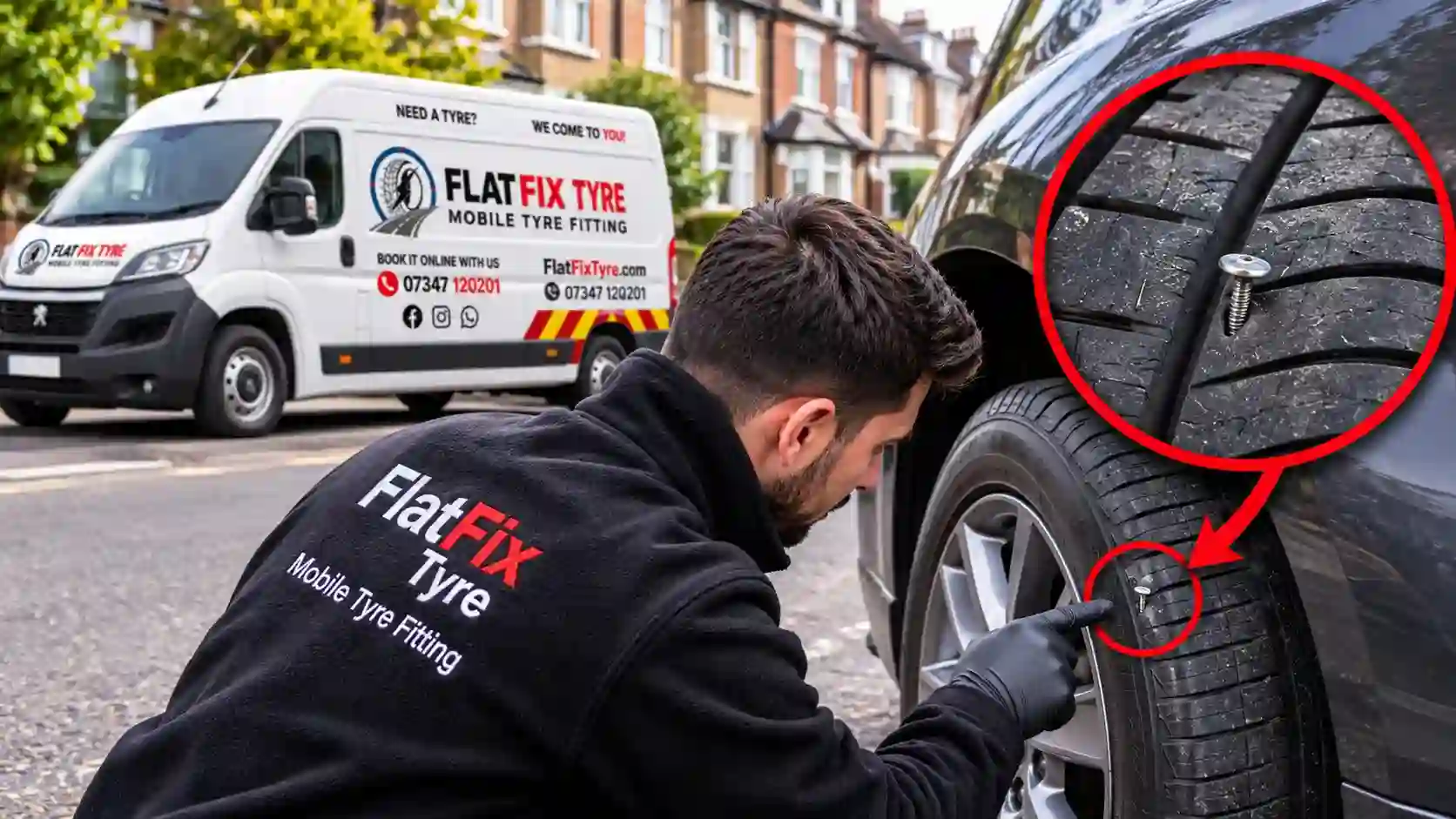
The problem is that you cannot always tell how serious the damage is just by looking at the outside of the tyre. A small nail may cause a slow puncture, while driving on an underinflated tyre can damage its internal structure and increase the risk of sudden tyre failure.
So, can you drive with a nail in your tyre? Should you remove it, and can the tyre be repaired rather than replaced?
In this guide, we explain what to do when you discover a nail in a car tyre, how to recognise signs of a puncture, when a repair may be possible and when professional inspection or tyre replacement is necessary. We also explain how mobile tyre assistance in London can help you deal with the problem without having to drive to a garage on a potentially damaged tyre.
Found a Nail or Screw in Your Tyre in London? Call Now
Do not pull the nail out or risk driving on an underinflated tyre. Call FlatFix Tyre on 07347 120 201 for fast mobile puncture repair or replacement at your home, workplace, or safe roadside location.
24/7 London Mobile Puncture & Tyre Replacement • BS AU 159 Compliant Repairs
Quick Check: Where Is the Nail Located?
Select where the nail or screw is embedded on your tyre to check whether a repair under British Standard BS AU 159 is likely to be possible:
Interactive Nail Puncture Assessment
Tap an option below. Final repairability always requires an internal and external inspection by a qualified technician.
Nail in the Central Tread Area
Likely Outcome: Potentially Repairable (Subject to Inspection). Under BS AU 159, minor punctures under 6mm in the central tread area can often be permanently repaired if the internal liner and casing are undamaged.
What to Do: Leave the nail in place, check pressure if safe, and call 07347 120 201 for mobile puncture repair.
Can You Drive with a Nail in Your Tyre?
Driving with a nail in your tyre is not recommended until the damage has been professionally assessed. Although some punctures cause only a gradual loss of air, that does not mean the tyre is safe to use.
A nail can penetrate the tread and create a small opening through which air escapes. Sometimes the nail remains lodged in the rubber, partially restricting the airflow. This can make the puncture less obvious because the tyre may appear inflated for some time. However, the situation can change as the tyre rotates, heats up and carries the weight of the vehicle.
There are several reasons why driving with a nail in your tyre can be dangerous:
- Gradual pressure loss: Air may escape slowly, causing the tyre to become increasingly underinflated.
- Internal tyre damage: Driving with insufficient pressure creates additional heat and stress within the tyre structure.
- Reduced vehicle control: Incorrect tyre pressure can affect braking, steering and overall handling.
- Sudden loss of pressure: A puncture can worsen, potentially resulting in rapid deflation while driving.
- Expensive replacement: Continued use of a damaged or underinflated tyre may make an otherwise repairable puncture unsuitable for repair.
There is no guaranteed safe distance you can drive with a nail in your tyre. The risk depends on the puncture, the amount of air remaining, the tyre's condition and whether internal damage has already occurred.
What Should You Do If You Find a Nail in Your Tyre?
Discovering a nail in your car tyre does not necessarily mean you need a replacement. However, taking the correct steps can prevent further damage and help you deal with the problem safely:
1. Find a Safe Place to Stop
If you notice a nail in your tyre while driving, avoid sudden braking or sharp steering movements. Reduce your speed carefully and look for a safe place away from moving traffic. If you are on a motorway or dual carriageway, use an emergency refuge area or another safe stopping place where available. Do not attempt to inspect a tyre beside fast-moving traffic.
Once safely parked:
- Apply the parking brake.
- Switch on your hazard warning lights if appropriate.
- Keep a safe distance from passing traffic and avoid standing between your vehicle and moving traffic.
- Do not attempt to change the wheel in a dangerous location.
2. Do Not Remove the Nail
One of the most important things to remember is not to pull the nail out of the tyre yourself. Although removing it might seem like the obvious first step, doing so could make the situation worse.
The nail may be partially blocking the puncture and slowing the escape of air. Pulling it out could allow the tyre to deflate more quickly, particularly if the object has penetrated deeply. Removing it can also make it harder to understand the original direction and extent of the damage. Leave the nail or screw in place until a tyre professional can inspect it. The AA also advises motorists not to remove a penetrating object themselves when dealing with a tyre puncture.
3. Check for Visible Damage and Pressure Loss
Once your vehicle is safely parked, look at the affected tyre from a safe position for a visible nail or screw, cracks, cuts, bulges, unusual gaps between the tyre and the road, or a TPMS warning light.
If you have a reliable tyre pressure gauge and can safely access the valve, you may check the pressure without removing the nail and compare it with the manufacturer's recommended pressure inside the driver's door or owner's handbook. Remember that a normal pressure reading does not confirm that the tyre is structurally safe.
4. Avoid Driving on an Underinflated Tyre
If the affected tyre has lost pressure, do not continue driving on it. An underinflated tyre flexes more than it should, generating additional heat and placing stress on its internal components. This can damage the casing, sidewall and other structural parts even over a short distance.
If your tyre is flat or visibly underinflated, arrange roadside assistance or mobile tyre support. For further guidance, read our article about driving on a flat tyre.
5. Arrange a Professional Tyre Inspection
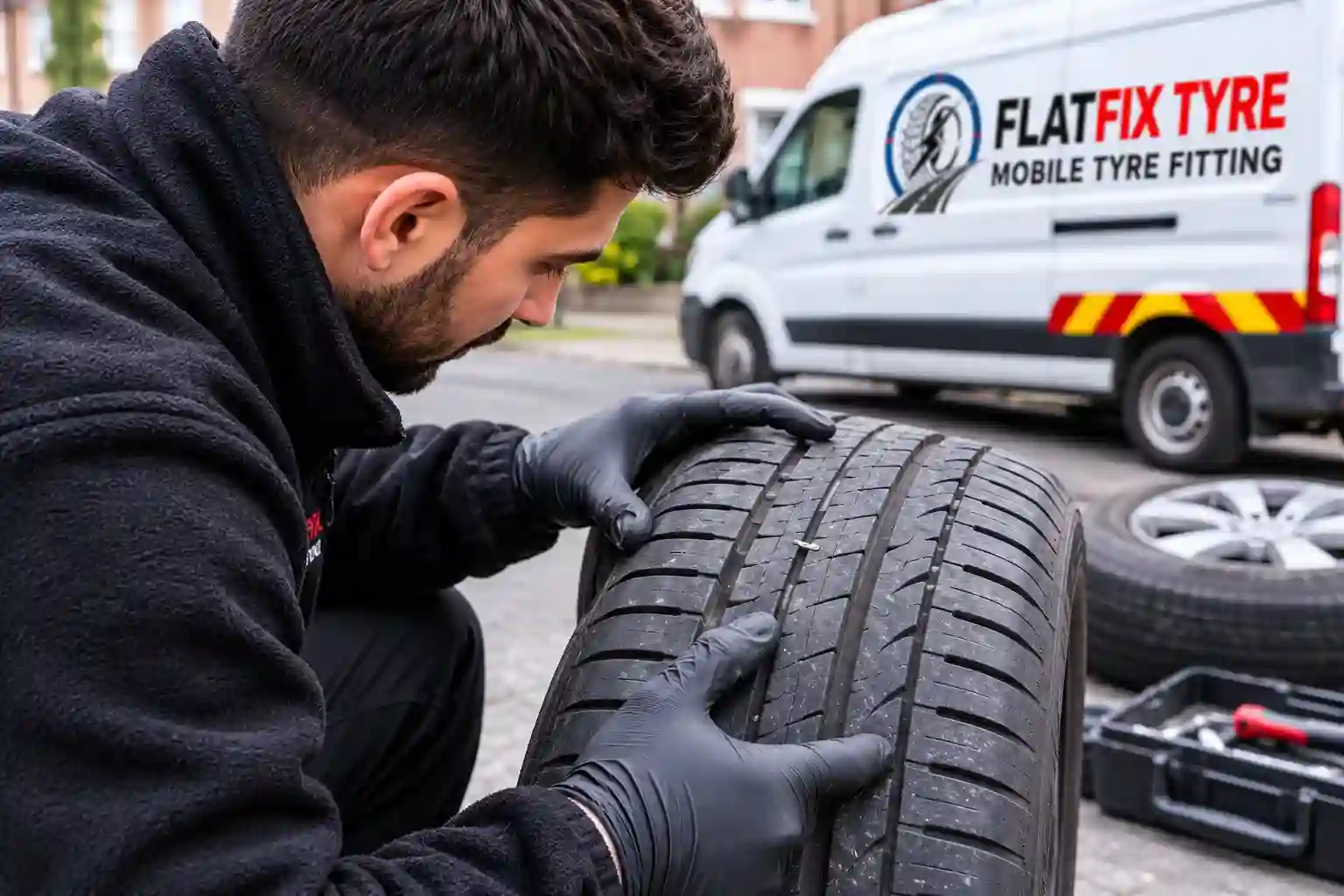
The safest way to establish whether a nail puncture can be repaired is to have the tyre examined by an experienced tyre technician. The tyre generally needs to be removed from the wheel so the technician can inspect where the nail entered, the size and direction of the puncture, and whether internal casing damage has occurred.
If you are in London and cannot safely take your vehicle to a garage, mobile tyre assistance may provide a more convenient way to have the problem assessed.
Need Help With a Nail in Your Tyre in London?
Call FlatFix Tyre on 07347 120 201 to enquire about mobile tyre assistance at your home, workplace, or safe roadside location.
Can a Tyre with a Nail in It Be Repaired?
Yes, a tyre with a nail in it may be repairable, but not every puncture can be fixed safely. The decision depends on several factors, including the location of the puncture, its size, the tyre's construction and its overall condition.
In the UK, professional tyre repairs should follow the relevant requirements of British Standard BS AU 159. The British Tyre Manufacturers' Association (BTMA) and TyreSafe provide guidance on assessing and repairing damaged tyres. A permanent repair must be carried out using an appropriate internal repair method after the tyre has been removed from the wheel and inspected. For additional information, see the BTMA guidance on tyre repairs.
When a Nail Puncture May Be Repairable
- Damage is within the defined central tread repair area and under 6mm in diameter.
- The tyre has sufficient legal tread remaining.
- There are no cracks, splits, or significant cuts.
- The internal liner and casing show no damage from driving underinflated.
- Any previous repairs comply with BS AU 159 standards.
When the Tyre Needs Replacing
- Shoulder penetration: Curved edge between tread and sidewall flexes too much for safe repair.
- Sidewall penetration: Structural flexing makes sidewall repairs unsafe. See our tyre sidewall damage guide.
- Puncture too large: Exceeds the 6mm minor-repair diameter limit.
- Multiple punctures: Compromises structural integrity.
- Internal run-flat damage: Casing damaged by driving with low air pressure.
Signs Your Tyre Has Been Punctured by a Nail
Not every nail puncture produces an immediate flat tyre. Knowing the warning signs can help you identify a potential puncture before the damage becomes more serious:
- Gradual Tyre Pressure Loss: Regularly topping up the same tyre over several hours or days often points to a slow leak from a nail or screw.
- TPMS Warning Light: Dashboard tyre pressure alerts should never be ignored, especially after driving near roadworks or debris.
- Hissing Sounds: A faint hissing noise as air escapes around an embedded object.
- A Visible Nail or Screw: An object embedded in the tread requires inspection—do not pull it out to check its depth.
- Vehicle Pulling to One Side: Unequal air pressure can cause steering drift; read more in our guide on why a car pulls to one side.
- Changes in Steering or Handling: Unusual vibrations, heavier steering, or reduced stability when cornering or braking.
How Much Does Nail in Tyre Repair Cost in London?
The cost of repairing a nail in a tyre in London depends on the type of damage and the service required. A small puncture that meets British Standard repair requirements may be suitable for a permanent repair, whereas shoulder, sidewall, or internal casing damage requires a replacement tyre.
Several factors can affect the final cost:
- Location of the puncture: Central tread punctures may be repairable, while shoulder or sidewall damage requires replacement.
- Size and severity of the damage: Small minor punctures under 6mm cost less to resolve than larger structural damage.
- Overall tyre condition: Remaining tread depth, existing wear, and previous repairs determine whether repair is worthwhile.
- Whether a replacement tyre is required: If replacement is necessary, tyre size, brand, and load/speed specifications influence the price.
- Mobile service requirements: Attendance at your home, workplace, or roadside location in London is factored into the complete quotation.
Before agreeing to any work, ask for a clear explanation of the recommended repair or replacement and the total price. For a full breakdown, see our guide to tyre puncture repair costs in London.
Why Choose Mobile Tyre Puncture Repair in London?
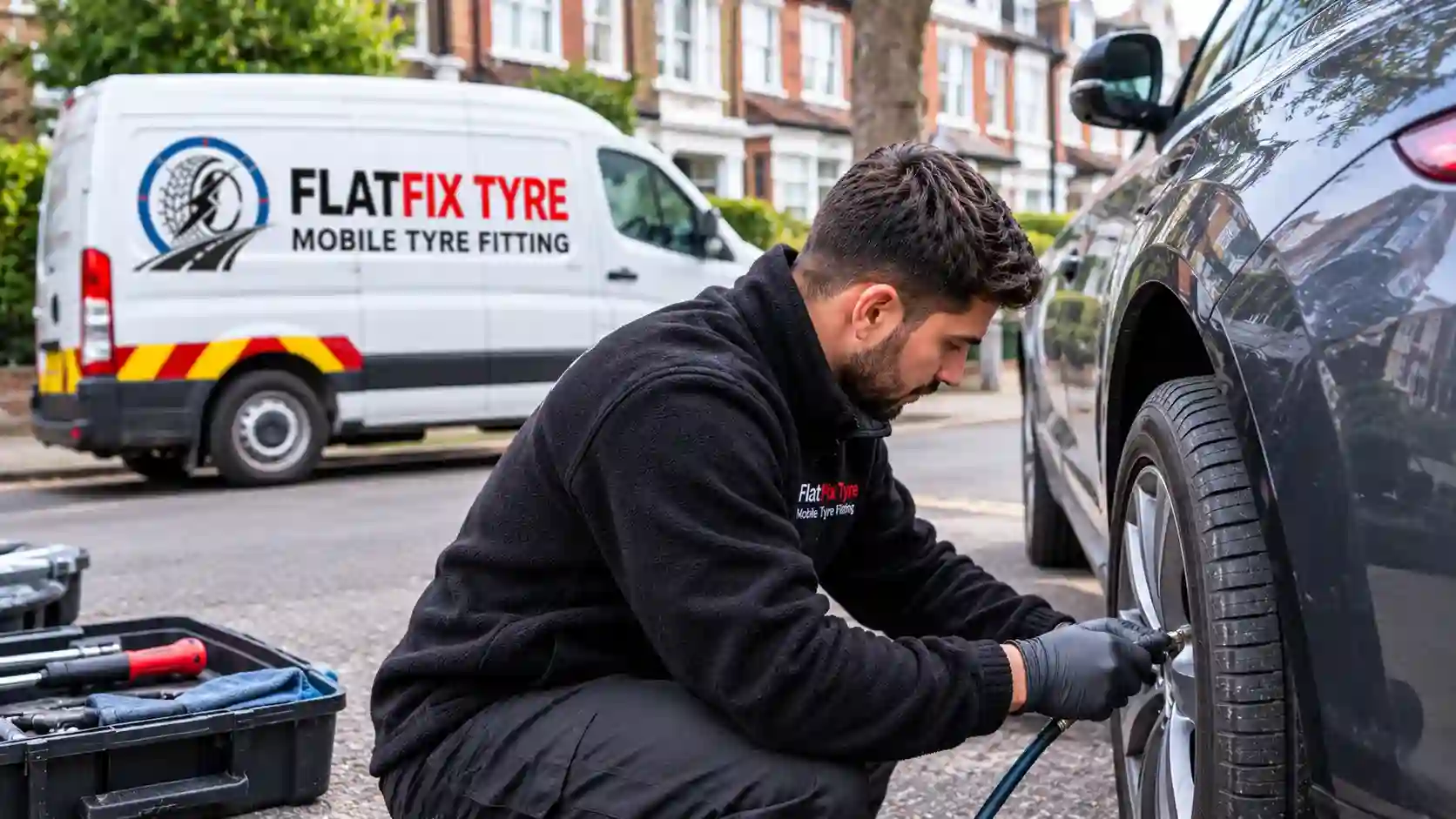
Finding a nail in your tyre can disrupt your entire day. If the tyre has lost pressure, driving to a traditional garage risks destroying the wheel rim and internal tyre casing. Mobile tyre assistance brings professional support directly to an accessible location.
Convenience at Home
If you spot a nail while parked outside your house, a mobile technician can inspect and repair or replace the tyre on your driveway.
Assistance at Your Workplace
Have your tyre assessed in your office car park without taking time off work or waiting in a garage reception.
Safe Roadside Attendance
Where safely parked away from live traffic, emergency flat tyre assistance in London gets you moving again.
Honest Inspection First
Our technicians check if a safe BS AU 159 repair is possible first—only recommending replacement when repair would be unsafe.
If you are looking for mobile tyre fitting near you, FlatFix Tyre provides mobile tyre services for London motorists.
Frequently Asked Questions About Nails in Tyres
Driving with a nail in your tyre is not recommended until the damage has been assessed. The tyre may be losing air gradually or may have suffered internal damage. If it is flat or visibly underinflated, do not continue driving. Arrange professional assistance.
No. Leave the nail or screw in place until a tyre technician can inspect it. Removing the object could allow air to escape more quickly and may make the puncture worse.
Yes, some nail punctures can be repaired. However, the puncture must meet the relevant British Standard requirements, and the tyre must pass a full internal and external inspection. Damage to the shoulder, sidewall or internal structure may require replacement.
There is no guaranteed safe distance or time. A tyre may lose pressure slowly or suddenly, and the extent of internal damage cannot always be identified from the outside. Have it inspected promptly rather than continuing to drive.
A nail may continue to restrict airflow while remaining embedded in the rubber, but this does not mean the tyre is safe. Air can escape gradually, and continued driving may worsen the damage. The tyre should be professionally inspected.
Yes. A small puncture may cause a slow leak, particularly if the nail remains lodged in the tread. You might notice that the same tyre repeatedly loses pressure or that the TPMS warning light appears.
A penetration in the sidewall is not suitable for a normal permanent puncture repair under BS AU 159. The tyre will generally need replacing to maintain its structural integrity and safety.
The cost depends on whether the tyre can be repaired or needs replacing. Puncture size, location, tyre condition, replacement tyre specification and mobile attendance can all affect the quotation. Ask for a clear price after the damage has been assessed.
Yes, a mobile tyre service may be able to inspect and repair a suitable nail puncture at your home. If the tyre is unsuitable for repair, a replacement may be recommended instead. Availability depends on the service, location and required equipment.
Normal tyre pressure does not guarantee that the tyre is safe. The nail may have caused damage that is not immediately visible, and the tyre could lose pressure later. Arrange a professional inspection before relying on the tyre.
Need Help with a Nail in Your Tyre? Contact FlatFix Tyre
Finding a nail in your tyre does not always mean you need to buy a replacement, but ignoring the problem can put your safety and your vehicle at risk. The right solution depends on where the nail has entered, the size of the puncture and the overall condition of the tyre.
If you are in London and have discovered a nail or screw in your car tyre, FlatFix Tyre can help you enquire about mobile tyre assistance at home, at work or at an accessible location. Rather than risking further damage by driving on a potentially punctured tyre, visit FlatFix Tyre or call our team directly to discuss your situation.
Do Not Ignore a Nail in Your Tyre — Call FlatFix Tyre Now
Get the damage assessed at your home, workplace, or safe roadside location across London and make sure your vehicle is safe before continuing your journey.
Call Direct: 07347 120 201 | Email: info@flatfixtyre.com | Website: flatfixtyre.com