
How Long Can You Drive on a Flat Tyre?
How Long Can You Drive on a Flat Tyre?
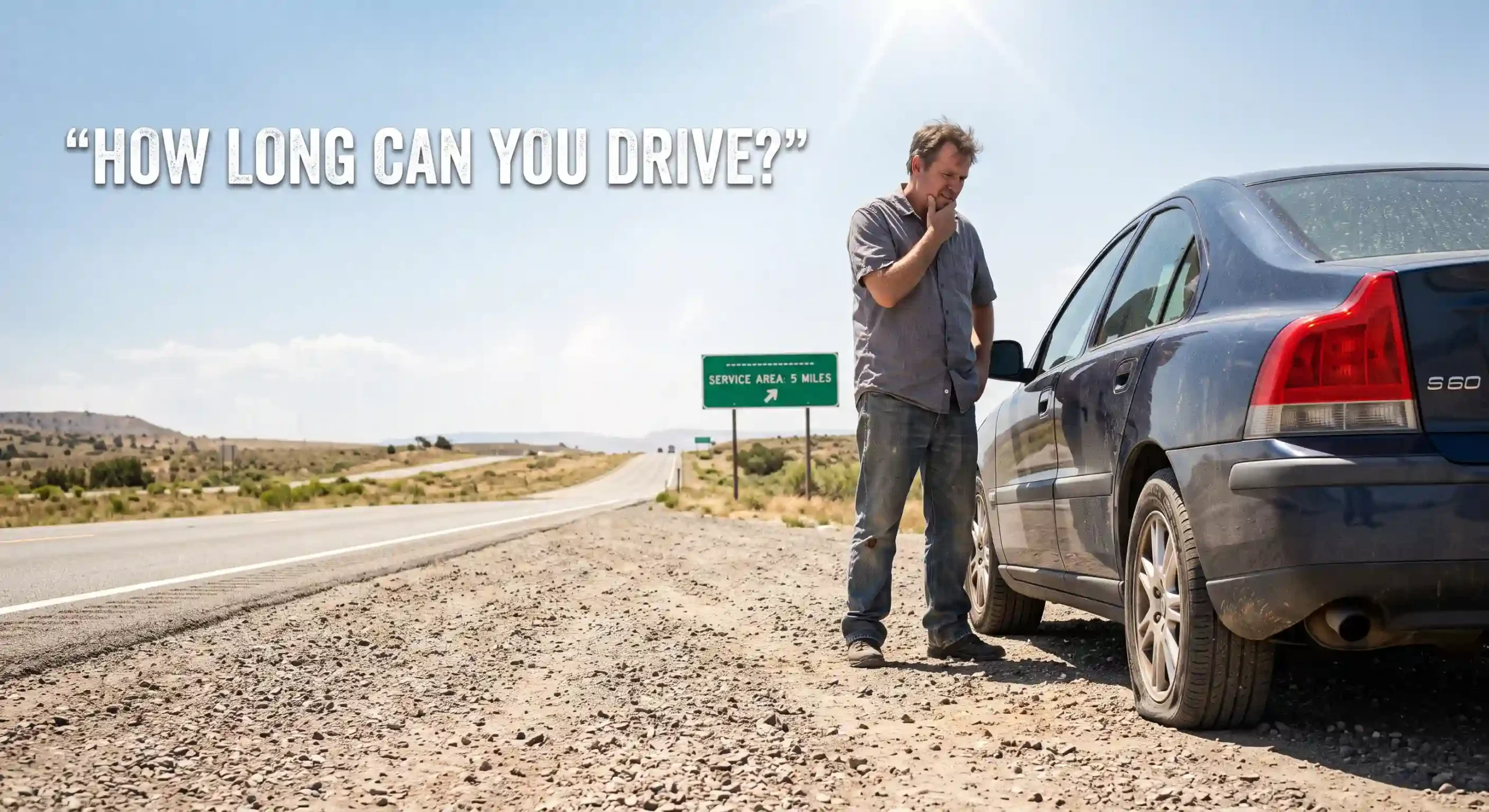
When a tyre suddenly loses its air, one of the first questions most drivers ask is, “How long can I drive on a flat tyre?” The safest answer is usually as little as possible. A completely flat conventional tyre should generally not be driven on because the tyre can be damaged internally, the wheel can be damaged and the vehicle can become much harder to control.
A flat tyre can happen almost anywhere. You might discover it when leaving home, notice a tyre-pressure warning while driving through London, or suddenly feel the car pulling to one side after hitting a pothole. The situation can be stressful, particularly if you are on a busy road or do not have the equipment or confidence to change the tyre yourself.
The important thing is not simply how far you can drive on a flat tyre. The more important question is whether the tyre is safe to drive on at all. In many situations, continuing to drive can turn a repairable puncture into a tyre replacement and can potentially cause damage to the wheel.
If you have a flat or seriously damaged tyre in London, a mobile tyre service can often come directly to your location rather than requiring you to drive to a garage. FlatFix Tyre provides mobile tyre fitting , puncture repair and emergency tyre replacement across London.
If a conventional tyre is completely flat, avoid continuing to drive on it. Even a short journey can potentially damage the tyre internally or affect the wheel.
If you are already on the road, your first priority should be moving yourself and your passengers to a safe location rather than trying to reach your original destination.
If the tyre has lost significant pressure, appears damaged or the vehicle is behaving abnormally, arrange appropriate professional assistance rather than continuing to drive.
For more information about dealing with a flat tyre while travelling through London, read:
Can You Drive on a Completely Flat Tyre?
With a standard road tyre, you should not continue driving when it is completely flat.
A normal tyre is designed to operate with the correct air pressure supporting the vehicle. When the pressure falls significantly, the tyre's sidewalls and internal structure have to carry loads they were not designed to carry in that condition. As the wheel rotates, the sidewall can flex excessively and generate heat.
Even travelling a short distance can therefore cause additional internal damage.
This is one reason why simply pumping the tyre back up and assuming everything is fine is not always enough. If the tyre has already been driven while severely underinflated, it may need to be inspected internally before it can safely return to the road.
If you discover a flat tyre while parked at home or work, there is usually no reason to drive the vehicle at all. This is an ideal situation for mobile tyre fitting because the tyre can be inspected and repaired or replaced at your location.
How Far Can You Drive on a Flat Tyre?
There is no reliable distance that can be given for a conventional flat tyre.
You may hear people say that you can drive a few hundred metres or a mile on a flat tyre, but this should not be treated as a safe allowance. The amount of damage depends on the tyre, vehicle, load, road surface, speed and how much pressure remains.
A tyre that has lost some pressure is different from a tyre that has completely collapsed. A slow puncture may still leave enough air for you to move the vehicle to a safe position, while a completely deflated tyre can be damaged very quickly.
The safest approach is therefore to stop driving as soon as it is safe to do so and arrange assistance.
If you are already on the roadside, your first priority should be getting yourself and your passengers somewhere safe. Avoid stopping somewhere that exposes you unnecessarily to passing traffic.
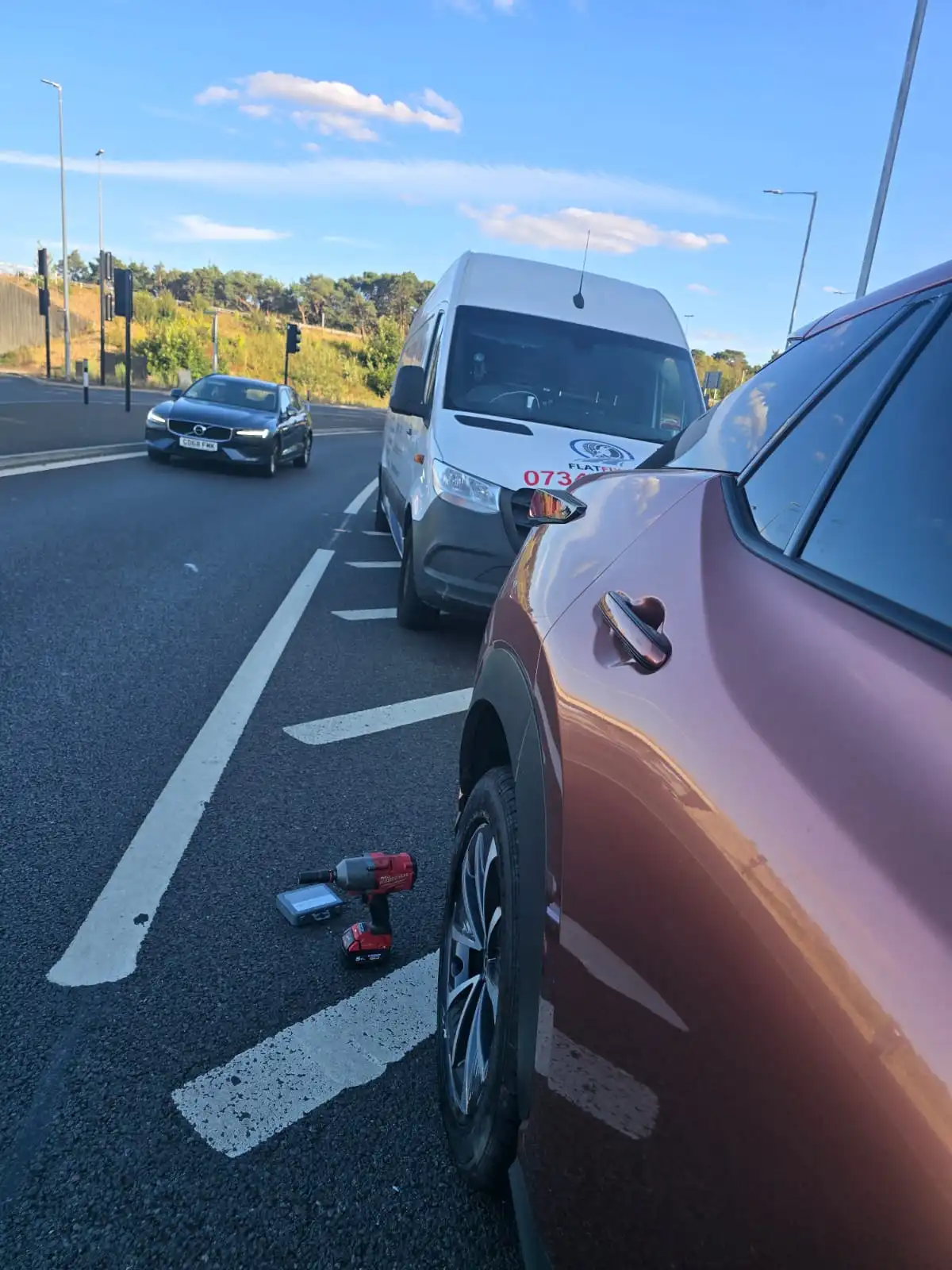 A completely flat conventional tyre should not be driven unnecessarily because continued driving can cause additional tyre and wheel damage.
What Happens When You Drive on a Flat Tyre?
Driving on a flat tyre does more than make the journey uncomfortable. The tyre can suffer damage that may not be visible from the outside.
When a tyre has very little or no air pressure, the sidewalls can flex much more than normal. Continued rotation can generate heat and place significant stress on the tyre's internal structure. The tyre may also become distorted against the wheel.
At the same time, the steering and handling of the vehicle can change. You may notice that the vehicle pulls towards one side, feels unstable or responds differently when you turn the steering wheel.
Braking can also feel different because the tyre is no longer operating in its intended condition.
This is why a flat tyre should be treated as a safety problem rather than simply an inconvenience.
Can a Flat Tyre Damage the Wheel?
Yes. Continuing to drive on a flat tyre can potentially damage the wheel as well as the tyre.
With insufficient air pressure, the wheel can come into greater contact with the road through the collapsed tyre structure. Potholes, kerbs and uneven road surfaces can make the situation worse.
A damaged alloy wheel can create another problem because even after fitting a new tyre, the wheel may need to be inspected for damage.
If you have driven on a flat tyre, it is therefore sensible to have both the tyre and wheel checked rather than assuming that fitting another tyre automatically solves everything.
A pothole or kerb impact can damage the tyre, wheel or the seal between them. If the tyre became flat after a significant impact, avoid assuming that the tyre itself is the only problem.
FlatFix Tyre also provides wheel balancing where appropriate, alongside mobile tyre services for suitable locations across London.
What Should You Do When You Get a Flat Tyre?
If you discover a flat tyre while driving, do not panic and do not immediately continue towards your destination.
Reduce your speed carefully and look for a safe place to stop. If possible, move away from moving traffic and avoid stopping in a dangerous position such as a blind bend or narrow section of road.
Once you are safely stopped, switch on your hazard lights where appropriate and assess the situation. If you have a spare wheel and know how to use it safely, you may be able to change the wheel yourself. However, roadside conditions are not always suitable for carrying out this work.
If you do not have a spare, do not have the correct equipment, or simply do not feel safe changing the wheel, professional roadside assistance is a practical alternative.
FlatFix Tyre provides mobile tyre assistance for suitable locations across London. You can learn more through our FlatFix Tyre website.
Can You Drive a Short Distance to a Garage?
This is one of the most common questions people ask after getting a puncture.
If the tyre still has some pressure and you are only moving the vehicle a very short distance to reach a genuinely safe location, the situation may be different from driving several miles on a completely flat tyre.
However, you should not assume that a garage a few miles away is worth the risk.
If the tyre is visibly collapsed, badly damaged, making unusual noises, or the vehicle is handling abnormally, continuing to drive is not a sensible option.
A mobile tyre fitter can remove the need to drive the damaged vehicle to a garage. Instead, the technician can come to your home, workplace or a suitable roadside location and inspect the tyre there.
That is one of the main advantages of mobile tyre fitting .
What If You Have a Slow Puncture?
Not every flat tyre becomes completely flat immediately.
A nail, screw or other object can sometimes create a slow puncture. You may notice that one tyre repeatedly loses pressure over several days rather than becoming flat overnight.
This can be easy to ignore, especially if the tyre can be reinflated.
However, repeatedly adding air does not fix the underlying problem. If the tyre is losing pressure consistently, the cause needs to be identified.
The puncture may be repairable depending on its location and severity. If it is not safe to repair, the tyre may need to be replaced.
You can also read our detailed guide, What Causes a Car Tyre to Lose Air? , which explains common causes such as punctures, valve problems, bead leaks, wheel damage, temperature changes and tyre deterioration.
Can a Flat Tyre Be Repaired?
Sometimes, but not every flat tyre is suitable for repair.
A tyre may be repairable when the damage is limited and located in a repairable area of the tread. The technician needs to inspect the tyre properly before deciding.
A tyre should not simply be repaired because it has a small visible nail or screw. There may be additional internal damage, particularly if the tyre has been driven while underinflated.
If the tyre has significant sidewall damage, severe structural damage or other conditions that make repair unsafe, replacement may be necessary.
FlatFix Tyre provides mobile puncture repair where the tyre is suitable for repair. If the tyre cannot safely be repaired, the alternative may be emergency tyre replacement .
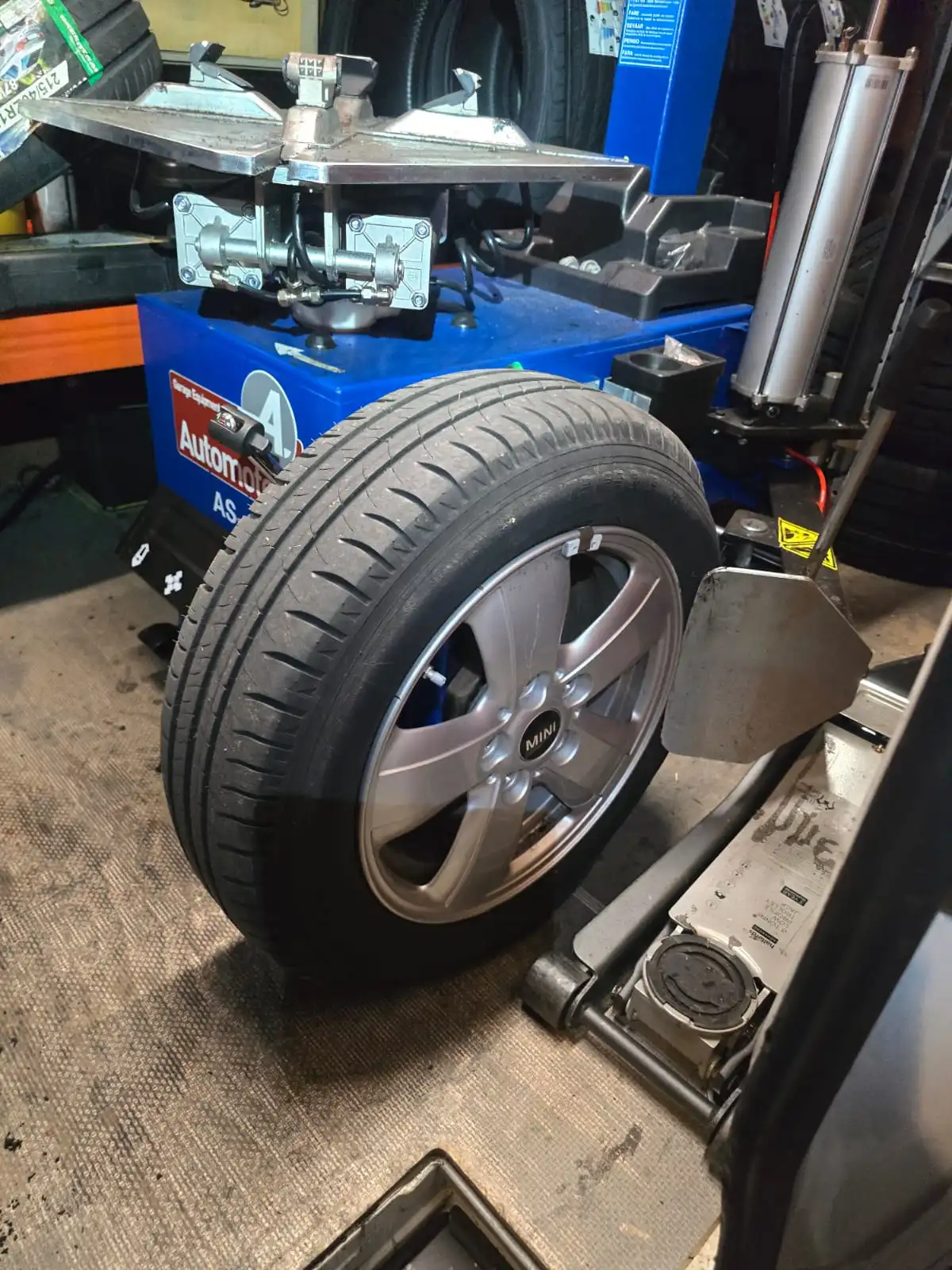 A professional inspection helps determine whether a punctured tyre can be repaired or needs to be replaced.
What If You Have a Flat Tyre at Home?
A flat tyre at home is usually much easier to deal with than a flat tyre on a busy road, but you still should not drive the car to a tyre centre simply because it is convenient.
If the tyre is flat on your driveway, outside your house or in a workplace car park, you can arrange for a mobile tyre fitter to come to you.
FlatFix Tyre's mobile service is designed around this principle. The service can attend suitable homes, workplaces and roadside locations across London.
This means you can avoid putting a damaged tyre back on the road simply to reach a traditional tyre centre.
What If You Have a Flat Tyre on a Motorway or Busy Road?
A flat tyre on a busy road requires extra caution.
Your priority should be your personal safety rather than trying to repair the tyre immediately. If you are in a dangerous position, follow the appropriate roadside safety procedures and seek professional assistance.
Do not stand unnecessarily close to moving traffic, and do not attempt a roadside tyre change if the location is unsafe.
Once you are in a suitable and safe position, professional roadside assistance can help determine the next step.
For more guidance about dealing with a roadside puncture, read:
Flat Tyre on a London Road: What to Do and How to Get Help
What Is the Difference Between a Flat Tyre and a Run-Flat Tyre?
A conventional tyre and a run-flat tyre should not be treated in exactly the same way.
Run-flat tyres are specifically designed with reinforced construction that can allow a vehicle to continue travelling for a limited distance after a loss of pressure, subject to the tyre manufacturer's instructions, vehicle requirements and actual driving conditions.
That does not mean that you can drive indefinitely on a run-flat tyre.
If your vehicle is fitted with run-flat tyres and you experience a pressure loss, you should follow the vehicle manufacturer's and tyre manufacturer's guidance. Speed and distance limitations can apply.
FlatFix Tyre also provides run-flat tyre services for suitable vehicles and tyres.
What Does the TPMS Warning Light Mean?
Many modern vehicles have a tyre pressure monitoring system, commonly called TPMS.
If the TPMS warning light appears, it means the vehicle has detected a tyre-pressure issue or, depending on the vehicle, a problem with the monitoring system.
A TPMS warning should not automatically be ignored just because the car still feels normal.
A tyre can lose pressure gradually without immediately producing an obvious change in handling. Checking the pressure and investigating the cause can help prevent the situation from becoming a completely flat tyre.
FlatFix Tyre provides TPMS checks as part of its mobile tyre services.
Why Does One Tyre Keep Going Flat?
If the same tyre repeatedly loses air, there is probably an underlying reason that needs investigating.
A slow puncture is one possibility, but it is not the only one. The valve can leak, the tyre can have damage that is difficult to see externally, the bead can have a sealing problem, or the wheel itself can have damage.
Repeatedly inflating the same tyre without identifying the cause can leave you dealing with the same problem again.
If you regularly discover that one tyre is lower than the others, arrange an inspection rather than simply continuing to top it up.
How Do You Know If a Tyre Is Too Damaged to Drive On?
A tyre may need immediate attention if it is visibly flat, severely underinflated, damaged on the sidewall, showing exposed internal material, badly cut, bulging or otherwise structurally compromised.
You should also pay attention to changes in the vehicle's behaviour. Pulling to one side, unusual vibration, thumping sounds or a significant change in steering can all indicate that something is wrong.
For a more detailed guide, read 7 Signs Your Car Tyres Are Unsafe to Drive On .
Can Driving on a Flat Tyre Make a Puncture Worse?
Yes. A small puncture does not necessarily mean the tyre is immediately beyond repair.
The problem is that driving on a severely underinflated or flat tyre can cause additional internal damage. Once the tyre has been driven in that condition, a technician may find that replacement is safer than repair.
This is why stopping early can sometimes save you from turning a relatively straightforward puncture problem into a complete tyre replacement.
If you notice a puncture, deal with it as soon as reasonably possible instead of waiting for the tyre to become completely flat.
Should You Repair or Replace a Flat Tyre?
The answer depends on the actual condition of the tyre.
A puncture in a suitable part of the tread may be repairable after proper inspection. A severely damaged tyre, sidewall damage or a tyre that has suffered internal damage from being driven flat may need replacement.
Tyre age and overall condition also matter. If the tyre is worn, cracked or otherwise approaching the end of its usable life, repairing a single puncture may not be the most appropriate solution.
Our guide How to Know When Your Car Tyres Need Replacing explains the signs that can indicate it is time for replacement.
Can Mobile Tyre Fitting Help If You Have a Flat Tyre?
Yes. Mobile tyre fitting is particularly useful when the vehicle cannot safely be driven to a garage.
Instead of driving a flat or damaged tyre across London, you can arrange for a technician to come to your location.
FlatFix Tyre provides mobile tyre fitting across London for suitable home, workplace, car park and roadside locations.
Depending on the condition of the tyre and the nature of the problem, the technician can determine whether puncture repair or replacement is appropriate.
If you are comparing the convenience of mobile tyre fitting with visiting a garage, read:
Mobile Tyre Fitting vs Garage: Which Is More Convenient?
How Much Does Mobile Tyre Fitting Cost in London?
The cost of mobile tyre fitting can vary depending on the tyre required, tyre size, brand, vehicle, number of tyres and the type of service needed.
If your tyre is flat and you are considering a replacement, our detailed guide explains the factors that can affect the cost:
How Much Does Mobile Tyre Fitting Cost in London?
The important thing is to establish what has happened to the tyre before deciding whether it needs repair or replacement.

FlatFix Tyre Services for Flat and Damaged Tyres
FlatFix Tyre provides several services that can help when you experience a flat, punctured or damaged tyre.
With mobile tyre fitting , a technician comes to a suitable location instead of requiring you to take the vehicle to a tyre centre.
For suitable punctures, puncture repair can provide a convenient way to get the tyre back into service without replacing it unnecessarily.
When a tyre is damaged beyond safe repair, emergency tyre replacement can provide a replacement at a suitable location.
Mobile Tyre Fitting
Tyres can be supplied and fitted at a suitable location, helping you avoid an unnecessary trip to a tyre centre when mobile fitting is appropriate.
Learn more →Puncture Repair
A technician can inspect a suspected puncture and determine whether the tyre may be suitable for repair.
Learn more →Emergency Tyre Replacement
If a tyre is damaged beyond repair, a suitable replacement can be fitted where the required tyre is available and conditions are safe.
Learn more →Wheel Balancing
Wheel balancing is available where appropriate when vibration or wheel-and-tyre balance needs to be assessed.
Learn more →TPMS Checks
Tyre pressure monitoring systems can be checked as part of suitable tyre-related servicing and troubleshooting.
Learn more →Run Flat Tyres
Suitable run-flat tyre services are available for vehicles that require compatible run-flat specifications.
Learn more →Van & Commercial Tyres
Suitable vans and commercial vehicles can receive mobile tyre fitting and replacement services.
Learn more →Tyre Supply & Fit
Tyres can be supplied and fitted according to the vehicle's required size, specification and suitable tyre requirements.
Learn more →How to Prevent a Flat Tyre From Becoming an Emergency
Regular tyre checks can reduce the likelihood of being surprised by a serious tyre problem.
Checking tyre pressure regularly is particularly important. The correct pressure should be based on your vehicle manufacturer's recommendations rather than simply copying the pressure printed on another vehicle or assuming that all four tyres should always have the same pressure.
It is also worth checking tread condition and looking for visible cuts, cracks, bulges or objects embedded in the tyre.
If one tyre repeatedly loses pressure, do not treat frequent inflation as a permanent solution. Find out why it is losing air.
Wheel condition matters as well. A pothole impact that damages the wheel or tyre may not always be immediately obvious.
Regular inspections can help identify problems before they become roadside emergencies.
Related FlatFix Tyre Guides
If you are dealing with a flat, punctured or damaged tyre, our previous FlatFix Tyre guides can also help you understand what to look for and what to do next.
What Causes a Car Tyre to Lose Air?
7 Signs Your Car Tyres Are Unsafe to Drive On
How to Know When Your Car Tyres Need Replacing
Mobile Tyre Fitting vs Garage: Which Is More Convenient?
How Much Does Mobile Tyre Fitting Cost in London?
Flat Tyre on a London Road: What to Do and How to Get Help
Need Help With a Flat Tyre?
If you have a flat tyre, suspected puncture or damaged tyre, speak with the FlatFix Tyre team about your vehicle, tyre condition and location.
Phone: 07347 120201
WhatsApp: Message FlatFix Tyre on WhatsApp
Email: info@flatfixtyre.com
Contact FlatFix Tyre Call 07347 120201Final Thoughts: How Long Can You Drive on a Flat Tyre?
So, how long can you drive on a flat tyre?
For a conventional tyre, the safest answer is you should not drive on it any farther than necessary to reach a safe stopping position.
There is no dependable “safe distance” that applies to every flat tyre. Continuing to drive can damage the tyre internally, damage the wheel and potentially make the vehicle more difficult to control.
If the tyre has only lost some pressure, stop somewhere safe and check it as soon as possible. If it is completely flat, visibly damaged or the vehicle is behaving abnormally, avoid driving on it.
You do not necessarily need to take the vehicle to a garage yourself. A mobile tyre fitter can come to you at home, work or a suitable roadside location.
For London drivers, FlatFix Tyre provides mobile tyre fitting, puncture repair and emergency tyre replacement at suitable locations across London.
When a tyre problem occurs, the priority should always be getting the vehicle and its occupants somewhere safe and then having the tyre properly inspected.
Frequently Asked Questions About Driving on a Flat Tyre
Here are answers to common questions about flat tyres, punctures, run-flat tyres, roadside assistance and mobile tyre fitting.
1. How long can you drive on a flat tyre?
For a conventional tyre, you should avoid driving on it except for the minimum distance necessary to reach a safe stopping position. There is no reliable safe mileage that applies to every flat tyre.
2. Can I drive 1 mile on a flat tyre?
You should not treat one mile as a safe distance. A completely flat conventional tyre can suffer damage even over a relatively short distance. Stop as soon as safely possible and arrange assistance.
3. Can I drive slowly on a flat tyre?
Driving slowly does not make a completely flat conventional tyre safe. The tyre can still suffer internal and structural damage.
4. What happens if I drive on a flat tyre?
The tyre can suffer internal damage, the sidewall can be damaged and the wheel may also be affected. Vehicle handling can change as well.
5. Can a completely flat tyre be repaired?
It depends on the cause and condition of the tyre. A technician needs to inspect it, particularly if the tyre has been driven while flat.
6. Can a flat tyre damage the wheel?
Yes. Driving on a completely flat tyre can increase the risk of wheel damage, particularly when the vehicle encounters potholes, kerbs or uneven road surfaces.
7. Is it safe to drive with a tyre that keeps losing air?
Persistent pressure loss should not be ignored. If the tyre is significantly underinflated, visibly damaged or completely flat, avoid unnecessary driving and arrange professional assistance.
8. Can a slow puncture be repaired?
Some punctures can be repaired depending on their size, location and the condition of the tyre. A professional inspection is required before deciding whether repair or replacement is appropriate.
9. Can a nail cause a tyre to lose air slowly?
Yes. A nail or screw lodged in the tread can allow air to escape gradually. A professional inspection can determine whether the puncture is suitable for repair or whether the tyre needs replacement.
10. Should I remove a nail from my tyre?
It is better to have the tyre professionally assessed rather than simply removing an embedded object and continuing to drive. Removing the object may change the way air escapes from the tyre.
11. Can I drive to a garage with a flat tyre?
You should avoid driving a completely flat conventional tyre to a garage. A mobile tyre service can be a more practical option because the technician can attend a suitable location.
12. Can I drive on a run-flat tyre after it loses pressure?
Run-flat tyres are designed for limited continued mobility after pressure loss, but manufacturer-specific speed and distance restrictions apply. Follow your vehicle and tyre manufacturer's instructions.
13. What should I do if my tyre becomes completely flat?
Avoid driving on a completely flat standard tyre. Move to a safe location if possible and arrange appropriate roadside or mobile tyre assistance rather than continuing to drive.
14. Can mobile tyre fitting help with a flat tyre?
Yes. Mobile tyre fitting can provide a convenient option when a vehicle has a puncture, damaged tyre or other tyre problem and attending a traditional tyre centre is inconvenient or unsuitable.
15. Does FlatFix Tyre provide puncture repair in London?
Yes. FlatFix Tyre provides mobile puncture repair at suitable locations across London, subject to the condition of the tyre and suitability of the repair.
16. Does FlatFix Tyre provide emergency tyre replacement in London?
Yes. FlatFix Tyre provides emergency tyre replacement across London, subject to tyre availability, location and safe working conditions.
17. Can a tyre look fine but still be unsafe to drive on?
Yes. Some tyre problems are difficult to identify visually. Internal damage, pressure loss or a problem caused by driving while underinflated may not always be obvious from the outside.
18. How can I avoid driving on a flat tyre?
Check tyre pressure regularly, pay attention to TPMS warnings, inspect tyres for visible damage and deal with repeated pressure loss promptly rather than repeatedly adding air without identifying the cause.
Got a Flat Tyre? Let FlatFix Tyre Help
Have you got a completely flat tyre, a suspected puncture or a tyre that keeps losing pressure?
FlatFix Tyre provides mobile tyre fitting, puncture repair and emergency tyre replacement at suitable home, workplace, car park and roadside locations across London.
If your tyre has lost significant pressure or appears damaged, avoid unnecessary driving and arrange appropriate professional assistance.
Get Tyre Assistance in London Call 07347 120201WhatsApp: Message us on WhatsApp
Email: info@flatfixtyre.com