What to Do If Your Van Gets a Flat Tyre: Roadside Help and Replacement Options
A flat tyre can bring a working van to a sudden stop, whether you are delivering parcels, travelling between jobs or carrying tools to a customer's property. The problem can be particularly disruptive in London, where busy roads, restricted stopping areas and tight work schedules make an unexpected tyre failure difficult to manage.
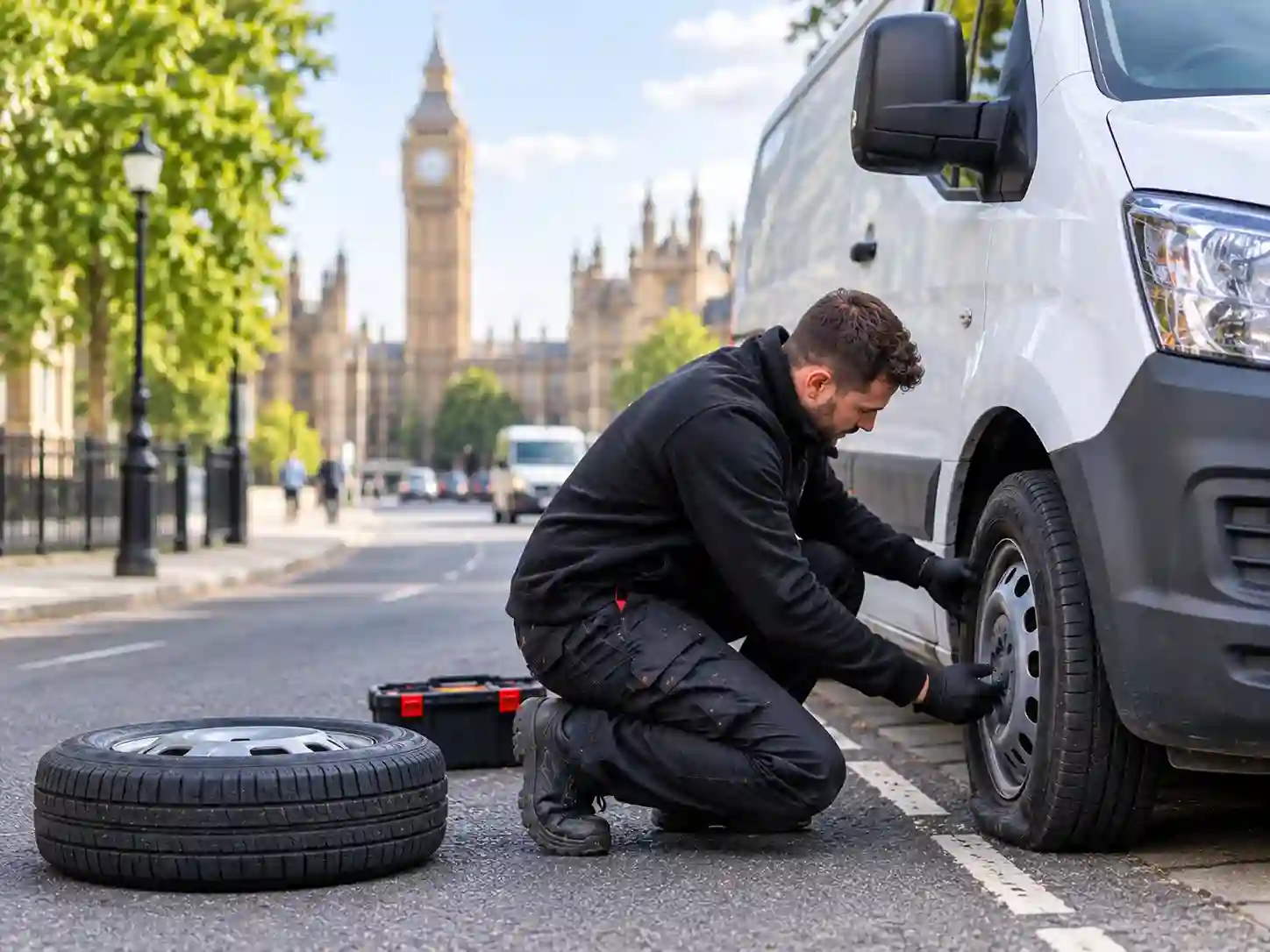
If you get a flat tyre on a van, the first priority is to stop safely. Do not continue driving on a deflated or visibly damaged tyre. Once you and your vehicle are in a safe position, the next step is to establish whether the tyre may be repairable or whether a replacement is needed.
This guide explains what van drivers should do, how to recognise serious tyre damage, when professional repair may be possible and how mobile van tyre replacement can help when a vehicle cannot safely continue its journey.
Stranded With a Flat Van Tyre in London? Call Now
Do not risk driving a loaded van on a flat tyre. Call FlatFix Tyre on 07347 120 201 for mobile puncture repair or commercial C-rated van tyre replacement at your roadside, depot, or job site.
24/7 London Van & Commercial Tyre Support • Minimal Downtime for Trades & Couriers
Quick Response Guide: Where Has Your Van Stopped?
Select where your van is currently parked to see the safest immediate action:
Van Flat Tyre Location Assistant
Tap your current location below for immediate safety and assistance guidance:
Parked on a London Street or Job Site
Safety First: Apply the parking brake, switch on hazard lights, and ensure the van is safely parked away from moving traffic without obstructing live lanes.
Next Step: Do not drive on the flat tyre. Call 07347 120 201 with your postcode and tyre size for mobile van tyre fitting.
1. What Should You Do Immediately If Your Van Gets a Flat Tyre?
If you notice a sudden loss of pressure, unusual vibration, pulling to one side or a loud bang, reduce speed carefully and look for a safe place to stop. Avoid harsh braking, sudden steering movements or accelerating to reach your destination. If a tyre has failed while the van is moving, keep a firm grip on the steering wheel and allow the vehicle to slow down under control.
Once stopped:
- Switch on your hazard warning lights.
- Apply the parking brake and switch off the engine.
- Assess the surrounding traffic before opening any doors.
- Move yourself and passengers to a safe place away from moving traffic, if it is safe to do so.
- Do not inspect or attempt to change a wheel in a dangerous roadside position.
- Arrange suitable breakdown or roadside tyre assistance.
A van carrying tools, materials or delivery goods may be considerably heavier than an empty vehicle. This makes it especially important not to make sudden movements or attempt to drive on a damaged tyre.
2. Can You Drive a Van with a Flat Tyre?
No. You should not continue driving on a completely flat tyre or one that has suffered serious damage. A deflated tyre cannot support the vehicle properly. Continuing to drive can damage the tyre's internal structure, distort the sidewall and potentially damage the wheel. It can also affect steering, braking and vehicle stability.
The risks are greater if the van is carrying a heavy load. Additional weight places more strain on the damaged tyre and can make the vehicle harder to control. Even if the van still appears to move normally, do not assume that the tyre is safe. A slow puncture can cause pressure to fall gradually, while internal damage may not be obvious from the outside.
A temporary sealant or mobility kit is not a permanent repair. Follow the vehicle manufacturer's instructions and have the tyre professionally inspected before relying on it again. For more information, read our guide on how long you can drive on a flat tyre.
3. What Causes a Flat Tyre on a Commercial Van?
Commercial vans often travel long distances, make frequent stops and operate in demanding environments. Several issues can cause a sudden or gradual loss of tyre pressure:
Punctures from Nails, Screws & Debris
Construction sites, industrial estates, loading areas and busy urban roads expose tyres to sharp objects. Do not pull an embedded object out of the tyre—removing it may worsen air loss.
Impact Damage from Potholes & Kerbs
Hitting a pothole or mounting a kerb while loaded can crush the tyre against the wheel rim. A bulge in the sidewall indicates internal structural damage.
Incorrect Tyre Pressure
Running below recommended pressure causes excessive flexing and overheating under heavy loads. Over-inflation also degrades handling and accelerates centre wear.
Worn Tyres or Overloading
Excessive tread wear, ageing cracks, or exceeding the tyre's load rating compromises safety under commercial use. Review TyreSafe's van tyre safety guidance.
4. Can a Puncture in a Van Tyre Be Repaired?
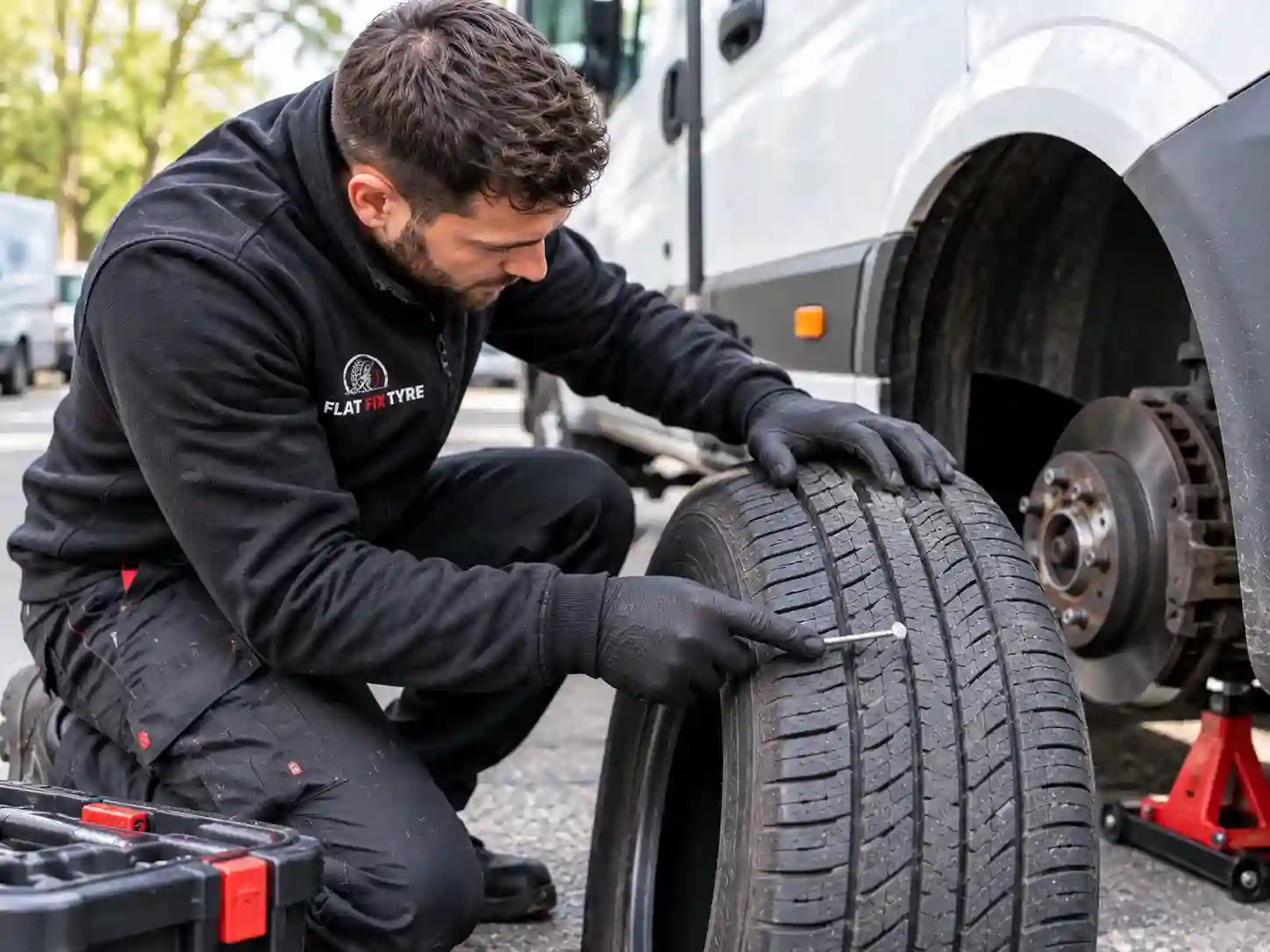
Sometimes, yes. However, not every puncture can be repaired safely. A tyre specialist must inspect the tyre to establish whether the damage falls within the accepted repair area and whether the tyre's internal structure remains suitable for use.
When Repair May Be Possible
- Puncture is inside the permitted central tread area.
- Damage is within applicable BS AU 159 size limits.
- Tyre has not been driven while severely under-inflated.
- Casing and inner liner remain structurally intact.
When Repair Is Unsuitable
- Significant sidewall or shoulder damage.
- Visible sidewall bulge, split, or exposed cords.
- Internal run-flat damage from driving flat.
- Tread worn below the legal minimum limit.
Under recognised British Standard BS AU 159, the tyre must be removed from the wheel so a professional can inspect it internally as well as externally. For further guidance, see TyreSafe's puncture and puncture repair advice, the British Tyre Manufacturers' Association's tyre care guidance, or explore our professional mobile puncture repair service.
5. When Does a Van Need a Replacement Tyre Instead?
A replacement is normally required when the damage cannot be repaired in accordance with the relevant safety standard or the tyre is no longer suitable for service:
- A puncture or cut in the sidewall or shoulder.
- A large tear or multiple areas of damage.
- A visible bulge or distorted tyre shape.
- Exposed cords or serious casing damage.
- Internal damage caused by driving while under-inflated.
- Tread depth below the legal minimum or damage to the tyre bead.
UK Legal Tread Depth for Vans: For vans and light commercial vehicles up to 3,500kg maximum gross weight, the legal minimum tread depth is 1.6mm across the central three-quarters of the tread and around the full circumference. Heavier vehicles can have different requirements. See GOV.UK vehicle safety guidance and the DVSA MOT inspection manual.
6. Why Is the Correct Replacement Tyre Important for a Van?
A van tyre is not simply a car tyre with a different size. Many light commercial vehicles use tyres designed to carry higher loads and operate at higher inflation pressures. Before fitting a replacement, check:
- Tyre size: The width, profile and wheel diameter must match vehicle specifications.
- Load index: Indicates the maximum load the tyre is designed to carry at its specified pressure.
- Speed rating: Identifies the tyre's approved speed category.
- Commercial construction: Many vans require reinforced or commercial tyres marked with a C after the size (for example, 215/65 R16C).
- Vehicle requirements: Always follow manufacturer-approved fitment specifications.
If you are unsure, provide your vehicle registration and sidewall markings to a tyre specialist. Read more in our guide to choosing the right van tyres.
7. When Is Mobile Van Tyre Replacement the Practical Solution?
If your van has a damaged tyre and cannot safely reach a garage, arranging mobile tyre assistance at your location allows a technician to inspect the tyre on site and carry out repair or replacement without towing.
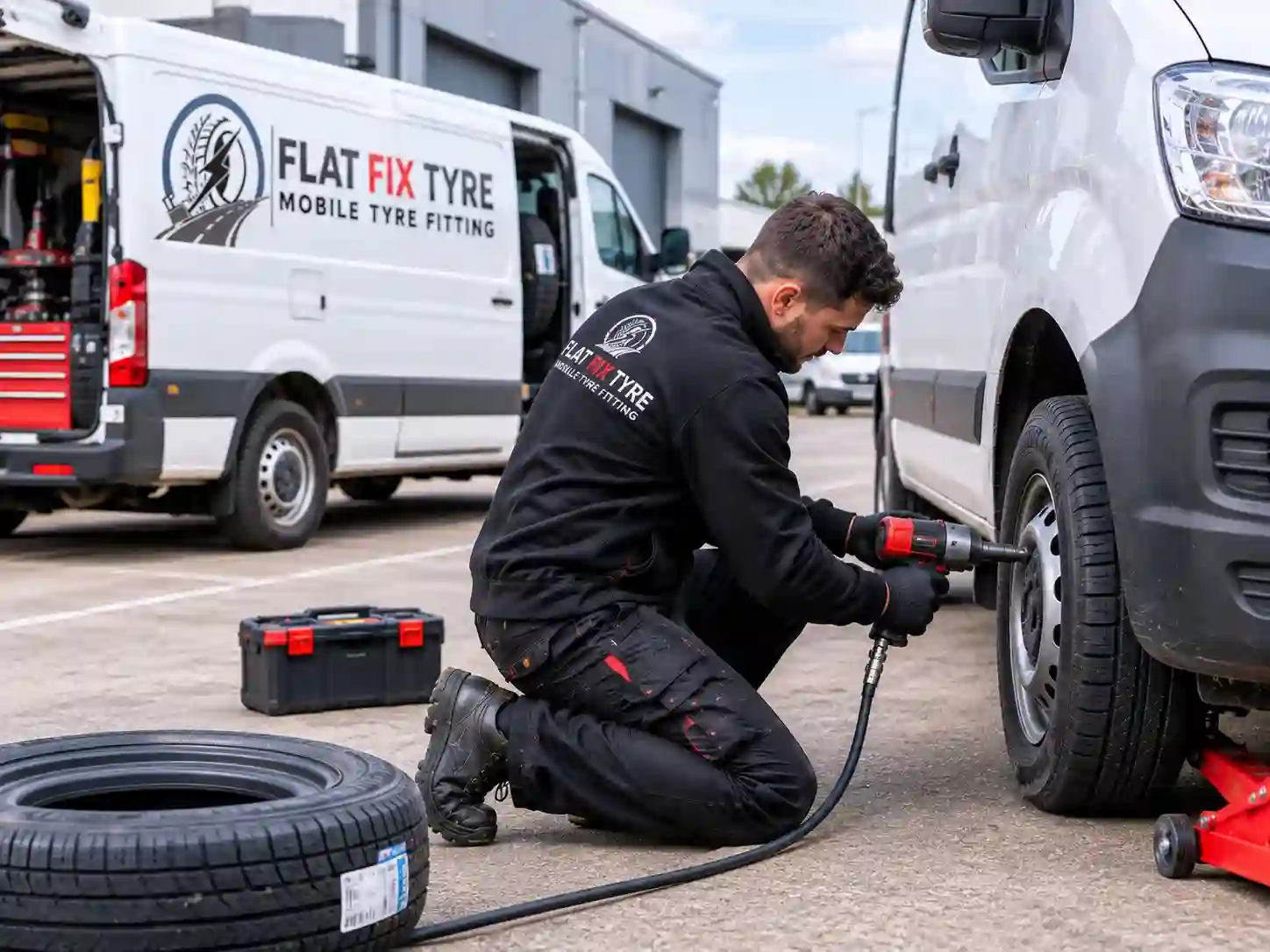
This is particularly practical for tradespeople carrying tools, delivery drivers mid-route, couriers across London boroughs, and businesses with vans parked at depots or commercial premises. On a motorway, follow motorway breakdown procedures and arrange appropriate recovery.
How Does Mobile Van Tyre Replacement Work?
- Initial contact: Explain what has happened and where the van is located.
- Vehicle information: Provide the registration, make, model and tyre size if known.
- Problem assessment: Describe whether the tyre is flat, punctured, cut or visibly damaged.
- Suitable assistance: The provider confirms availability and whether the parked location is safe for fitting.
- Inspection and work: The technician assesses the tyre internally/externally and carries out a repair or replacement.
- Final checks: Fitted tyre pressure and wheel torque security are checked before you resume driving.
FlatFix Tyre provides van and commercial tyre fitting across London, with mobile assistance at suitable home, workplace, depot and roadside locations.
8. What Information Should You Give a Mobile Tyre Fitter?
Preparing accurate details helps check stock availability immediately. Tap each item below as you gather it before calling:
Pre-Call Van Breakdown Checklist (Tap to Tick Off)
- Exact location or postcode: Confirm you are parked in a safe, accessible spot away from live lanes.
- Van make, model & registration: Helps verify commercial load index and wheel specifications.
- Tyre size on the sidewall: E.g., 215/65 R16C (include the 'C' commercial marking if present).
- Condition & wheel layout: Note if it is flat, has a visible nail/bulge, is heavily loaded, or uses twin rear wheels.
- Locking wheel nut key: Have the adapter ready if your van wheels are fitted with locking bolts.
9. How Can Businesses Reduce Downtime After a Van Tyre Failure?
A flat tyre can delay multiple customer appointments and deliveries. A practical fleet response plan helps manage disruption:
- Keep vehicle registration and tyre specifications accessible for every van.
- Record correct tyre sizes and load requirements in each cab.
- Train drivers on safe roadside breakdown procedures and never to drive on flat tyres.
- Carry out regular pressure and tread inspections before breakdowns occur. See our guide to commercial van tyre maintenance.
10. Need Help with a Flat Van Tyre in London?
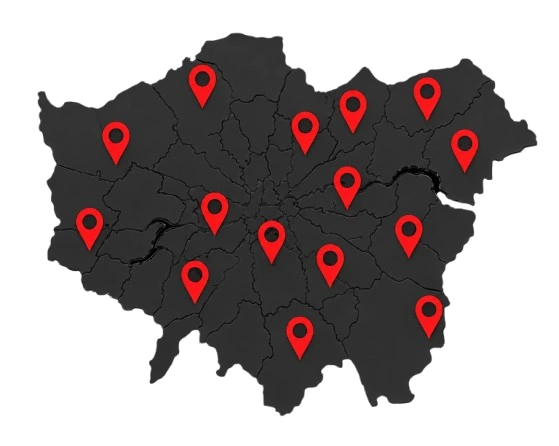
A flat tyre does not always mean the tyre must be replaced, but it should never be ignored. If your van has suffered a puncture, sidewall damage or sudden tyre failure, FlatFix Tyre supports tradespeople, delivery drivers and businesses across London and Greater London.
Get Your Van Back on the Road — Call FlatFix Tyre
Speak directly with our London mobile tyre dispatch team for immediate van puncture repair or commercial tyre replacement at your location.
Call Direct: 07347 120 201 | Email: info@flatfixtyre.com
Frequently Asked Questions
No. Do not continue driving on a flat or visibly damaged tyre. Stop somewhere safe and arrange suitable assistance. Driving further can damage the tyre, wheel and vehicle and may affect control.
Possibly. A tyre specialist must inspect the puncture's location, size and the tyre's internal condition. Do not remove the nail yourself, as this may cause further air loss.
A professional repair carried out in accordance with the relevant British Standard can be permanent where the tyre is suitable. Temporary sealants and emergency repair kits should not be confused with a permanent repair.
Mobile fitting may be possible at a suitable workplace, depot or other accessible location. Confirm the location, vehicle details and tyre specification with the provider before arranging attendance.
Provide the tyre size, load index and speed rating where available, along with the vehicle registration, make and model. The provider can use these details to help identify a suitable replacement.
Many vans require tyres designed for their load and operating requirements. Some use commercial or reinforced tyres, often marked C. Always follow the vehicle manufacturer's specification.
For vans and light commercial vehicles up to 3,500kg maximum gross weight, the minimum is generally 1.6mm across the central three-quarters of the tread and around the entire circumference. Different rules can apply to heavier vehicles.
A professional may be able to assess and repair a tyre if the damage is suitable and the location is safe for the work. If the tyre cannot be repaired, replacement may be necessary. A motorway or dangerous roadside location may require recovery or another safe arrangement.