How Often Should You Check Your Tyre Pressure?
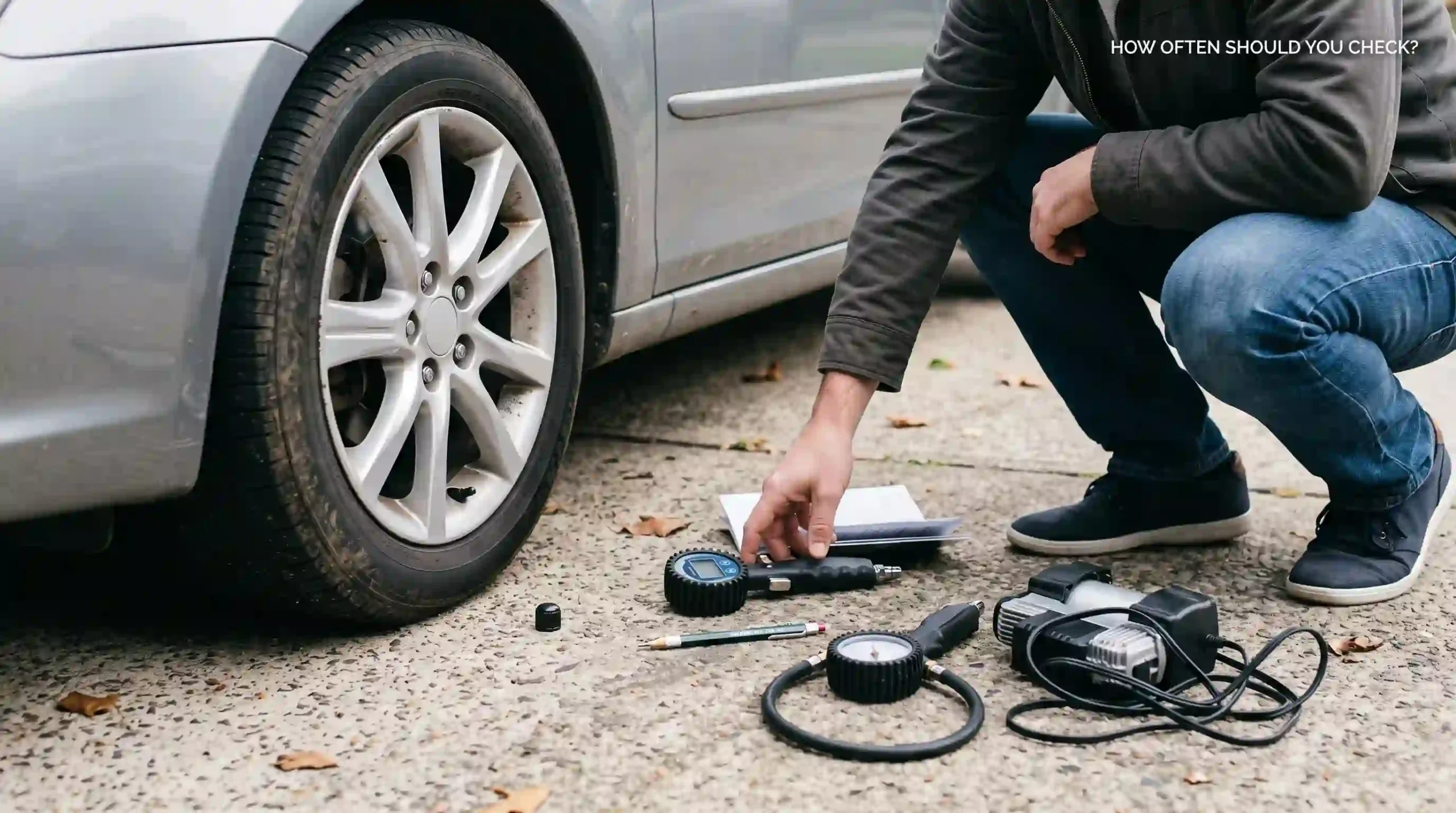
Tyre pressure is one of the simplest parts of vehicle maintenance to check, but it is also easy to overlook. Many drivers only think about tyre pressure when a warning light appears, a tyre looks low, or they are preparing for a long journey.
Checking your tyre pressure regularly can help you identify pressure loss early and keep your tyres operating at the pressure recommended for your vehicle.
For drivers in London, regular tyre pressure check London services can also be useful when you are unsure whether your tyres are correctly inflated or when a tyre keeps losing pressure.
So, how often should you check your tyre pressure? As a general routine, it is sensible to check your tyres regularly and before longer journeys, while also checking them whenever you notice a change in handling, pressure or tyre appearance.
If you are already experiencing a tyre that is losing air, you may also find our guide useful: What Causes a Car Tyre to Lose Air?
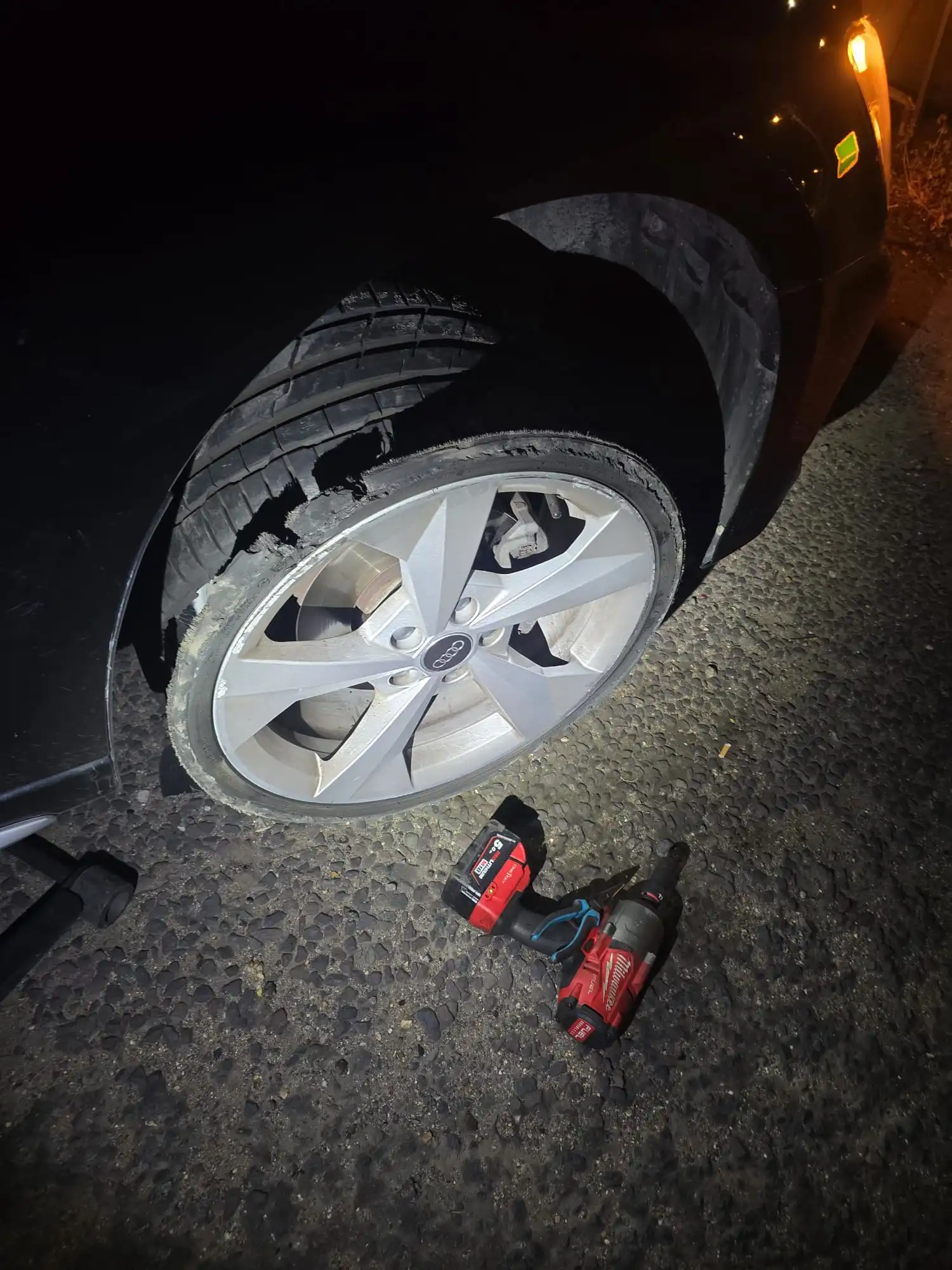
Regular tyre pressure checks can help identify pressure loss before it becomes a bigger problem.
How Often Should You Check Your Tyre Pressure?
Tyre pressure should be checked regularly rather than only when there appears to be a problem.
A practical routine is to check your tyre pressures at least once a month and before long journeys. You should also check them if your vehicle has been carrying a heavier load than usual or if you suspect that a tyre is losing pressure.
Tyres can naturally lose pressure over time, and changes in temperature can also affect tyre pressure.
Regular checks make it easier to notice a slow leak before it develops into a more serious problem.
Why Is Correct Tyre Pressure Important?
Correct tyre pressure affects several aspects of how your vehicle behaves.
Underinflated or incorrectly inflated tyres can affect:
- Vehicle handling
- Braking performance
- Tyre wear
- Fuel consumption
- Driving comfort
- Tyre durability
Keeping your tyres at the manufacturer's recommended pressure helps ensure they are operating as intended.
Correct pressure is particularly important when driving in busy London traffic, where vehicles frequently stop, accelerate, turn and brake.
If you are unsure whether your tyres are still suitable for use, read our guide: How to Know When Your Car Tyres Need Replacing .
What Tyre Pressure Should Your Car Have?
There is no single tyre pressure that is correct for every vehicle.
The recommended pressure depends on factors such as:
- Vehicle make and model
- Tyre specification
- Vehicle load
- Front and rear axle requirements
Your vehicle's recommended tyre pressure can usually be found in the vehicle handbook or on a manufacturer's information label, often located around the driver's door area or another specified location.
Do not simply use the maximum pressure printed on the tyre sidewall as the recommended vehicle pressure.
The tyre sidewall information and the vehicle manufacturer's recommended pressure serve different purposes.
Should You Check Tyre Pressure When the Tyres Are Cold?
Yes.
Tyre pressure is best checked when the tyres are cold, meaning the vehicle has not been driven recently or the tyres have had enough time to cool down.
Driving causes tyres to warm up, which can temporarily increase the pressure reading.
For a more consistent and useful reading, check your tyre pressures before driving or after the vehicle has been stationary for a suitable period.
How Do You Check Tyre Pressure?
Checking tyre pressure is relatively straightforward when you have access to a suitable pressure gauge or inflation equipment.
Find the Recommended Pressure
Check your vehicle handbook or the manufacturer's tyre-pressure information.
Check the Tyres When Cold
Ideally, check the tyres before driving or when they have cooled down.
Remove the Valve Cap
Remove the valve cap carefully and keep it somewhere clean.
Attach the Pressure Gauge
Place the gauge firmly onto the valve so that you get a proper reading.
Compare the Reading
Compare the measured pressure with the vehicle manufacturer's recommended pressure.
Inflate or Adjust if Required
If the pressure is too low, add air until it reaches the recommended level.
Investigate Repeated Pressure Loss
If the pressure is consistently dropping, investigate the reason rather than repeatedly inflating the tyre without checking for a problem.
Replace the Valve Cap
Once the check is complete, replace the valve cap securely.
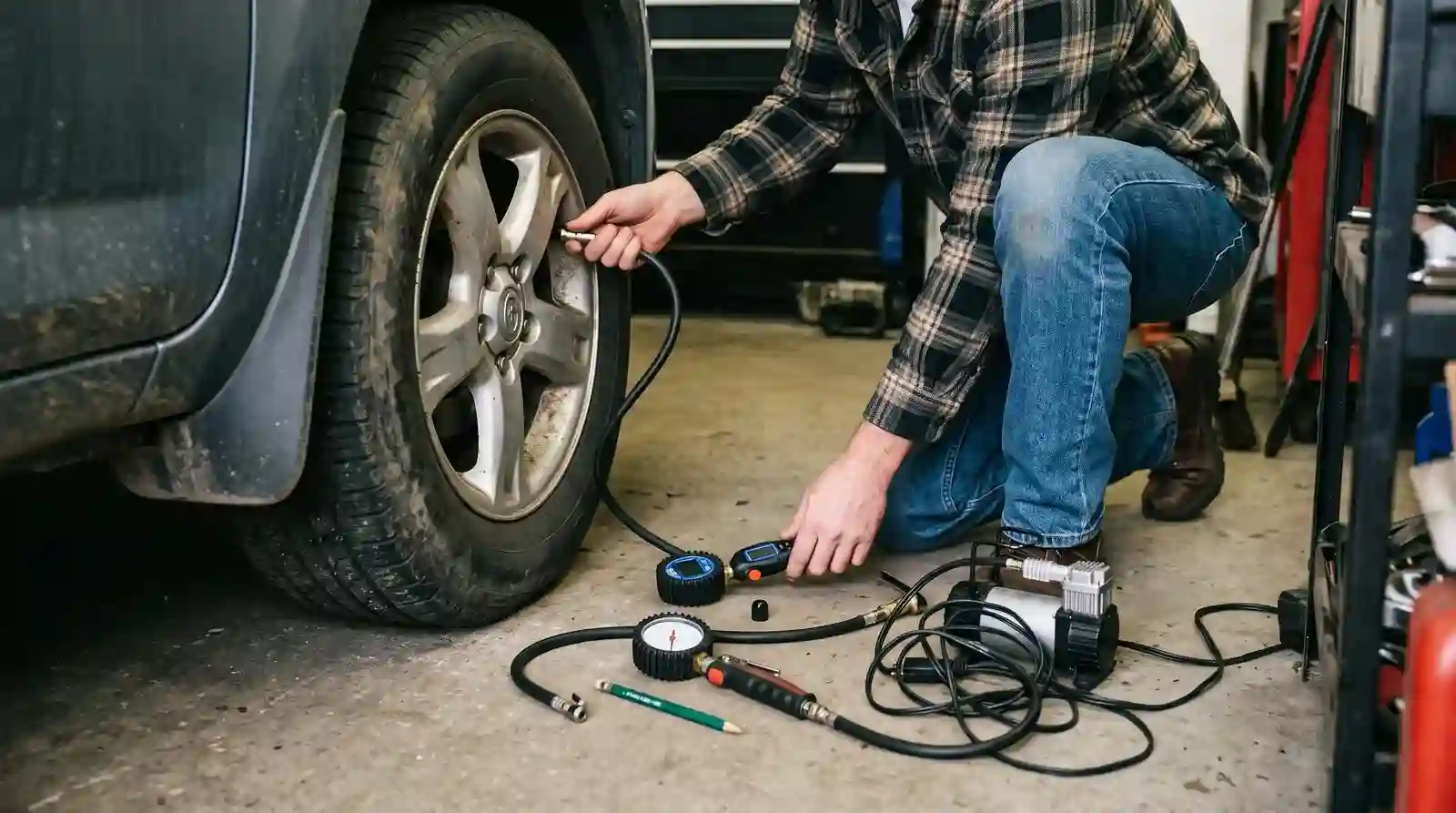
Checking tyre pressure regularly can form part of routine vehicle and tyre maintenance.
How Often Should You Check Tyre Pressure in Winter?
It is useful to pay particular attention to tyre pressure when temperatures change.
Temperature changes can affect tyre pressure, meaning a pressure reading can differ between colder and warmer conditions.
This does not mean you need to constantly adjust your tyres every time the weather changes, but regular checks remain important.
If you notice that a tyre pressure warning appears or a tyre looks noticeably lower than the others, check it as soon as it is safe to do so.
What Happens If Tyre Pressure Is Too Low?
Driving with insufficient tyre pressure can affect how a vehicle handles and can increase tyre wear.
An underinflated tyre may also generate more heat while driving.
You may notice:
- Heavier steering
- Changes in handling
- Increased tyre wear around the edges
- Lower fuel efficiency
- A tyre-pressure warning light
- A tyre that visibly looks lower than the others
If you notice a significant loss of pressure, do not simply assume that the tyre needs more air.
There could be a puncture, valve problem, wheel issue or another cause of air loss.
If pressure loss is caused by a puncture, see: Tyre Puncture vs Tyre Damage: When Do You Need a Replacement?
What Happens If Tyre Pressure Is Too High?
Overinflation can also affect the way a vehicle behaves.
A tyre inflated above the recommended pressure can have less contact with the road surface than intended and may wear differently.
It can also affect ride comfort and handling.
The safest approach is to follow the vehicle manufacturer's recommended pressure rather than choosing a pressure based on guesswork.
What If One Tyre Keeps Losing Pressure?
If one tyre repeatedly loses pressure while the others remain stable, there may be an underlying problem.
Possible causes can include:
- A puncture
- Valve damage
- Valve-core leakage
- Wheel damage
- A sealing problem between the tyre and wheel
- Damage to the tyre
Repeatedly adding air without investigating the cause is not a proper solution.
A professional tyre inspection can help determine why the pressure is dropping.
For more information about common causes of pressure loss, read: What Causes a Car Tyre to Lose Air?
Does Cold Weather Affect Tyre Pressure?
Yes, temperature can affect tyre pressure readings.
As temperatures change, the pressure inside a tyre can change as well.
This is one reason why regular tyre pressure checks are useful throughout the year.
However, you should always use the vehicle manufacturer's recommended pressure as your reference rather than trying to compensate for temperature changes by guessing.
Should You Check Tyre Pressure Before a Long Journey?
Yes.
Checking tyre pressure before a long journey is a sensible part of preparing your vehicle.
This is particularly important if:
- The vehicle will be heavily loaded
- You are carrying passengers
- You are travelling at higher motorway speeds
- The vehicle has not been checked recently
- You have noticed a tyre losing pressure
- You are travelling a long distance
Check the manufacturer's recommended pressures for the vehicle's load condition.
Before a long motorway journey, it is also useful to understand what to do if you experience serious tyre trouble. Read: What to Do If You Get a Tyre Blowout on the Motorway .
Does Carrying Extra Weight Change Tyre Pressure?
It can.
Some vehicles have different recommended tyre pressures depending on the number of passengers or the amount of luggage being carried.
If your vehicle is heavily loaded for a holiday, business journey or long trip, check the manufacturer's recommendations.
Do not automatically inflate all tyres to the same pressure unless that is what your vehicle manufacturer specifies.
What Is the Tyre Pressure Warning Light?
Many modern vehicles have a Tyre Pressure Monitoring System, commonly known as TPMS.
The system monitors tyre pressure and can alert the driver when pressure falls below a specified level.
A TPMS warning should not be ignored.
If the warning light appears, check the tyre pressures when it is safe to do so and investigate any pressure loss.
You can also learn more about TPMS checks and how tyre pressure monitoring can help drivers identify pressure problems.
Can TPMS Replace Manual Tyre Pressure Checks?
No.
TPMS is useful, but drivers should still carry out regular tyre checks.
A TPMS system is designed to monitor pressure and provide warnings, but it should not replace basic vehicle and tyre maintenance.
A tyre can also develop a problem that requires visual inspection or professional assessment.
Regularly checking tyre condition alongside tyre pressure is therefore important.
If you want to check for other warning signs, read: 7 Signs Your Car Tyres Are Unsafe to Drive On .
Tyre Pressure and Uneven Tyre Wear
Incorrect tyre pressure can contribute to abnormal tyre wear.
If tyres are consistently underinflated or overinflated, the tread may not wear evenly.
Uneven wear can sometimes indicate other vehicle issues as well, so it should not automatically be blamed on tyre pressure.
If you notice unusual wear, vibration or handling changes, a professional inspection can help identify the cause.
How Tyre Pressure Can Affect Fuel Consumption
Tyre pressure can also influence fuel efficiency.
When tyres are underinflated, rolling resistance can increase, which can make the vehicle work harder.
This may contribute to higher fuel consumption.
Keeping tyres at the recommended pressure is therefore useful not only for tyre maintenance but also for efficient vehicle operation.
Tyre Pressure Checks for London Drivers
Driving conditions in London can involve frequent stops, congestion, short journeys and changing road conditions.
Because vehicles can be used frequently for commuting, school runs, business travel and local journeys, tyre pressure can easily be overlooked.
A regular tyre pressure check London routine can help drivers identify pressure problems before they become more inconvenient.
Daily Driving
Regular checks can be useful for drivers who use their vehicle every day.
Motorway Travel
Check pressures before longer journeys and follow the vehicle manufacturer's recommendations.
Business Use
Drivers who use their vehicles for work can include tyre pressure checks in their regular vehicle routine.
Recent Tyre Work
If you have recently had a puncture or fitted new tyres, pay attention to any unusual pressure loss.
Can a Mobile Tyre Service Check Your Tyre Pressure?
A mobile tyre service can provide tyre-related assistance at a suitable and safe location.
Depending on the service required, this can include checking tyre condition, assessing pressure-related issues and carrying out appropriate tyre work.
This can be particularly convenient if your vehicle is already parked at home, at work or another suitable location.
FlatFix Tyre provides mobile tyre services across London and Greater London, subject to location and service availability.
If you are considering mobile tyre fitting, you can also read: Mobile Tyre Fitting vs Garage: Which Is More Convenient?
You can also learn about the cost considerations in: How Much Does Mobile Tyre Fitting Cost in London?
For drivers who need tyre assistance while at work: Mobile Tyre Fitting at Work: A Convenient Solution for Drivers
When Should You Get Professional Help?
You should consider professional tyre assistance if:
- A tyre repeatedly loses pressure
- You find a puncture
- A tyre has visible damage
- The tyre has a bulge or unusual deformation
- The vehicle pulls to one side
- You experience unusual vibration
- The TPMS warning remains active
- You are unsure whether a tyre is safe to use
A professional assessment can help determine whether the tyre can continue to be used, requires repair or needs replacing.
If you are dealing with a flat tyre right now, read: Flat Tyre on a London Road: What to Do and How to Get Help .
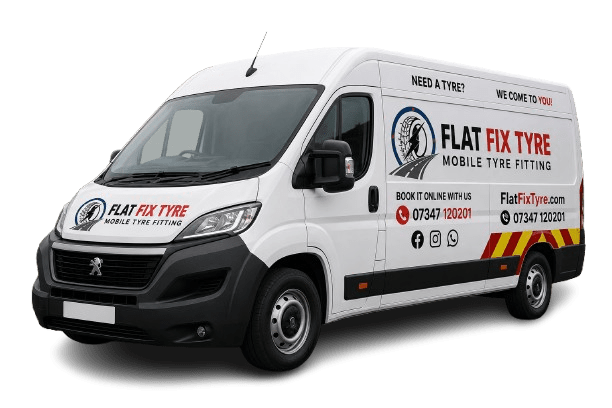
Professional tyre assistance can help identify pressure loss, punctures and other tyre-related problems.
How Can FlatFix Tyre Help?
FlatFix Tyre provides mobile tyre services across London and Greater London.
Depending on your vehicle and requirements, services include:
Puncture Repair
Professional assessment where a punctured tyre may be suitable for repair.
Learn MoreAreas We Cover
FlatFix Tyre provides mobile tyre services across London and Greater London.
Coverage includes areas such as:
Harrow, Stanmore, Wembley, Ealing, Hounslow, Hillingdon, Barnet, Enfield, Camden, Brent, Hammersmith & Fulham, Richmond, Kingston, Croydon, Bromley, Greenwich, Lewisham, Southwark, Wandsworth, Lambeth, Islington, Hackney, Haringey, Newham, Redbridge, Tower Hamlets, Waltham Forest, Barking & Dagenham, Havering, Bexley, Sutton and Merton.
You can check the London areas we cover before arranging a service.
Frequently Asked Questions
Here are some common questions about tyre pressure checks and tyre pressure maintenance.
How often should I check my tyre pressure?
A practical routine is to check tyre pressure at least once a month and before longer journeys. You should also check it whenever you notice possible pressure loss or a tyre warning.
Should I check tyre pressure when tyres are cold?
Yes. Tyre pressure is best checked when the tyres are cold because driving heats the tyres and can temporarily increase the pressure reading.
What tyre pressure should I use?
Always follow the pressure recommended by your vehicle manufacturer. Check your vehicle handbook or the manufacturer's tyre-pressure information.
Can low tyre pressure damage a tyre?
Driving with significantly low tyre pressure can increase tyre stress and wear. If a tyre is losing pressure, the cause should be investigated.
Why does one tyre keep losing air?
A repeated pressure loss can be caused by a puncture, valve problem, wheel damage, a sealing issue or another tyre-related fault.
Does cold weather reduce tyre pressure?
Temperature changes can affect tyre pressure. Regular checks are therefore useful as seasons and temperatures change.
Should I check tyre pressure before a motorway journey?
Yes. Checking tyre pressures before a long journey is a sensible part of vehicle preparation.
Can TPMS tell me if my tyres need more air?
A TPMS can warn you when tyre pressure falls below a specified level, but you should still check the actual tyre pressure and follow the manufacturer's recommended pressure.
Can a mobile tyre service check tyre pressure?
A mobile tyre service can assist with tyre-related checks and problems at a suitable location, depending on the service required.
What should I do if my tyre pressure warning light comes on?
Check your tyre pressures when it is safe to do so. If a tyre is significantly low or continues losing pressure, seek professional assistance.
Is the pressure printed on the tyre sidewall the correct pressure for my car?
Not necessarily. The vehicle manufacturer's recommended pressure should be used for normal inflation rather than simply using the maximum pressure printed on the tyre.
Can incorrect tyre pressure cause uneven wear?
Yes. Incorrect pressure can contribute to abnormal tyre wear, although uneven wear can also have other causes.
Can tyre pressure affect fuel consumption?
Incorrect tyre pressure, particularly underinflation, can increase rolling resistance and may contribute to higher fuel consumption.
Should all four tyres have the same pressure?
Not necessarily. Some vehicles specify different pressures for front and rear tyres, particularly depending on vehicle load.
Where can I get a tyre pressure check in London?
Drivers looking for a tyre pressure check London service should choose a suitable professional tyre service that covers their location and can safely inspect the vehicle.
Final Thoughts
Checking your tyre pressure regularly is a simple part of looking after your vehicle.
A good routine is to check your tyre pressures at least monthly, before long journeys and whenever you notice signs of pressure loss. Always use the vehicle manufacturer's recommended pressure and check the tyres when they are cold for a more reliable reading.
If one tyre repeatedly loses pressure, do not simply keep adding air. The underlying cause should be investigated to determine whether there is a puncture, valve problem, wheel issue or another fault.
For London drivers, professional mobile tyre assistance can make tyre checks and tyre-related services more convenient when your vehicle is parked at a suitable location.
If you are dealing with a flat tyre and need to understand how long it may be safe to drive, read: How Long Can You Drive on a Flat Tyre?
For urgent tyre problems, you can also read: What Is Emergency Mobile Tyre Fitting and How Does It Work?
Need Help With Your Tyres?
If you are concerned about tyre pressure, a puncture, tyre damage or another tyre problem, FlatFix Tyre can provide mobile tyre services across London and Greater London, subject to location and service availability.